Cultural Prescribing Experience at EXPO 2025 Osaka-Kansai “Hello Future! 100-Year Museum”
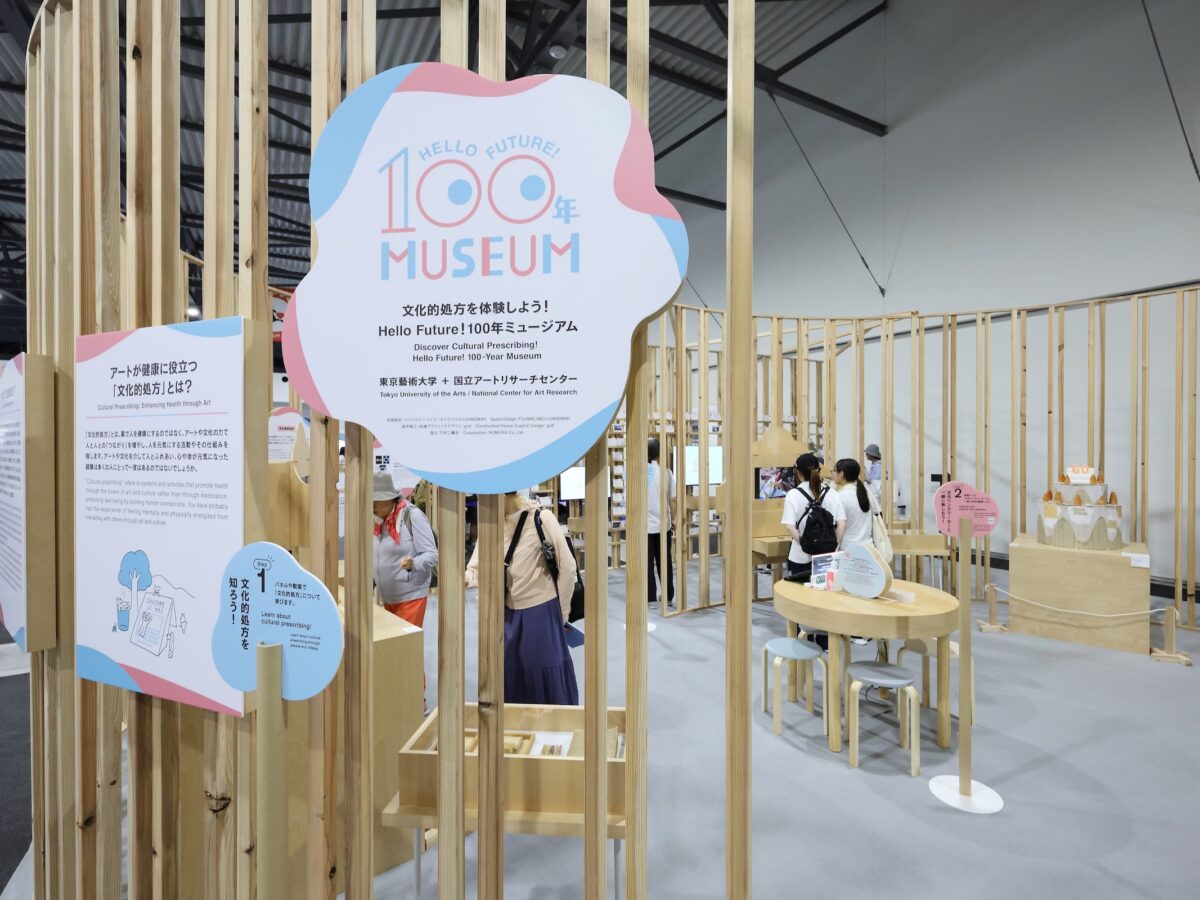
From August 14 to 19, 2025, Tokyo University of the Arts and the National...
“Science: Connecting You to the Future,” an Expo 2025-related event, was held by the Ministry of Education, Culture, Sports, Science and Technologies (MEXT) at Tokyo Innovation Base (TIB) in Tokyo. “Discover Cultural Prescribing! Hello Future! 100-Year Museum,” one of the exhibitions at the event, “Art Appreciation through Conversation” by Cultural Link Workers, and “Spatial Musical Instruments: Musicking” by Kiyoshi Furukawa, a musician and Professor of Tokyo University of the Arts both garnered plenty of attention. Here, we are reporting on the Cultural Prescribing workshop used to connect people and people with society through art.
目次
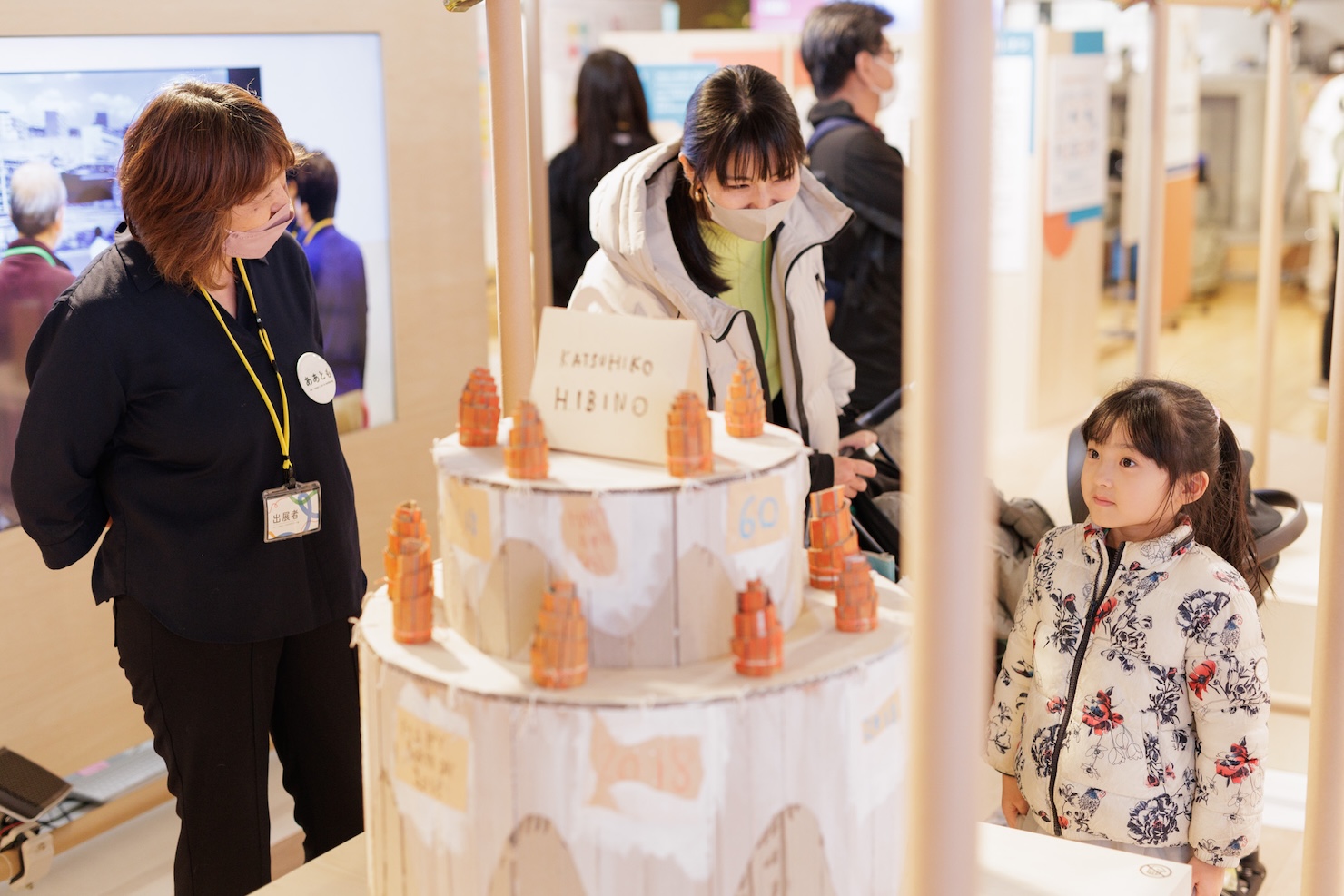
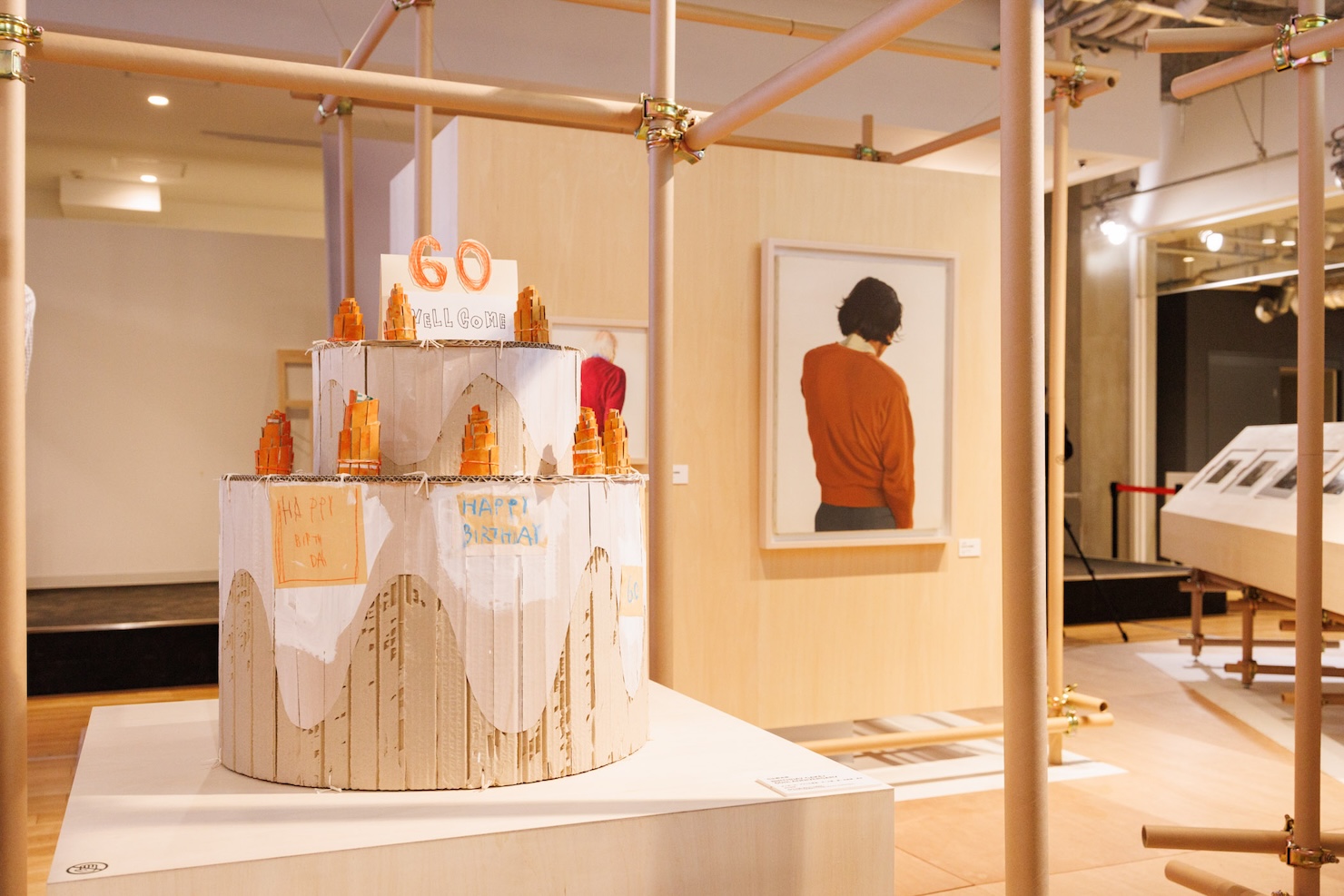
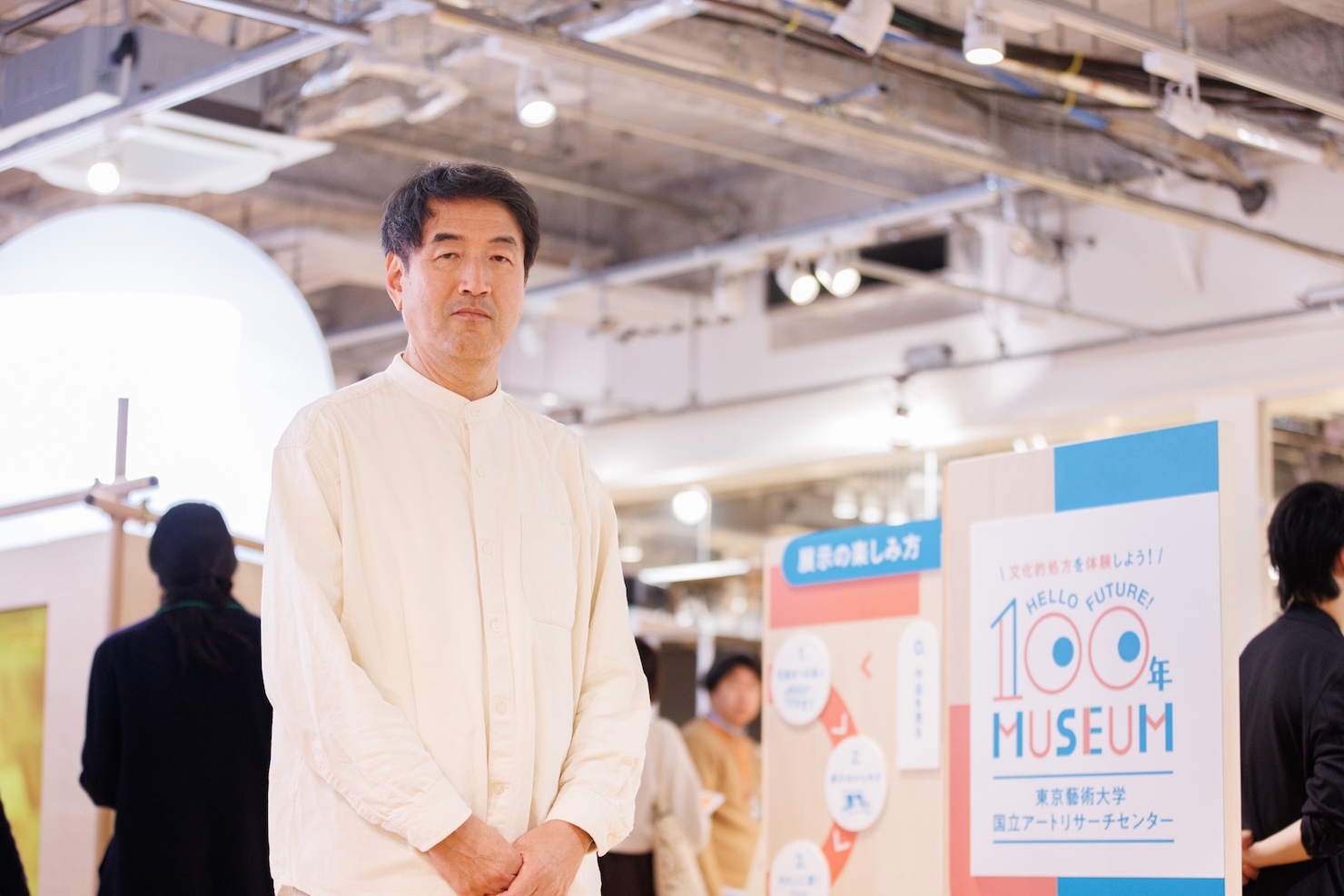
At the exhibition “Discover Cultural Prescriptions! Hello Future! 100-Year Museum,” we proposed a framework called “Cultural Prescribing” to create connections within a society through art and culture, as a remedy for unwanted loneliness and isolation. Along with paintings by Kaoru Ueno and artworks by Katsuhiko Hibino, pictures from the artists’ own photo albums depicting their childhoods, and pictures taken by residents showing the scenery around Kawasaki City were exhibited at the event. Visitors were free to pick up the photo panels and related movies and information would be displayed when the images were placed in front of the monitors.
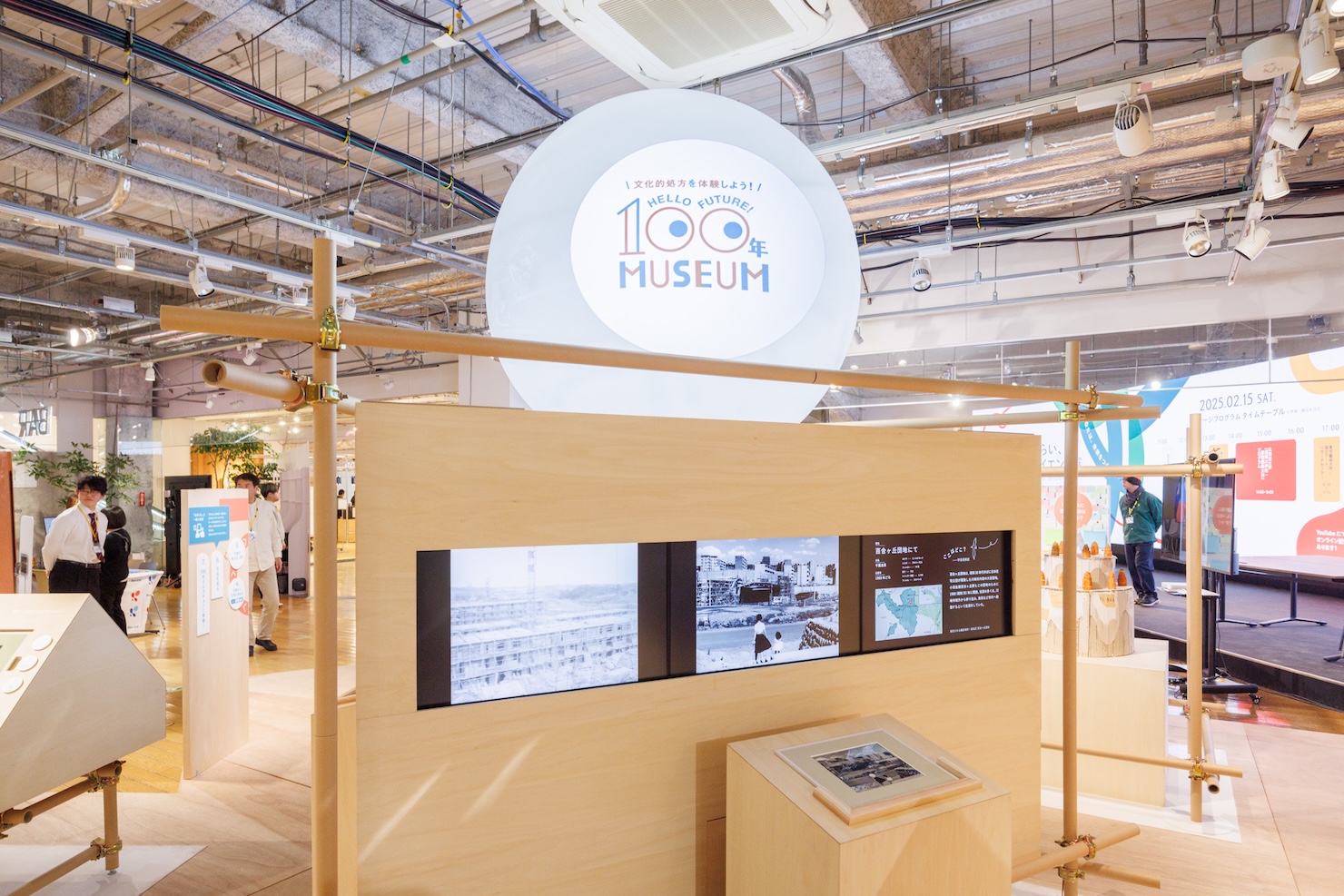
The exhibition titled “Photos from Civic Photo Competitions of Kawasaki City” used digital techniques to maintain and reproduce images capturing a record of Kawasaki City from the residents’ point of view. It was a good example of how Cultural Prescribing can help to promote a connection that goes beyond generational divides by sharing memories particular to a region. Aa-tomo Cultural Link Workers actively engaged with visitors viewing the pictures.

Cultural Link Workers are experts at enhancing social connections and wellbeing (mental health and happiness) through art. Rather than simply offering their extensive professional knowledge on the subject, aa-tomo created the event “Art Appreciation through Conversation” where visitors could discuss their own feelings and experiences. Few visitors even knew Cultural Link Workers existed as a profession and some visitors were surprised when they were approached by staff. But they soon relaxed and started talking freely about their thoughts on the works of art. Aa-tomo’s ability to communicate was excellent. Cultural Link Workers brought out the views and emotional responses from the visitors and encouraged them to find new meanings in the artworks.
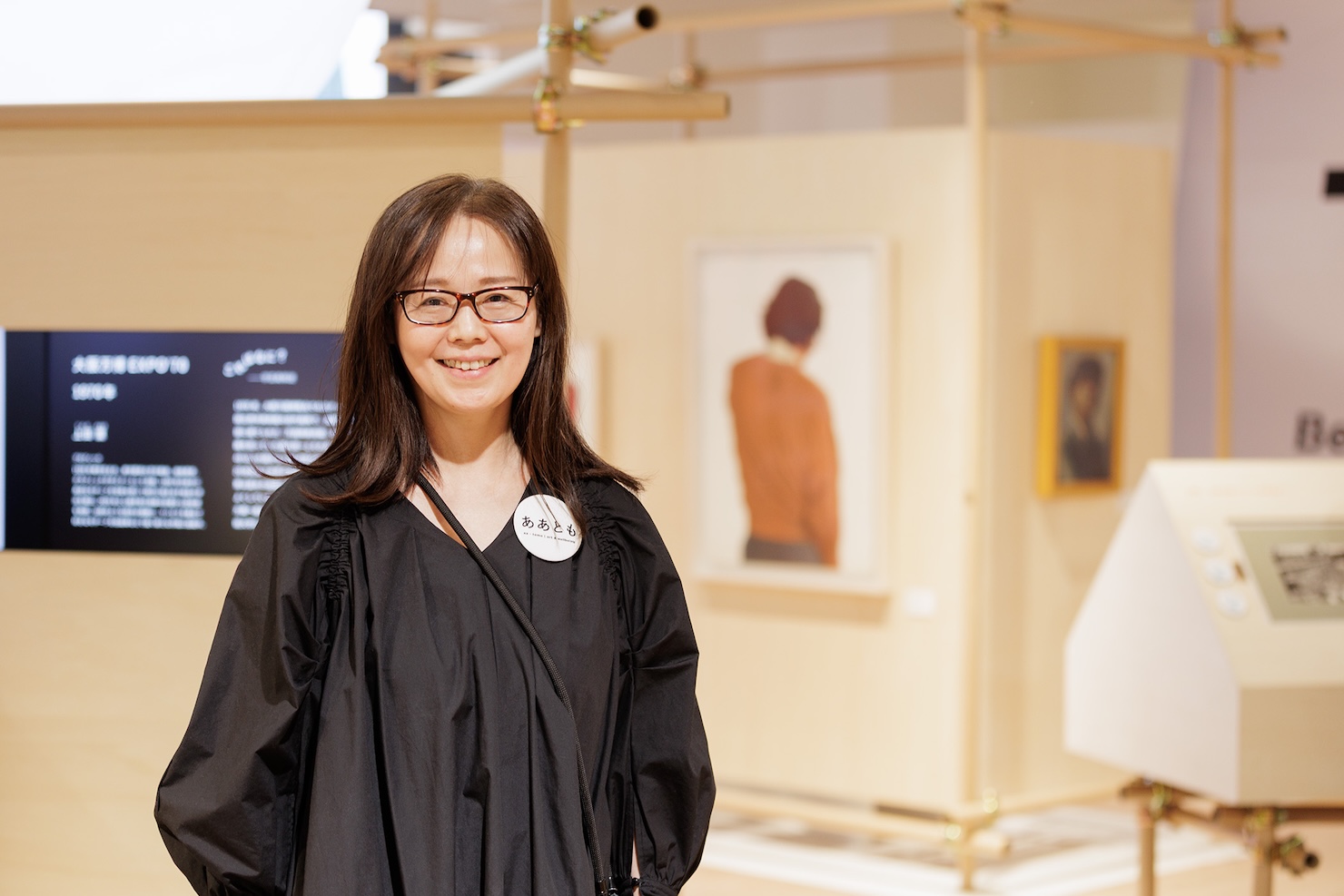
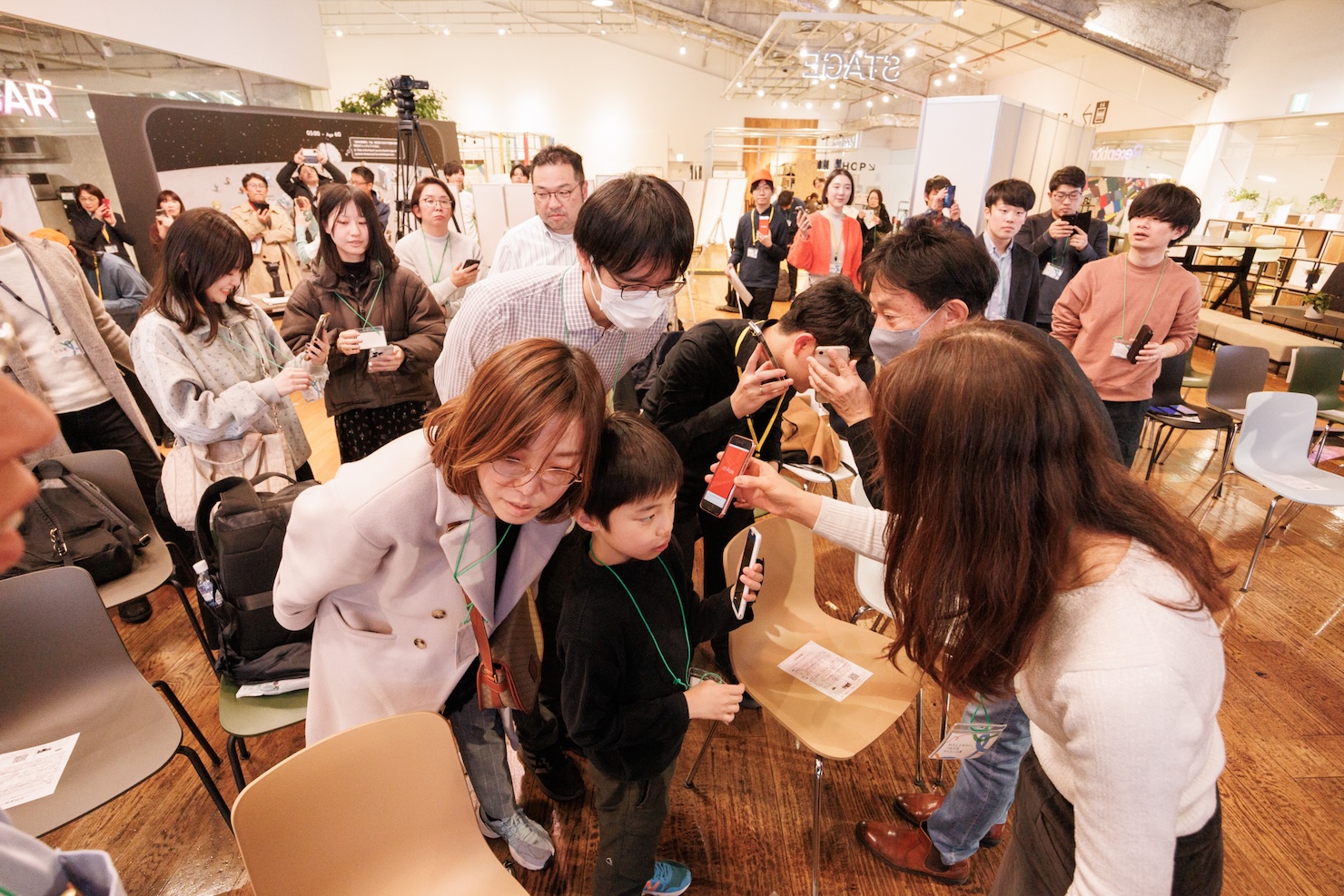
“First, I try to start a dialogue exploring a visitor’s interests. Some consider art difficult and highbrow. I try to overcome such bias through dialogue,” said aa-tomo member Zaitsu smiling. Interestingly, the conversation often started on a topic unrelated to art. One parent and child had no interest in art or Cultural Prescribing. However, through talking about the Near Field Communication (NFC) tags attached to the photo panels, they could segue into their favorite topic of conversation – trains. When the Cultural Link Worker mentioned the same NFC technology is used in electronic IC travel cards, the child suddenly became interested. Through this connection to a favored topic of conversation, the visitors could feel closer to the art on display.
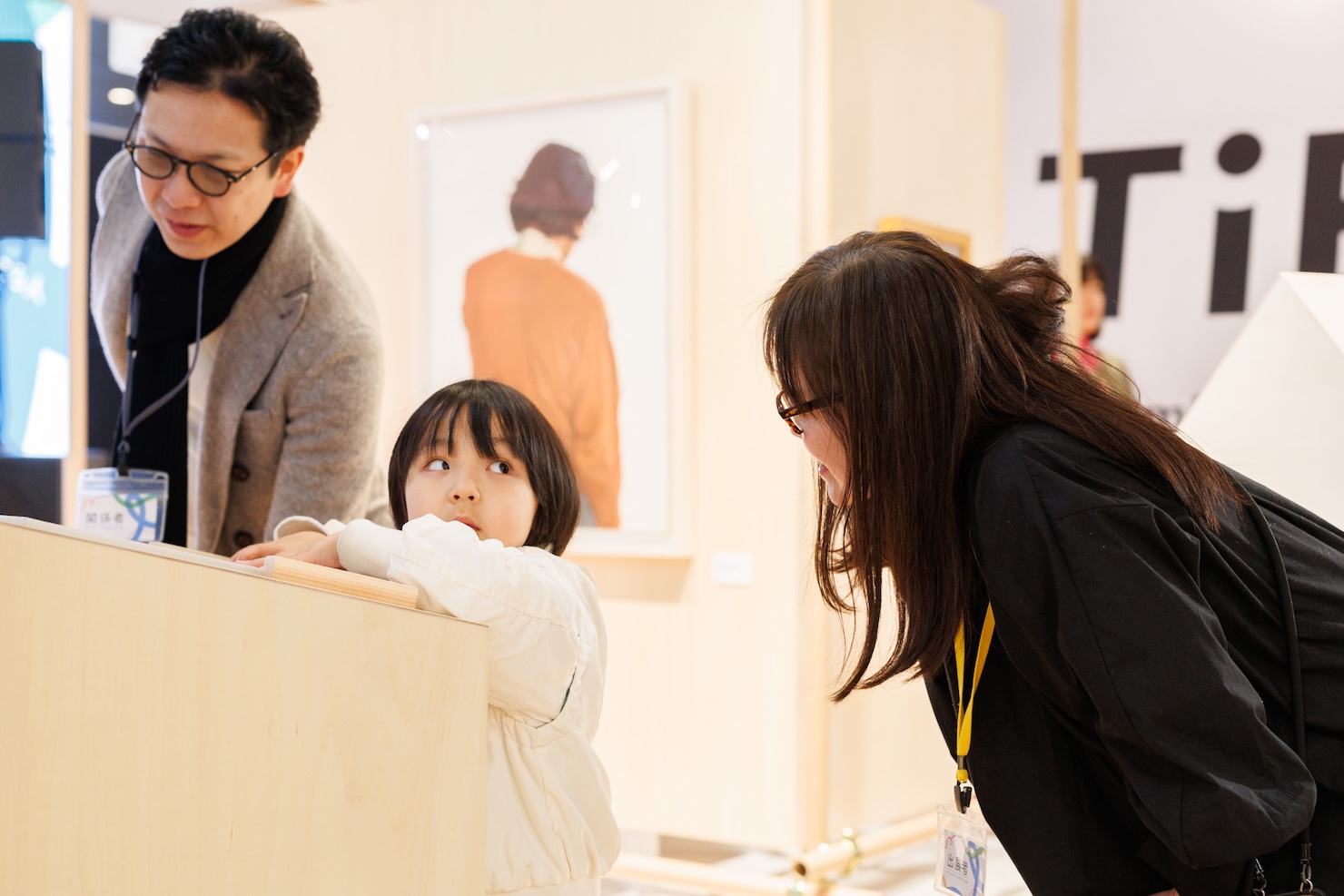
“Art Appreciation through Conversation” used Object Based Learning (OBL) to observe the target and build a conversation. Based on the thought that knowledge is built collaboratively, the success of OBL lies with overlapping several viewpoints rather than a single perspective. The artwork being observed would appear different by leveraging the thoughts and opinions of different people. Through dialogue, aa-tomo Cultural Link Workers aimed to suggest new avenues of thought and appreciation beyond what people would see by themselves. As they discuss their experience with family and friends, this naturally widens the scale of cultural connections.
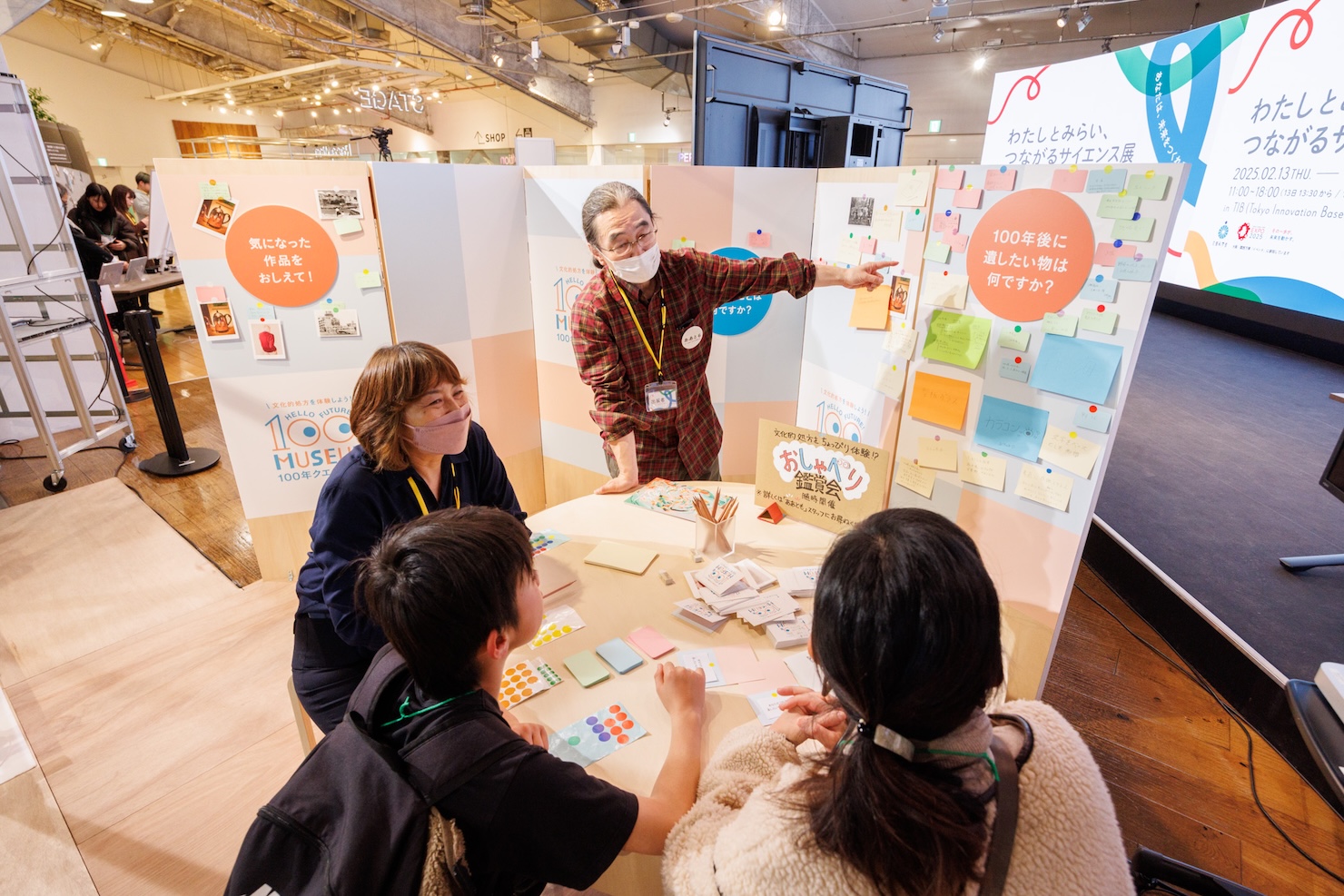
A colorful folding screen was placed at the corner of the venue. Visitors who looked at the artworks, could write notes to stick on the panel under the topic headings “What I want to pass on to the world 100 years in the future” and “Artworks I was interested in.”Their opinions were displayed at the venue and the panel itself became an space for conversation and exchange that went beyond generational divides. According to Zaitsu, the enjoyment of appreciating artwork using the OBL method is how we can build equal relationships through dialogue based on viewing the same work of art.
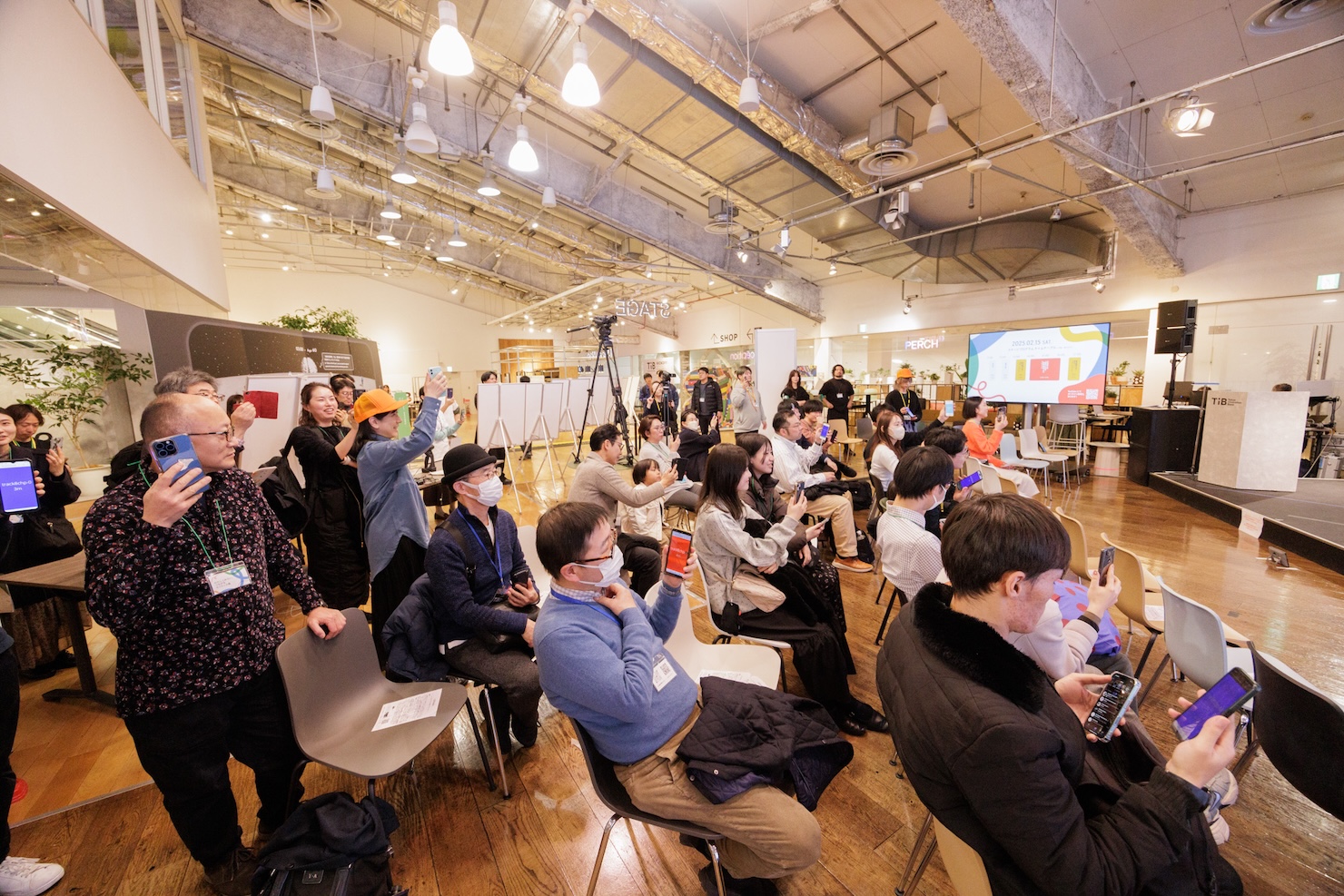
Kiyoshi Furukawa held the workshop “Spatial Musical Instruments: Musicking” on stage. Attendees could participate simply by reading a QR code with their smartphones. Without any musical expertise or technique, participants could simply read a QR code that would turn their smartphone into a musical instrument, letting them play music instantly.
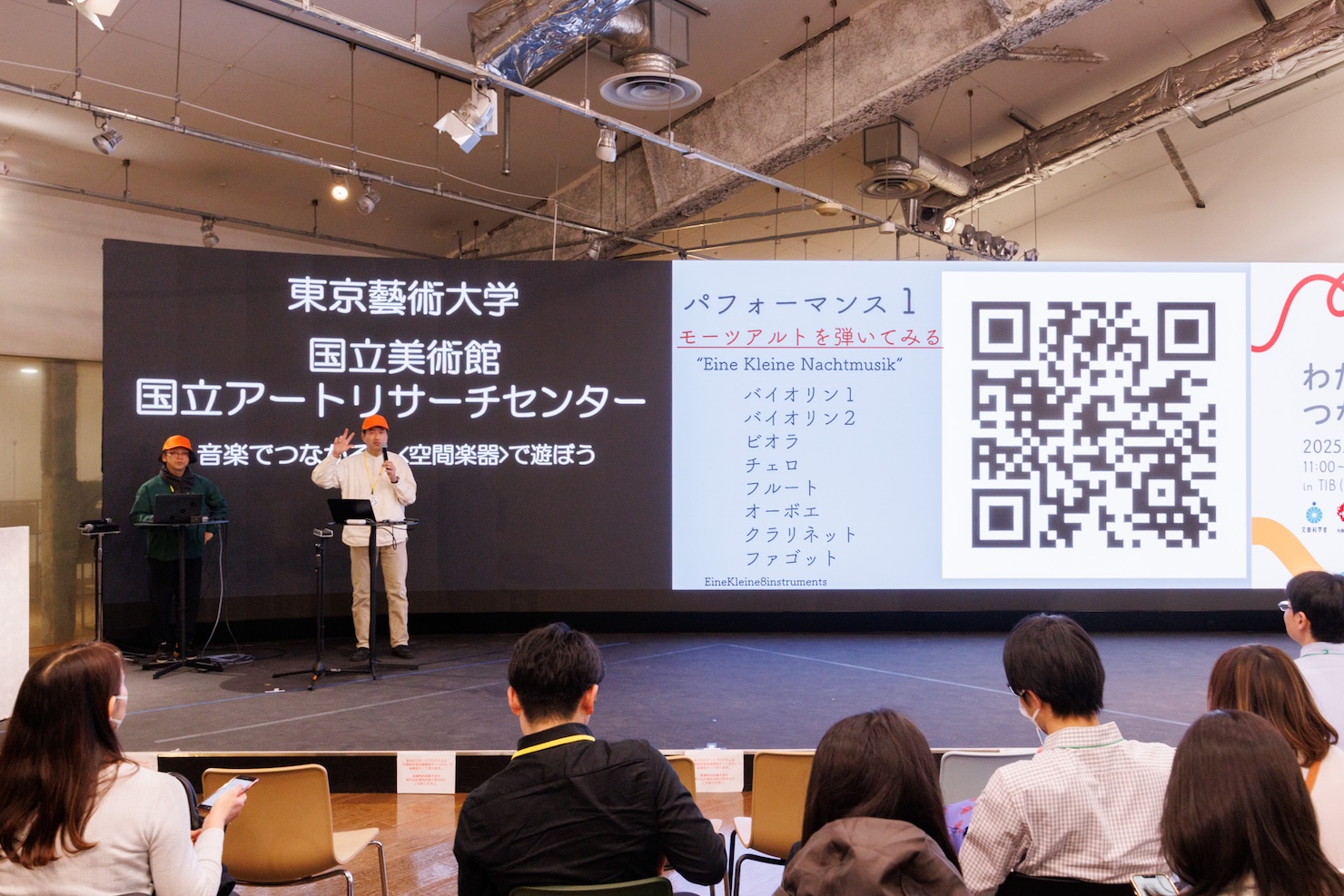
They held a performance titled “Try to Play Mozart” and the musical piece was “Eine kleine Nachtmusik” – a famous piece of music with a melody familiar to most people. The parts of the first violin, second violin, viola, cello, flute, oboe, clarinet, and bassoon were allocated to each participant. This piece is originally for a string orchestra, but the score was arranged to include woodwind instruments.
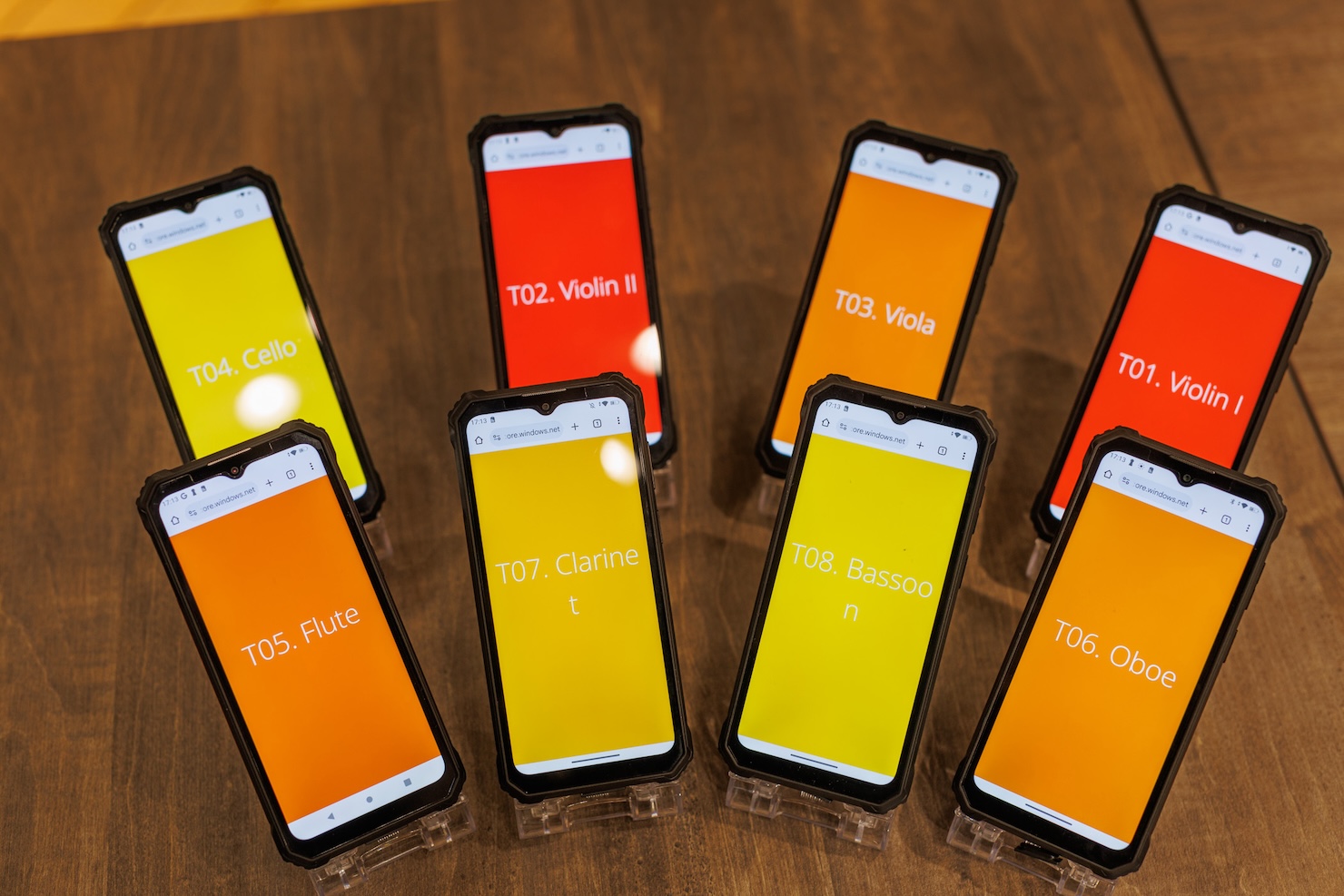
It opened strongly with each sound in unison. The first violin played the main tune with gusto followed by each instrument playing its own part.
The participants could recognize the sound of their specific instrument and they felt as if they had been a part of an orchestra. At first, they seemed a little perplexed at the situation, but soon people were smiling and communicating with each other. The volume would change depending on the angle the participant held the phone, so they really felt as if they had played a musical instrument. Though the participants had all been strangers, they could use music to become one.
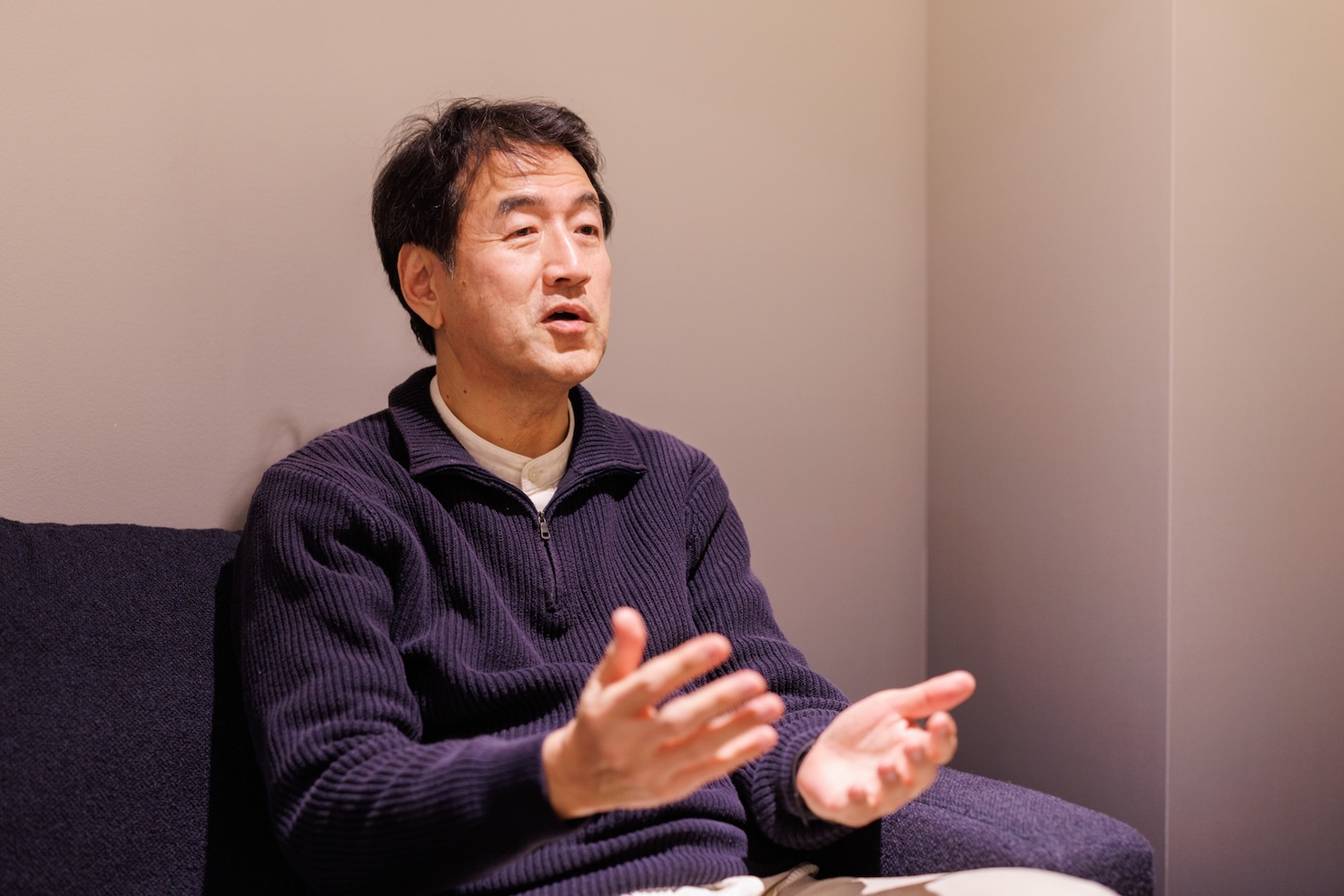
“I call this system ‘Spatial Musical Instruments.’ In the beginning, I planned to create a huge sound sculpture within a space by freely moving many sound sources. While I tried this, I thought it might be interesting if I made music with different sound elements and this idea took shape,” explained Furukawa.
It was true. When I recognized the element of the sound I was responsible for, it made me feel a deeper connection to the music.
“It is interesting to recognize the relationship between music and the self,” says Furukawa. “You realize how the parts are combined and connected.”
“Now society has changed greatly, the image of artists will also change,” says Furukawa. “The image of an artist as a ‘solitary genius’ no longer fits with the times. Instead, there are artworks born from the relationships between people, like those created by Hibino and others. I feel satisfied creating artworks that everybody can enjoy. Of course, I also still make contemporary music that is not easy to understand,” says Furukawa with a smile.
Furukawa created a space where anybody could participate with Spatial Musical Instruments even if they were not familiar with music. In principle, the idea of Spatial Musical Instruments can be upscaled to hundreds or thousands of participants. In the future, it could be implemented in an enormous space such as a baseball field.
During this event, interpersonal connections became tighter through interactive experiences with participants as key players, rather than experts unilaterally talking about their knowledge. Cultural Prescribing are a way of encouraging people to recognize the connections everybody has with society. It can promote mental and physical health, solve loneliness, and rebuild communities. Both “Art Appreciation through Conversation” based on OBL by Cultural Link Workers and “Spatial Musical Instruments: Musicking” by Furukawa are practical examples of Cultural Prescriptions that build relationships through art. Introducing such artistic and musical experiences into a society will increase the potential to create more inclusive and creative societies. This exhibition was a great opportunity to show this potential to a large number of people.
 KEYWORD for Cultural Prescribing! "Creative Health" What does it mean?
 KEYWORD for Cultural Prescribing! "Cultural Prescribing and Social Prescribing" What do they mean?