Cultural Prescribing Experience at EXPO 2025 Osaka-Kansai “Hello Future! 100-Year Museum”
From August 14 to 19, 2025, Tokyo University of the Arts and the National...
From August 14 to 19, 2025, Tokyo University of the Arts and the National Center for Art Research hosted the exhibit “Hello Future! 100-Year Museum” at the WASSE EXPO Exhibition Center at Yumeshima, the venue for EXPO 2025. The exhibit was part of a larger exhibition sponsored by Japan’s Ministry of Education, Culture, Sports, Science and Technology (MEXT) titled “Science: Connecting You to the Future.”
The exhibit’s theme was “Discover Cultural Prescribing,” and it aimed to provide an opportunity for a wide range of visitors to discuss and experience cultural prescribing, the practice of fostering connections through art and cultural activities. This initiative sought to communicate—not just to art specialists but also to the general public—the idea that art and culture can positively impact people’s health and wellbeing. We spoke with the National Center for Art Research’s Sawako Inaniwa, who oversaw the planning of the exhibit, about the exhibit’s objectives, the reaction of visitors, and how artwork can create connections among individuals.
目次
Editorial Team: We understand that this year’s EXPO 2025 exhibit was a valuable opportunity to present the concept of cultural prescribing to a wider audience. What aspects did you focus on when planning the exhibit?
Inaniwa: The exhibit at the EXPO provided an opportunity to introduce cultural prescribing to a broader audience, including those who don’t typically visit art museums. Cultural prescribing is a national research project co-created by approximately 40 organizations, including Tokyo University of the Arts and the National Center for Art Research. With cultural prescribing, art and creative activities are viewed as essential elements for physical and mental health, serving as an initiative and framework to promote culture.
At the EXPO, since we were exhibiting as part of the project sponsored by the Ministry of Education, Culture, Sports, Science and Technology (MEXT), we structured the exhibit with the aim of making it enjoyable for teens, specifically to introduce cultural prescribing to younger generations. The most important aspect this time was creating an entry point where art could be encountered as an extension of everyday life, not just for art lovers or those with specialized knowledge, but for a much broader audience.
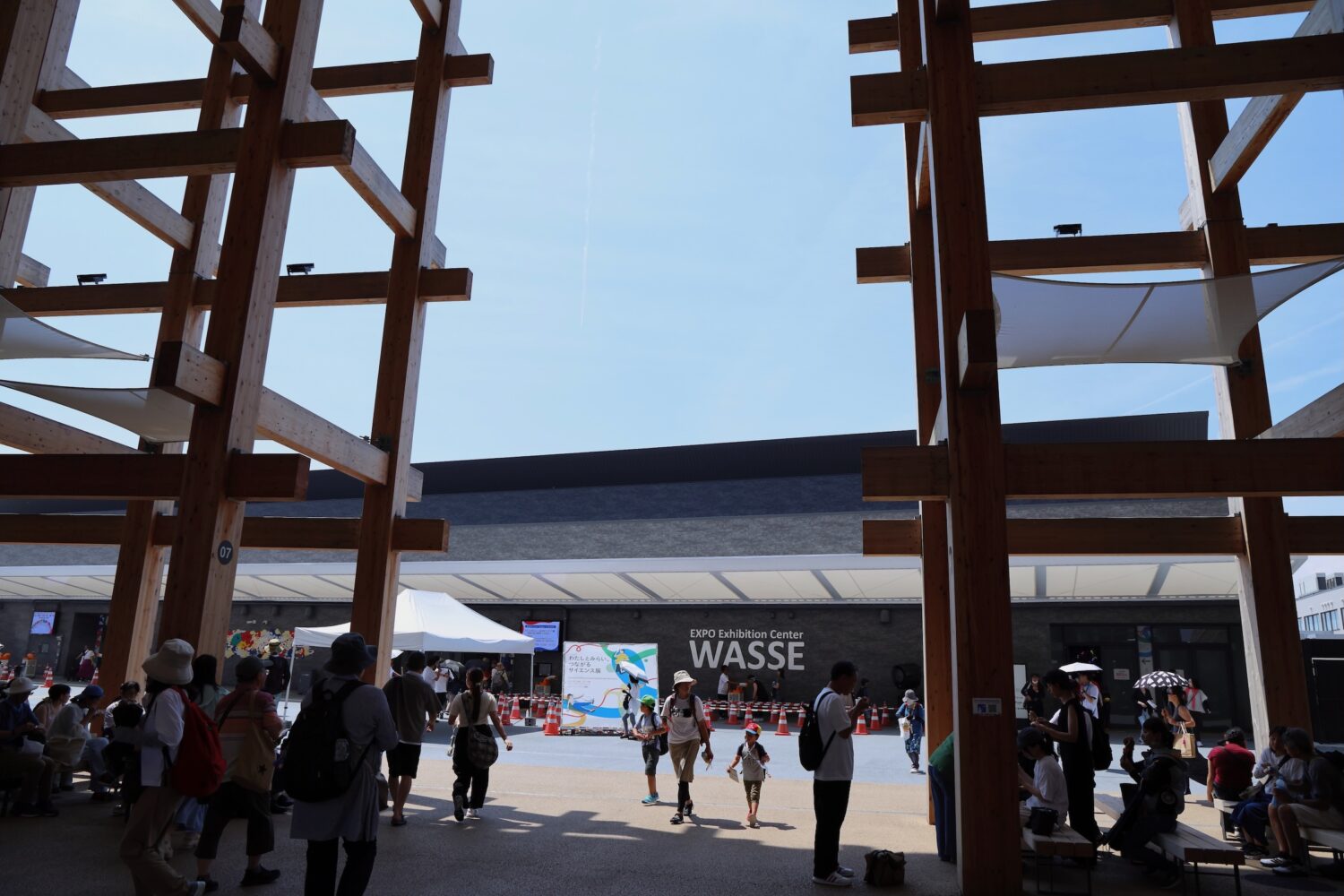
I have spent many years creating opportunities for families and children to enjoy art at museums, so I was able to draw on my experience when devising the exhibit. One reaction from visitors that truly surprised me—and made me rethink my own assumptions—was hearing repeatedly “I didn’t realize Tokyo University of the Arts and museums were doing this kind of work.” Visitors were expressing astonishment that Tokyo University of the Arts—a university known for nurturing artists with exceptional talent—and museums, which are institutions that handle “art,” were pioneering this new concept of “cultural prescribing” that broadens the concept of art to encompass local communities and daily life, connecting it to health and wellbeing.
In other words, most people don’t have a strong image that the art and cultural activities that are closely tied to their daily lives can actually connect with the art handled by art universities and museums. It probably surprised many visitors that universities and museums are researching how art and cultural activities relate to people’s health and wellbeing. Many staff members reported hearing such comments from visitors.
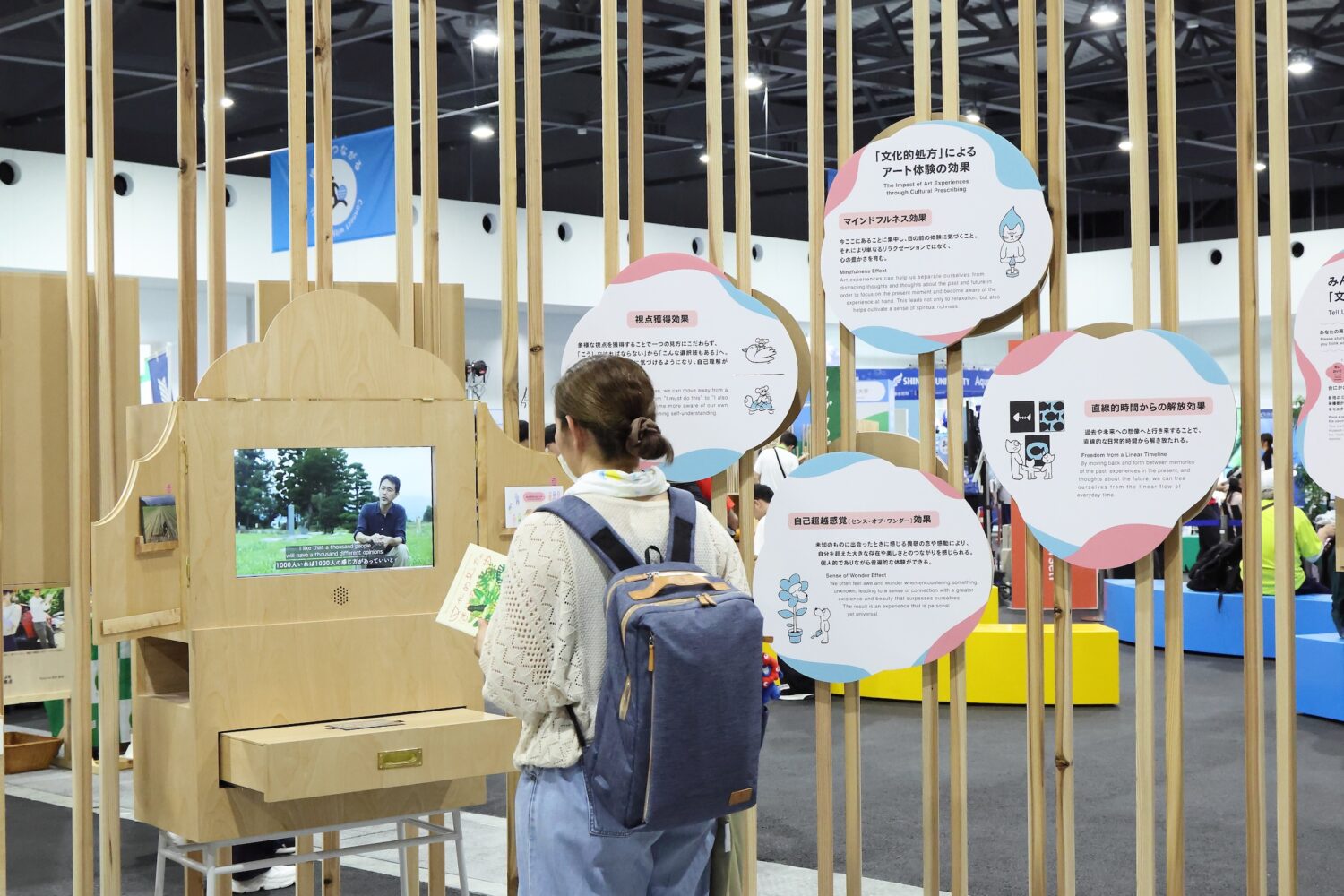
One university student excitedly approached me, asking “Are art and health really connected?!” Though he couldn’t grasp it immediately, something clearly resonated with him. We toured the exhibit together, and he later told me, “For the first time, I understood how art and health can be connected.” It was such a wonderful reaction. Precisely because the exhibit was in the open space of the EXPO, I believe it was possible to have a shared experience of viewing artworks and spark conversations among those who don’t usually visit museums.
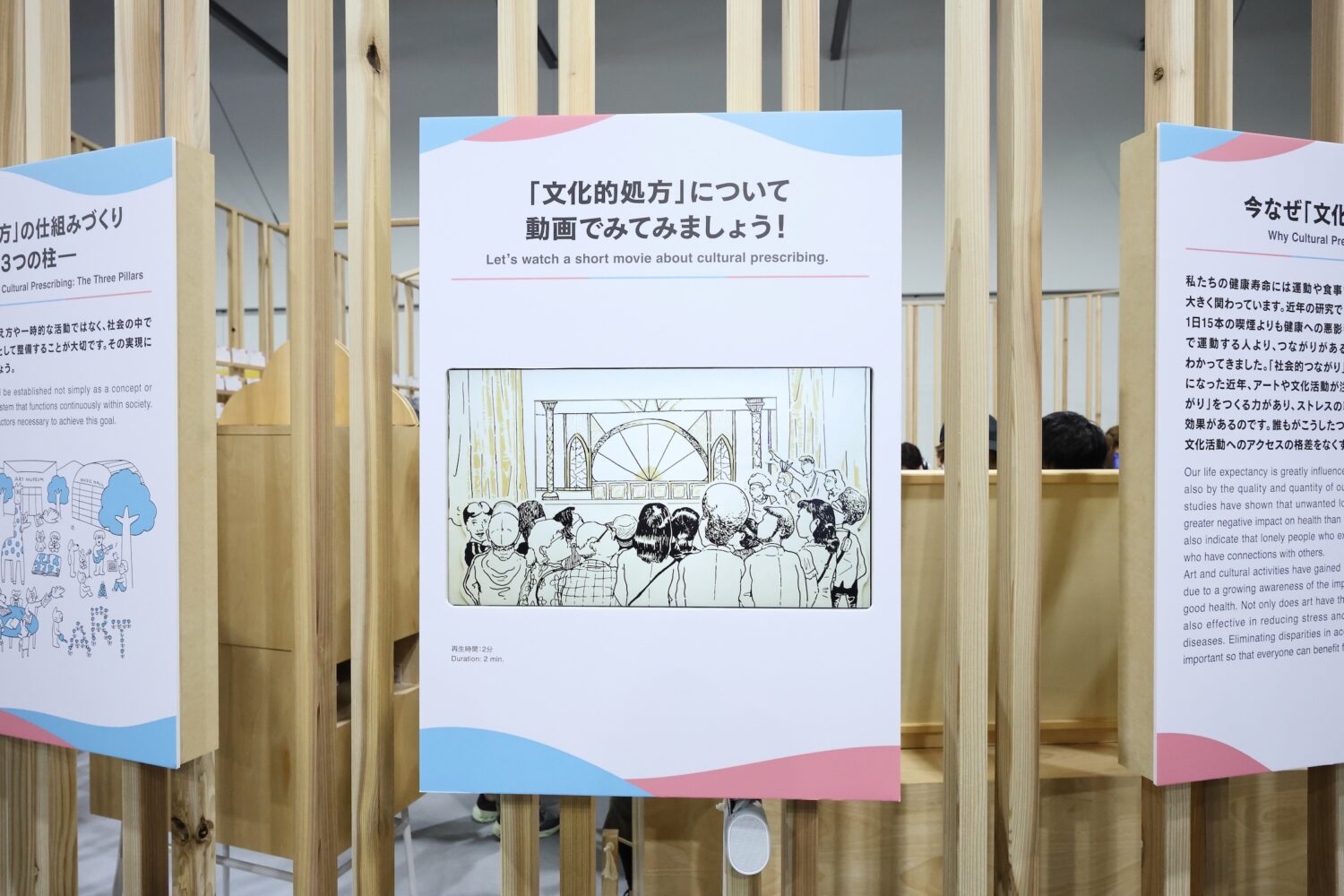
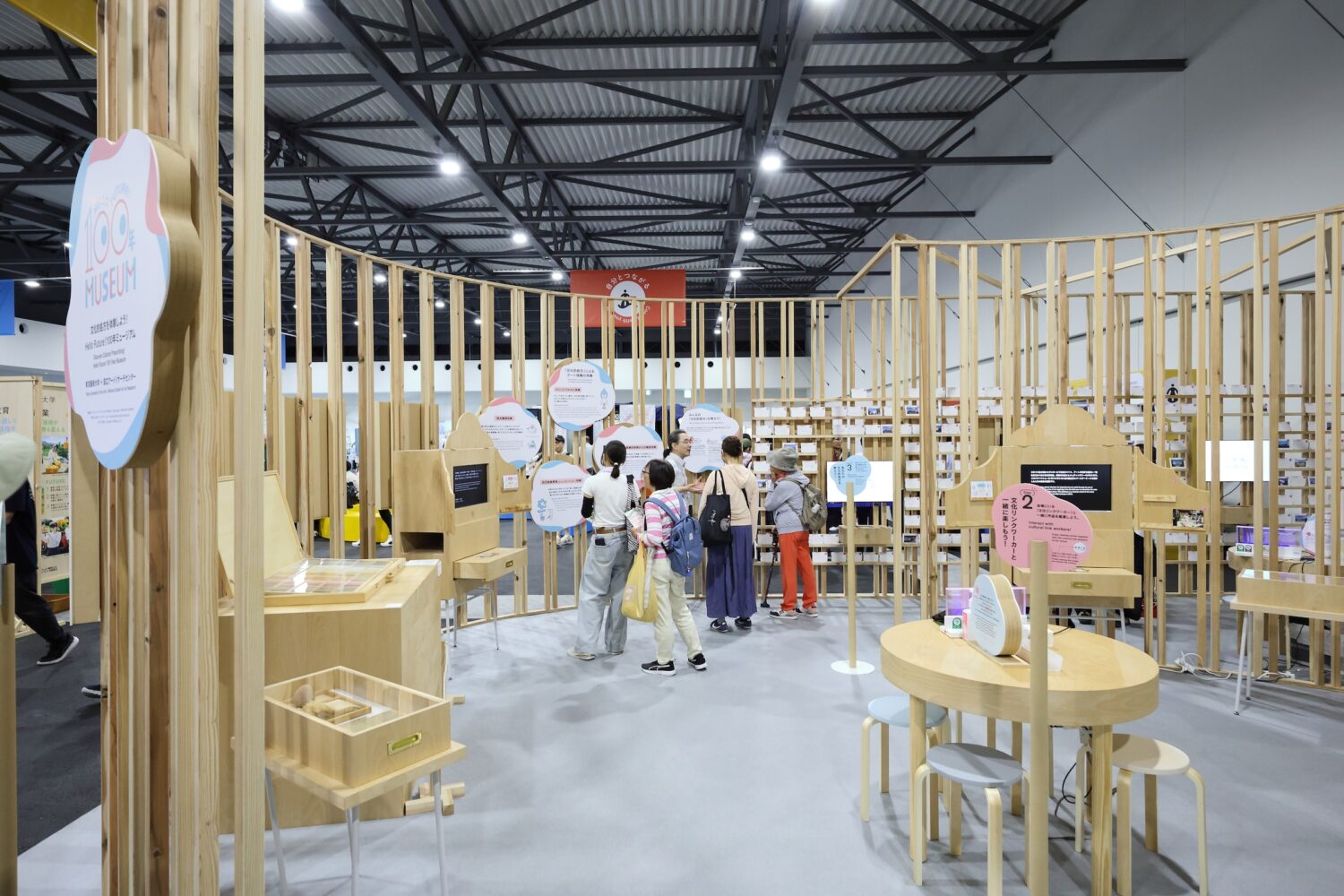
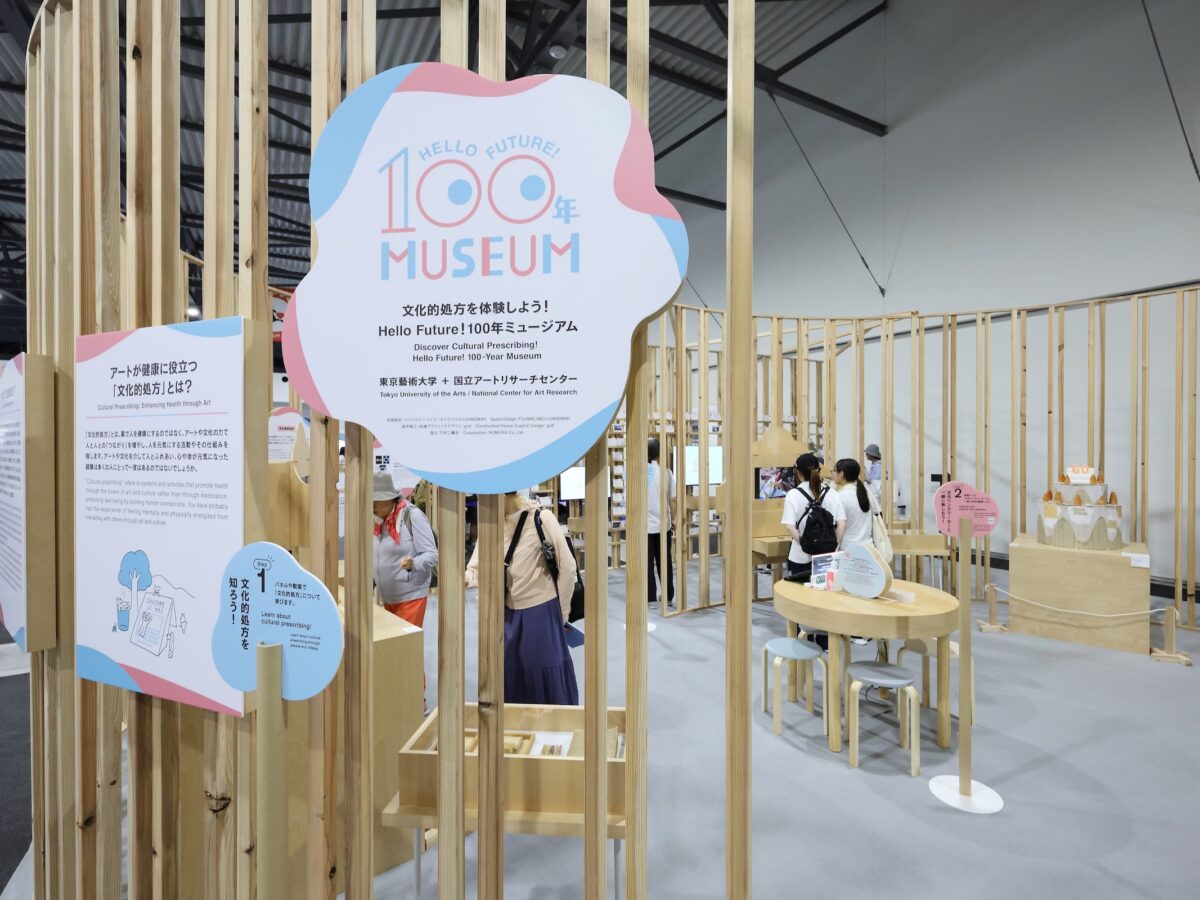
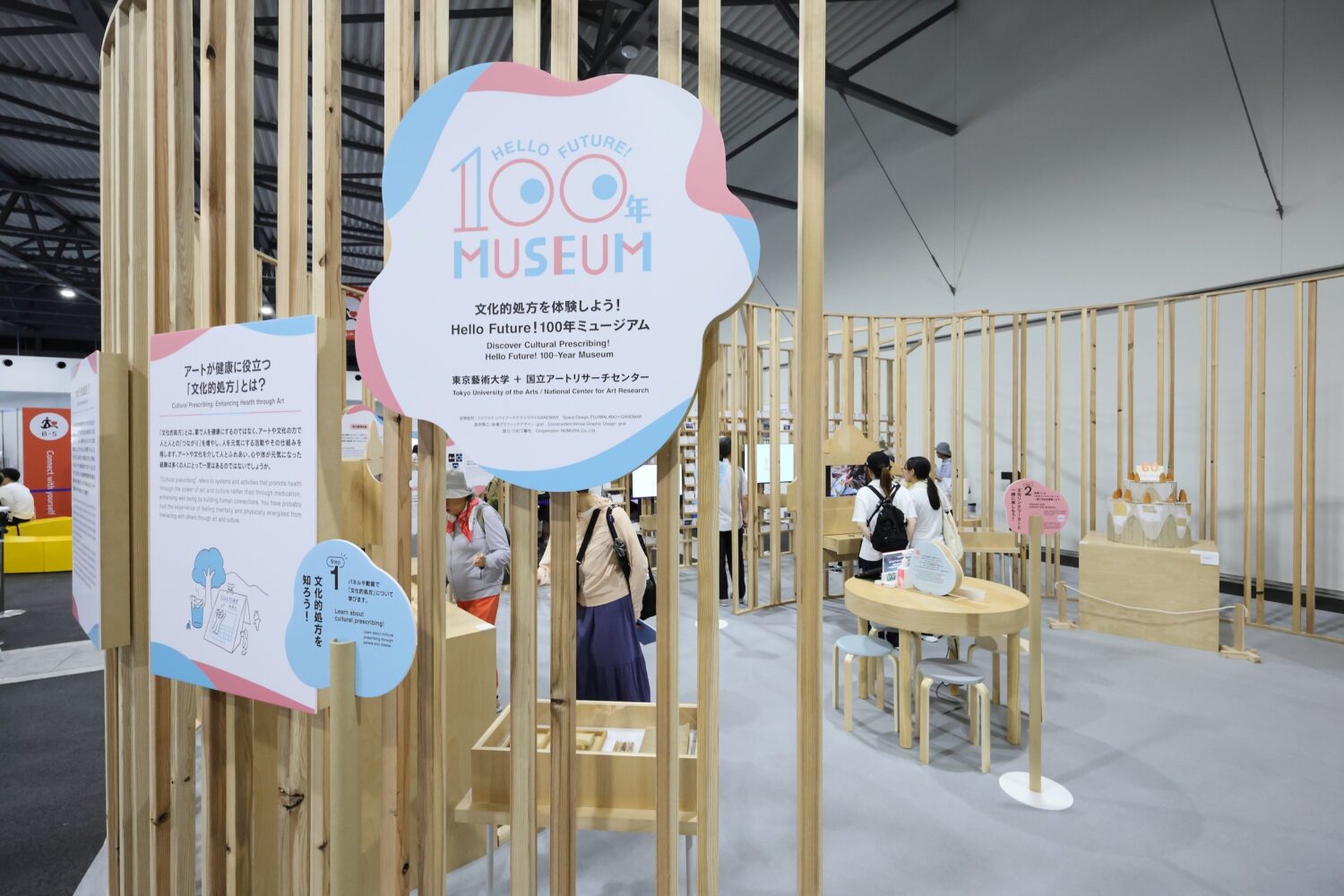
Editorial Team: The exhibit space really made an impression. On the outside, panels displayed information about cultural prescribing, while the inside featured an array of artworks and videos. After viewing the works inside, visitors flowed to the exit. It was a venue designed like a spiral shell that naturally created a flow of movement.
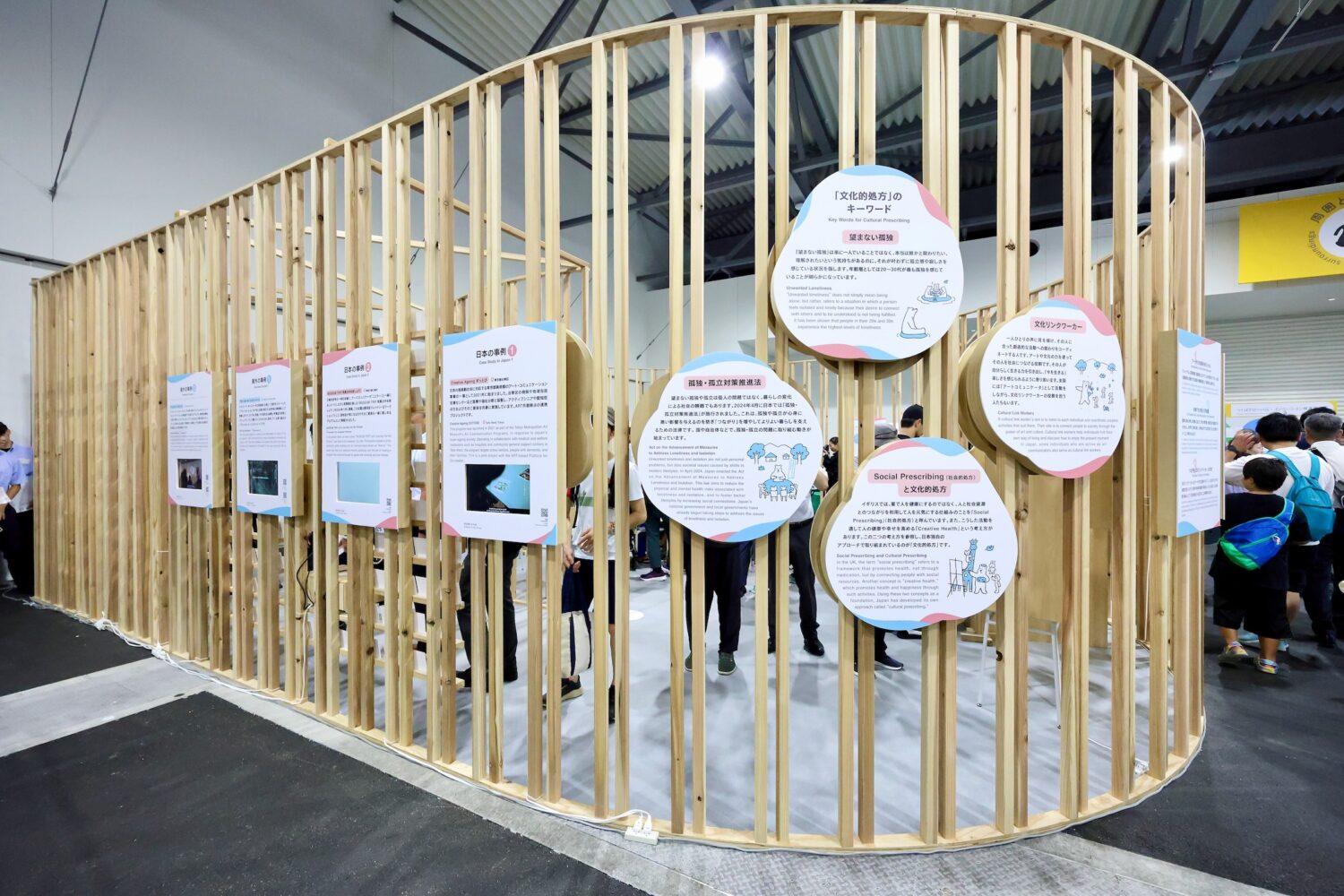
Inaniwa: Yes, we also called that venue layout a “conch shell” (laughs). Creating a space outside of a museum exhibition that would allow people and artwork to meet in just the right way was incredibly difficult. We revised the exhibit plan countless times, and it was a continuous process of trial and error. WASSE, the venue, wasn’t just for our exhibit. Each booth presented different content, so compared to a museum, we knew it was going to be information-heavy and inevitably noisy. Plus, reservations were not required; people were going to come and go freely, making the whole space alive with energy. Our challenge was how to create a space within that environment where people would pause, even briefly, and let their minds drift into the world of the art. We struggled with how to design the flow of the experience within a space of only about 70 square meters.
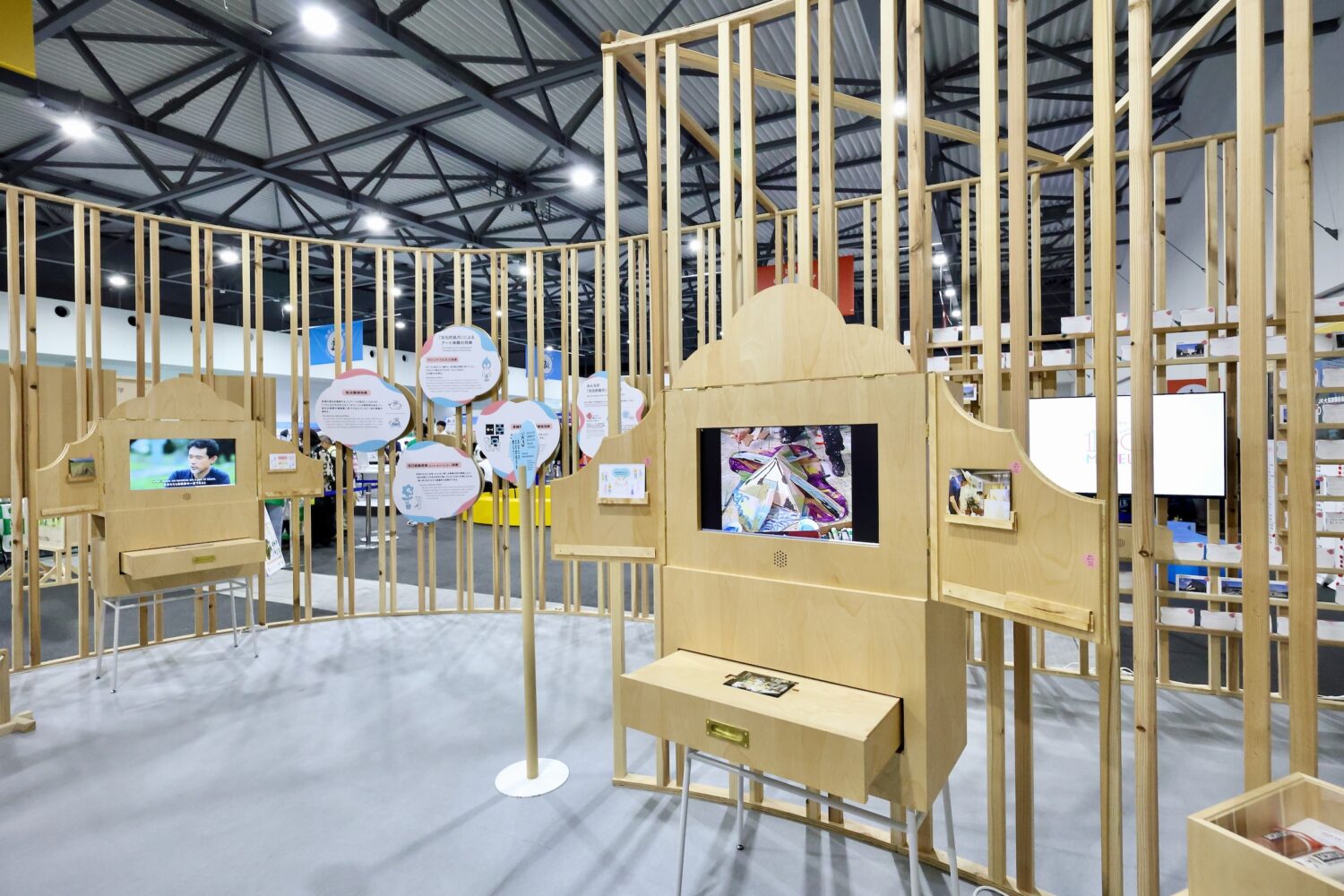
For this exhibit, we commissioned architect Teppei Fujiwara and his team to design the space, and the team at graf to create the display devices. The space appeared open from the outside, yet as you moved deeper inside, you could feel a growing sense of tranquility. By incorporating semi-open walls, we believe we created a place that felt open, yet as you stepped inside, your mind found peace.
Upon entering the space, visitors encountered three works of art and would pause, wondering what they were looking at. It’s not just about circulation; the exhibit drew people in through the presence of the artworks themselves. This approach, which prioritized the artwork experience in the design, was well-received. Visitors reported that walking through the venue naturally led them to enjoy the works while contemplating what cultural prescribing meant to them.
Editorial Team: The venue featured works by Taro Okamoto, Katsuhiko Hibino and Koichi Kurita. Though these artists might seem unrelated at first glance, they were a trio that somehow felt interconnected.
Inaniwa: I suppose the first images that come to mind when we hear the term “art” are Western paintings and sculptures. Perhaps these three pieces transcended that established framework of art with a certain lightness. You find yourself stopping, wondering, “Is this art?” and then you want to look and then linger.
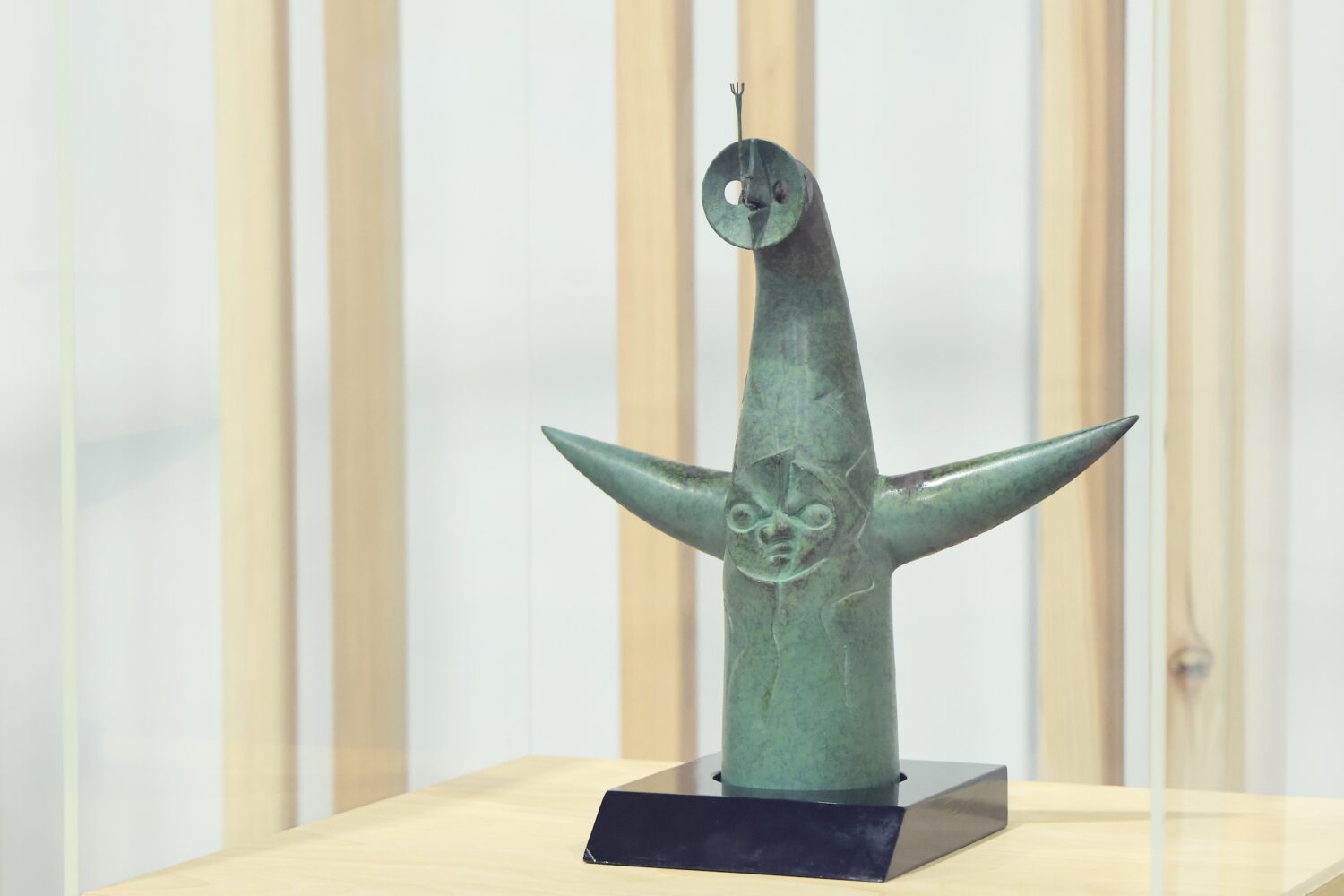
The three works first evoke familiar memories and images within each visitor. Taro Okamoto stated in an interview that at the time his “Tower of the Sun” was introduced at the 1970 Japan World Exposition, he was questioning whether humanity was moving in the right direction against the backdrop of Japan’s rapid modernization and the loss of certain human qualities.
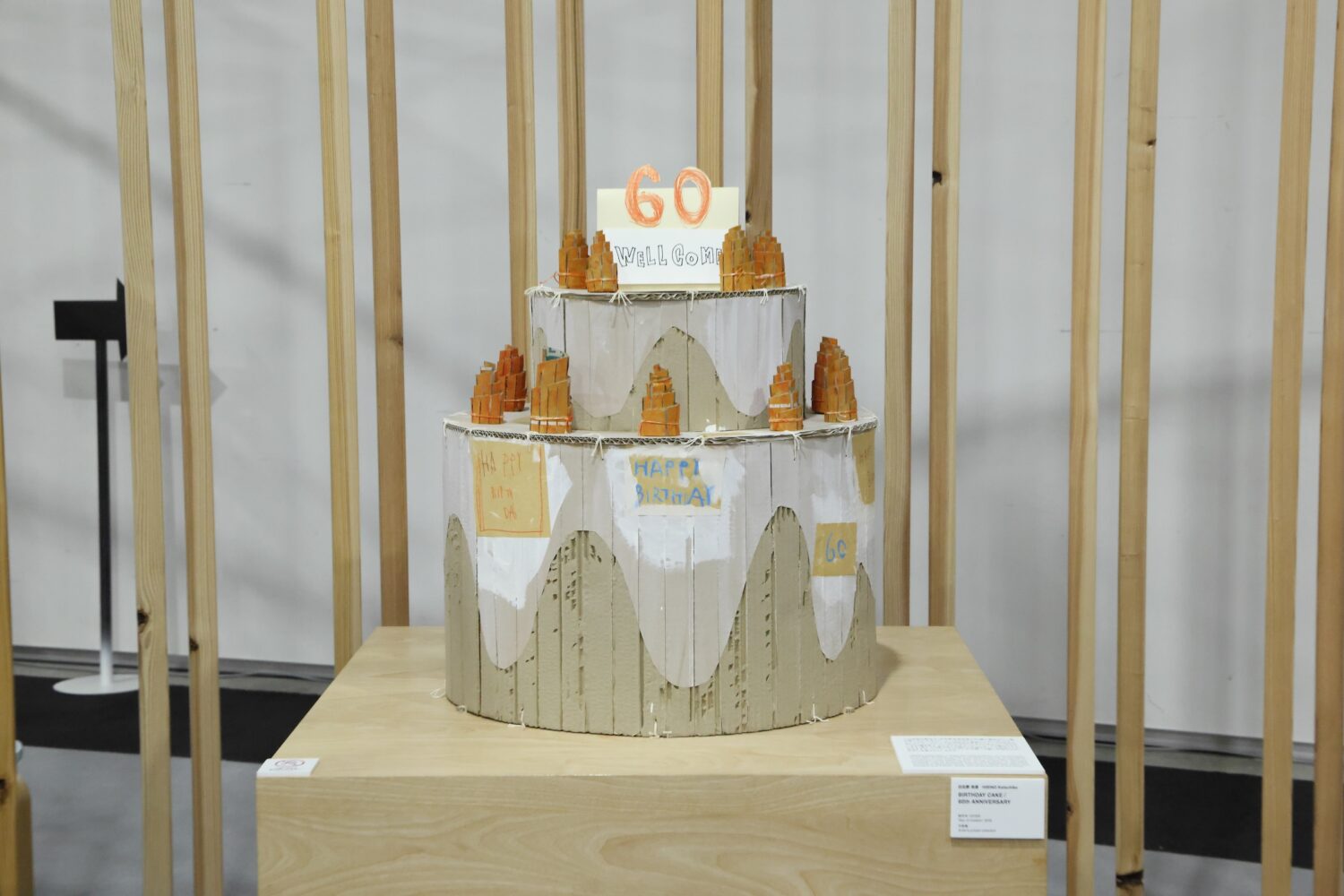
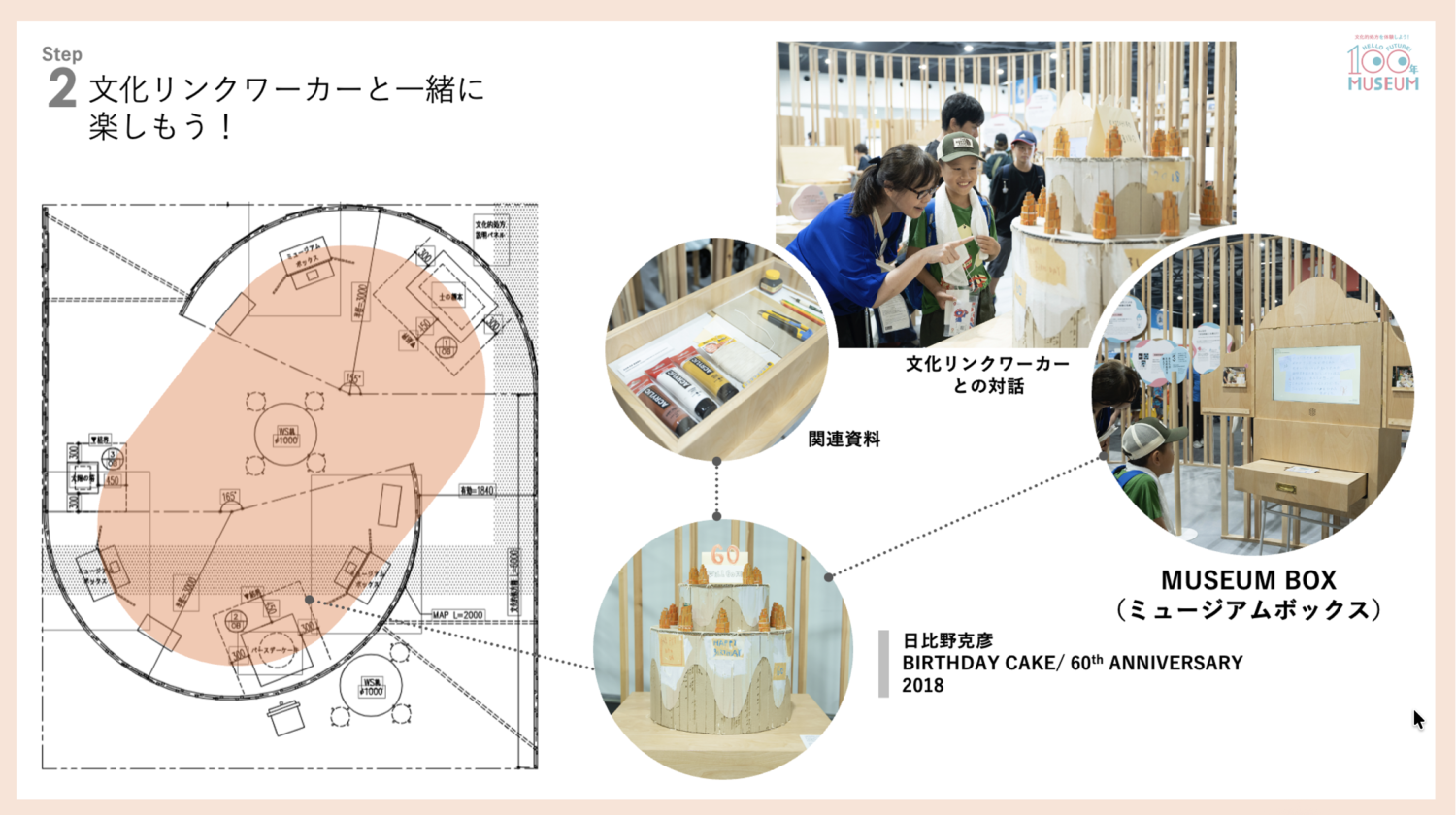
Katsuhiko Hibino’s BIRTHDAY CAKE uses everyday cardboard to evoke an image that is light yet filled with excitement. Birthday cakes are like monuments to life, iconic symbols that celebrate one’s very existence. The work is a giant cake made out of cardboard, which seems simple yet also feels like a long-cherished hope that lies deep within the heart. Viewers don’t just look at this work; when they see this cake, they mobilize all of their experiences and memories of eating something. I think the sensations that arise within the viewer are unexpected and resonate directly.
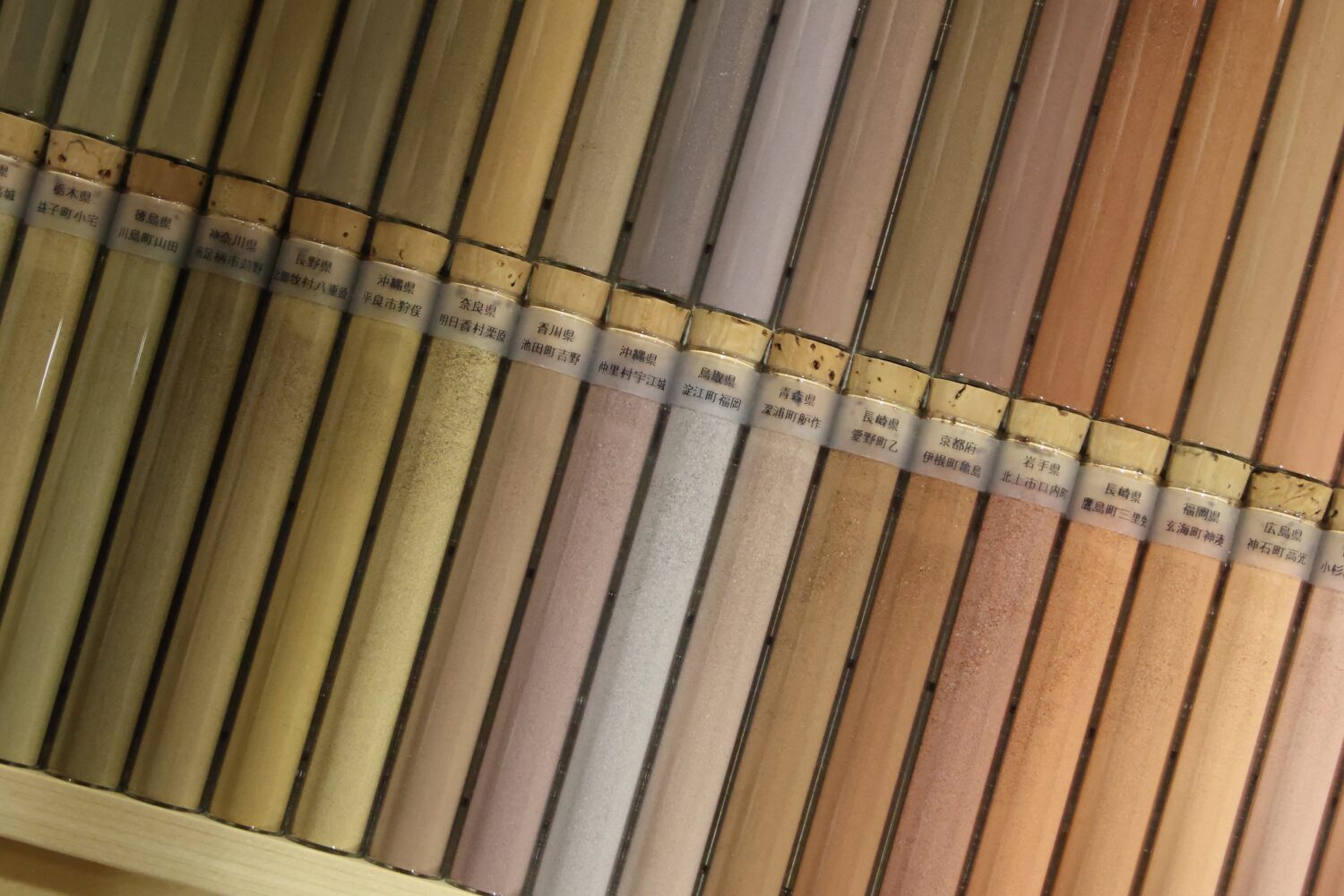
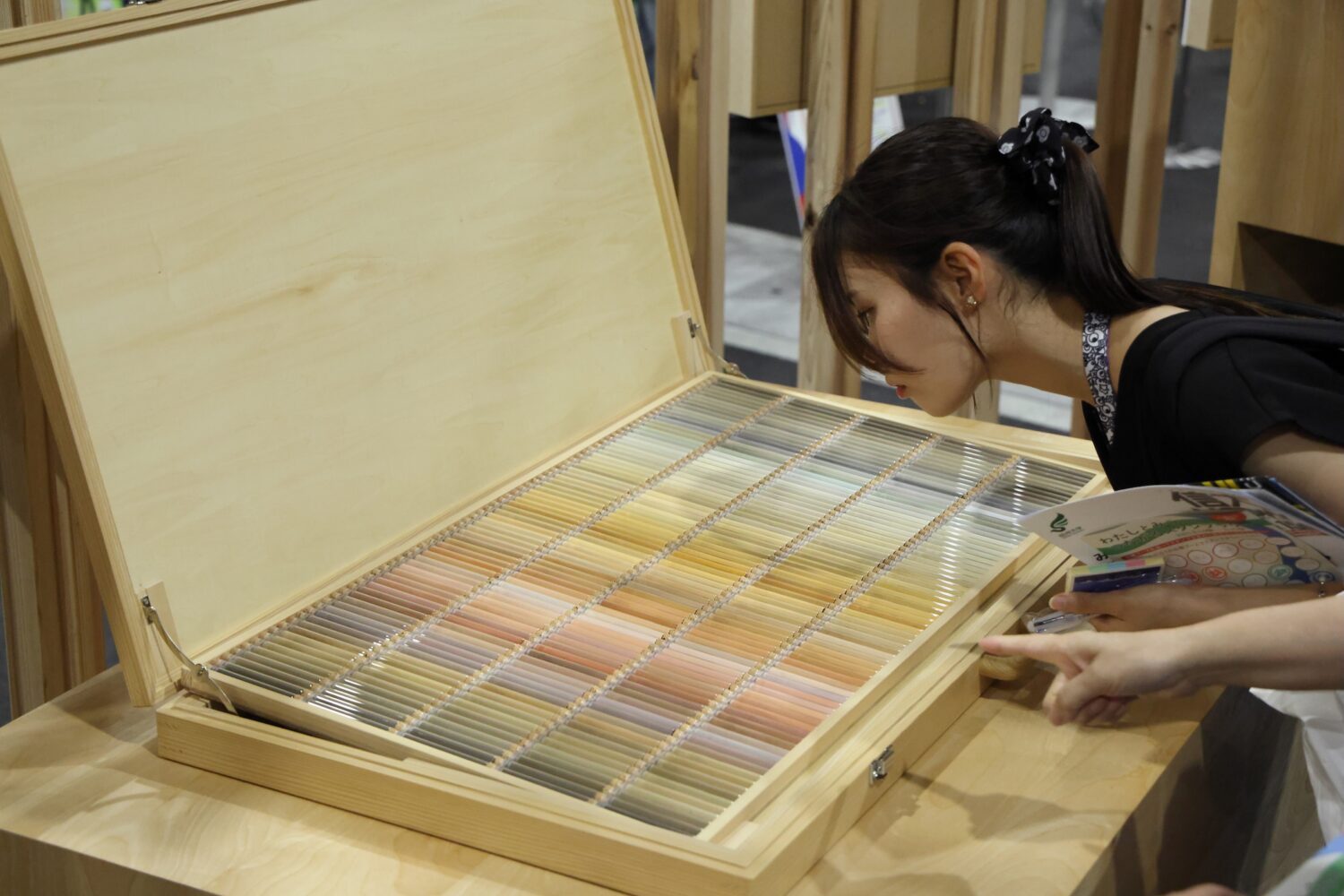
Koichi Kurita travels throughout Japan and the world, collecting soil and arranging it into artworks. “Is there really soil that is this pink, blue, or white?” Many people stopped in their tracks, surprised by the diversity and beauty of the soil colors. “This is soil?” For a moment, their thoughts froze and they became locked in, creating a moment for focused, close observation of the work. I think this time is incredibly important. A brief moment of immersion, where one becomes engrossed in the work, falling silent and speechless. This time spent traveling within the world of the artwork, detached from daily life and with a loosening perception of the passing of time, is likely one effect of cultural prescribing. It is said to release physical tension and cause the parasympathetic nervous system to become dominant.
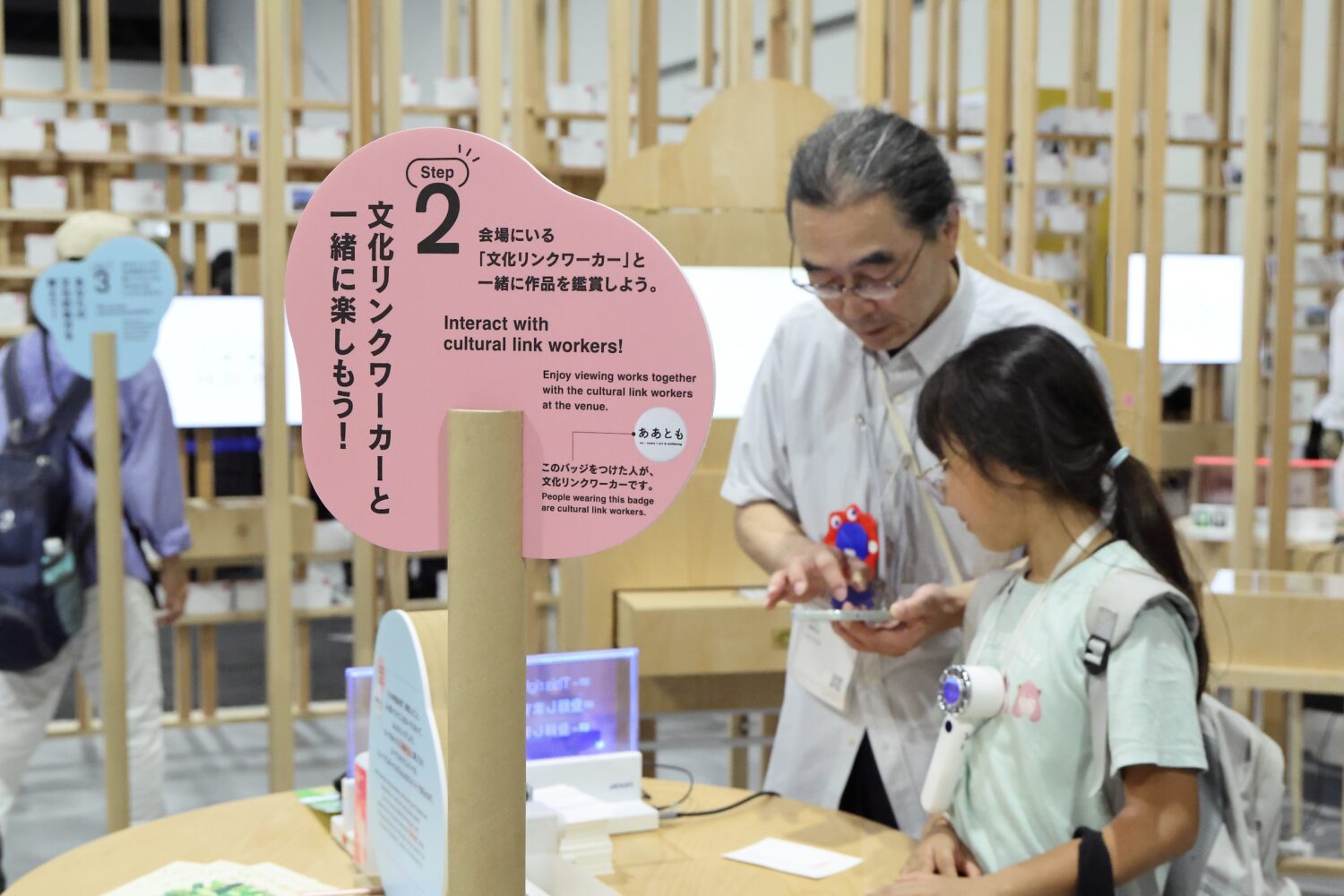
Editorial Team: The exhibit featured opportunities for visitors to talk with Cultural Link Workers who wore “aa-tomo” badges, or to write or draw their impressions on cards. It was refreshing to see so many people actively participating. There was also a system where the impressions written on cards could be scanned via smartphone and displayed on monitors, so that visitors’ impressions were actually part of the artwork.
Inaniwa: Rather than visitors simply viewing the works and finding them interesting, we incorporated a system for them to share their experience with others. This system involved scanning cards and displaying the results on monitors. We developed this system in collaboration with Professor Takashi Kiriyama’s laboratory at Tokyo University of the Arts. Your own emotions become part of the exhibition in real time.
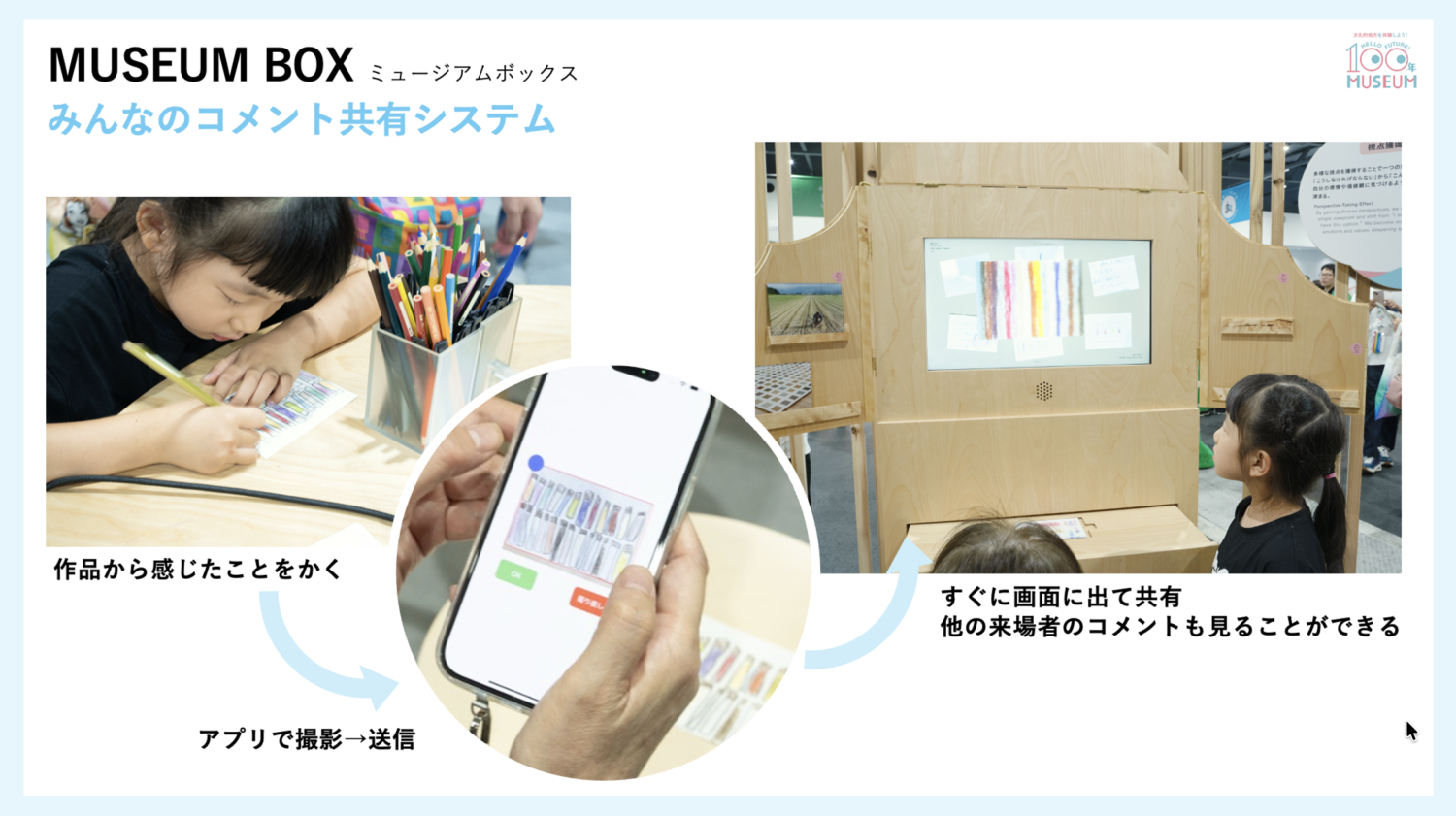
For many years, I’ve thought about the act of sharing one’s insights and feelings when appreciating art, and I’ve observed how people engage with it. The experience of viewing art with someone else and sharing insights can bring a different kind of fulfillment than viewing alone. One reason for this, I believe, lies in the act of “focusing our gaze on the same work.” It’s somewhat akin to “sharing a table and eating a meal together” – being in the same space as someone else, creating an experience together. I think that the “moment of gazing together with someone” is an act that provides some kind of important comfort for us humans. The brain activity that is triggered when seeing the same thing and feeling something—an “Aha!” moment—has a physical impact as well. Within this exhibit, “bubbles of time and space” created by different individuals popped up everywhere. In other words, this exhibit was also an attempt to visualize, as an exhibit, the act of “sharing” creative time with someone.
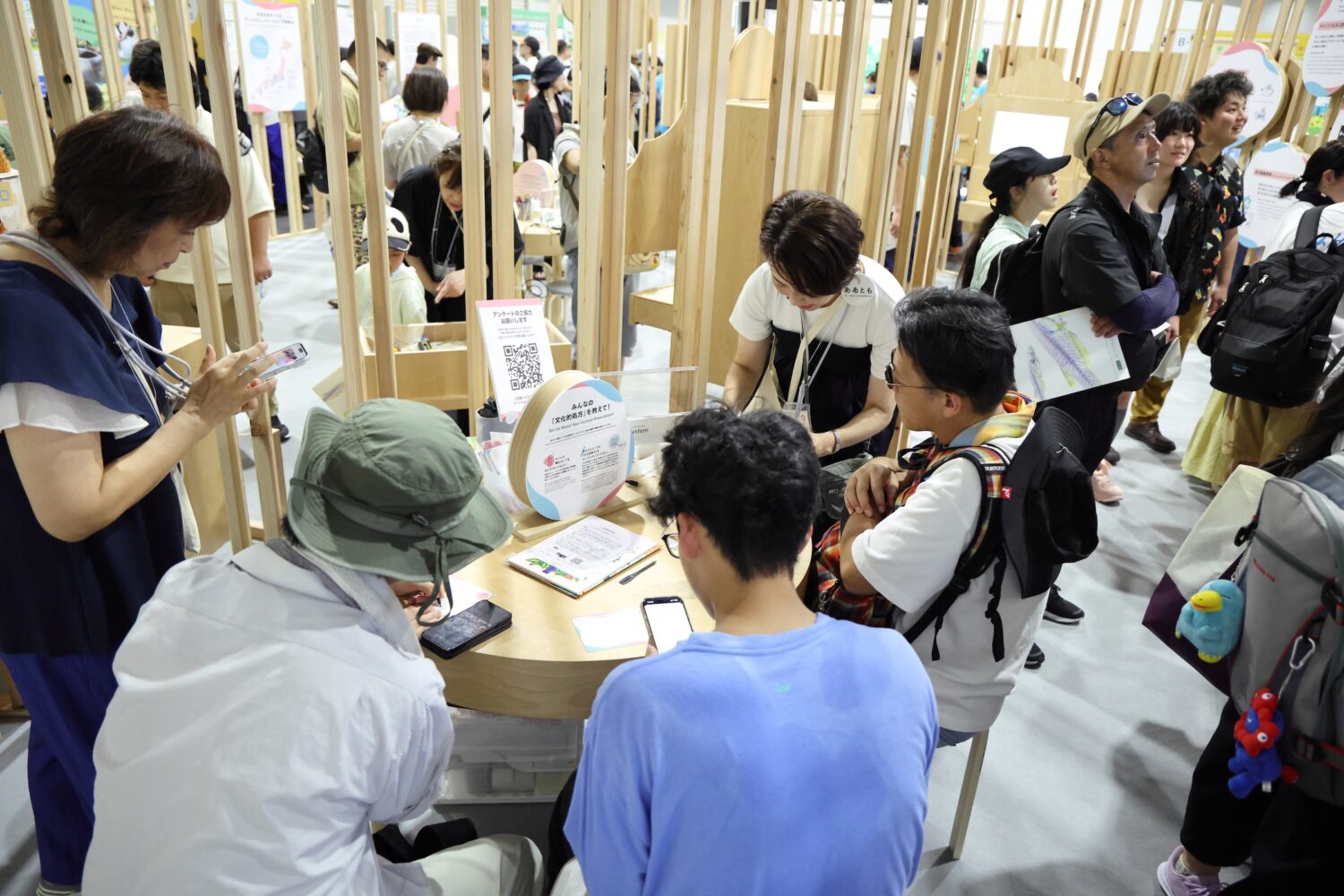
Editorial Team: Dialogue naturally emerges when people view the same artwork from the same perspective.
Inaniwa: That’s right. People come together to view the same work, reflect on it and then share their feelings. Scientific research shows that when people focus on something together, their brain waves synchronize. While this phenomenon doesn’t occur in online meetings, I read about studies indicating that in real-world settings, the patterns of change in people’s brain waves become similar. Considering my own experience of the difference in sensation between viewing art online and viewing it in person, it made perfect sense. Through an artwork, the artist’s perspective, the viewer’s perspective, and the perspectives of countless people who have enjoyed that work overlap across time. A “sharing of perspectives” occurs. I believe this sharing of perspectives actually underpins the connections between us as social beings.
Furthermore, we can view artworks as “gifts that transcend time.” For instance, when Katsuhiko Hibino created BIRTHDAY CAKE, he didn’t know or decide at that moment whom it would reach. Yet, this artwork, which was created with the belief that it would touch someone, was first viewed and received by one person, then, over time, viewed by others—passed along, as it were, through the act of viewing. I believe this “continuous passing” is the core of cultural prescribing. The drawings and words written on the comment cards I mentioned earlier may also become small gifts for someone in the future.
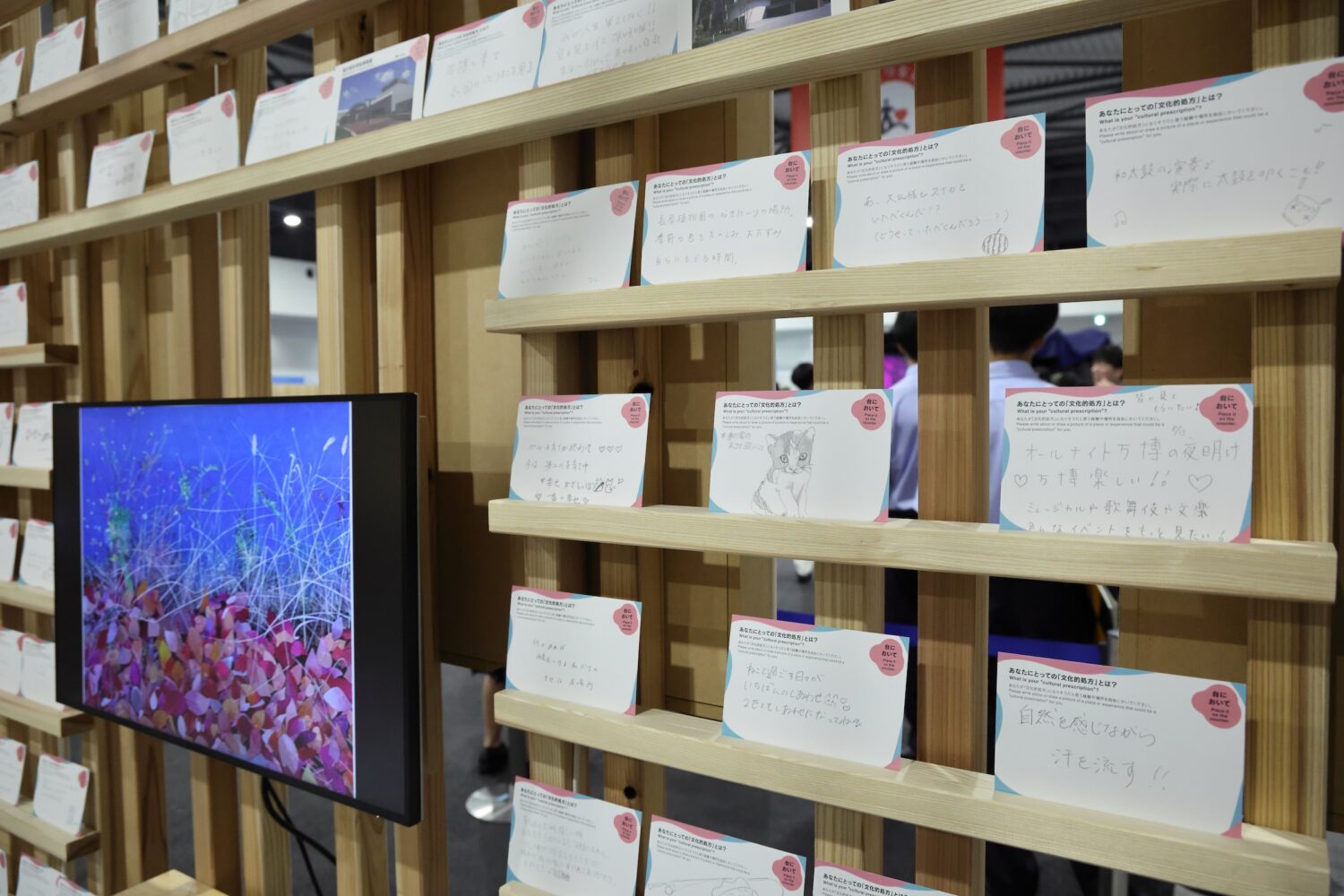
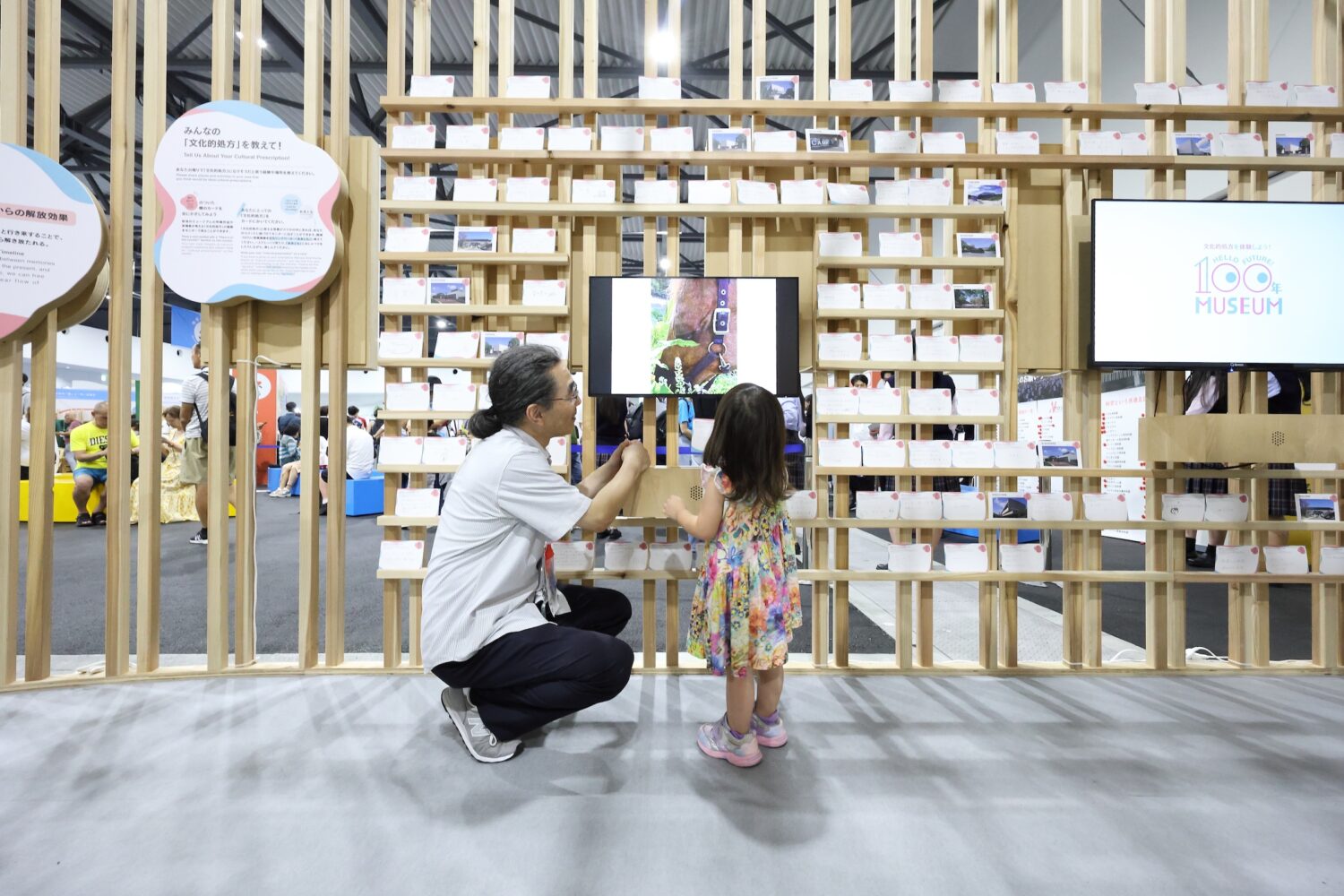
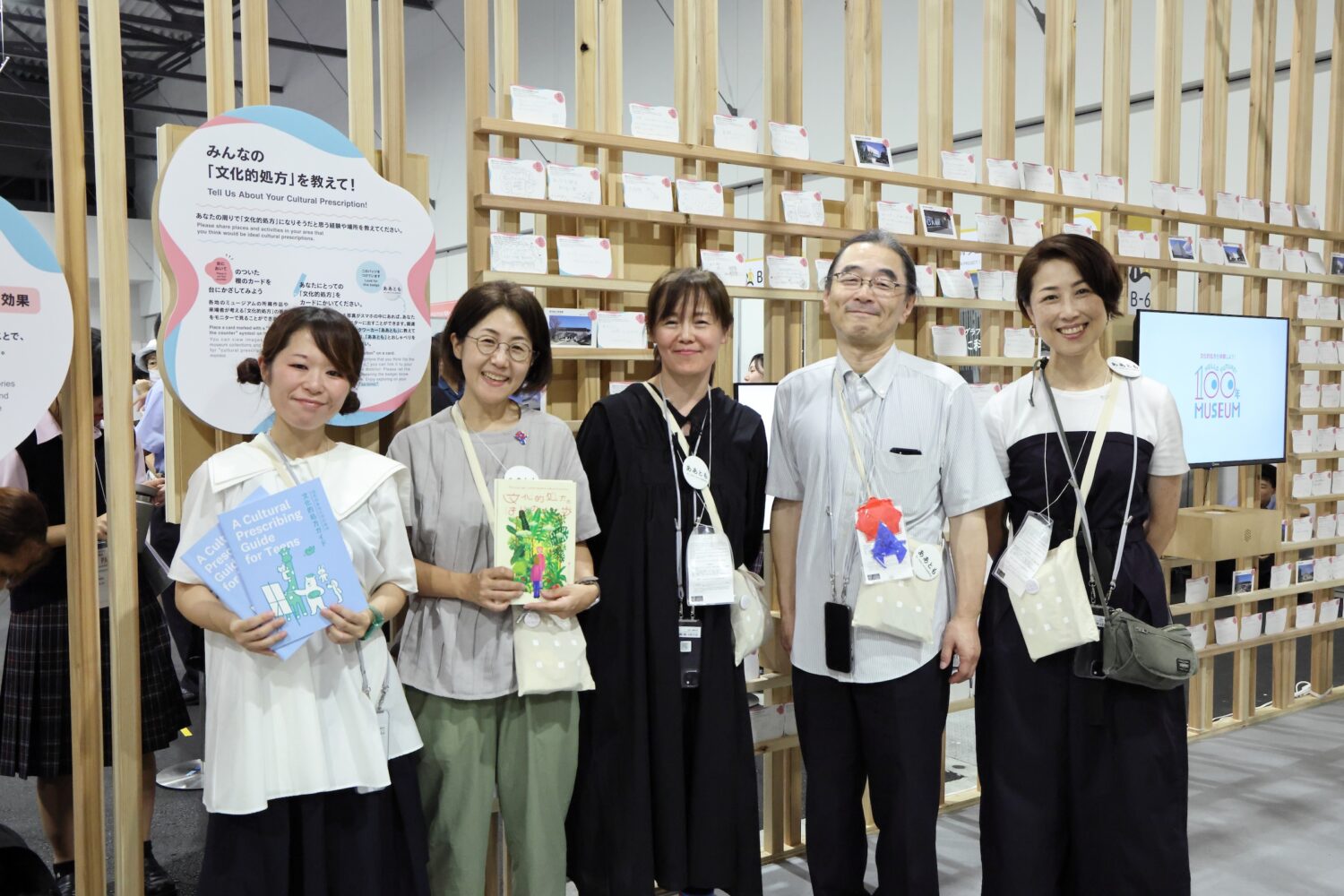
Near the exit, we set up a space called the Cultural Prescription Shelf, which resembled the racks where ema (Japanese wooden prayer plaques) are hung at shrines. In this space, visitors could write down their own cultural prescriptions on cards and place them on the shelf. During the exhibit, many messages lined the shelf. Reading everyone’s reflections, I was reminded once again of how art and culture have the power to touch people’s memories and emotions, bringing back recollections.
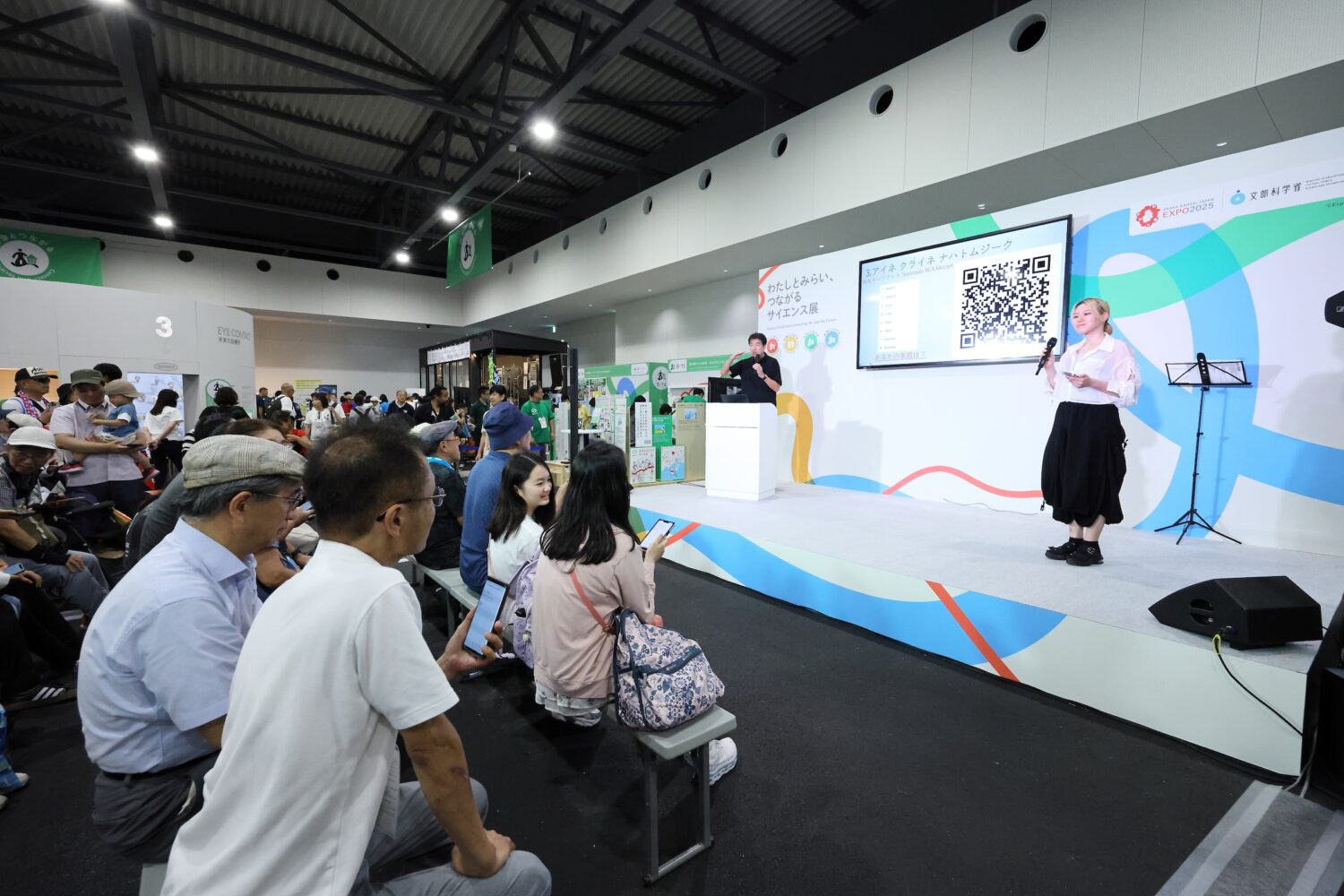
Attendance reached 70,455 visitors during the six-day exhibition at WASSE, and approximately 1,000 to 1,500 visitors viewed our exhibit daily. We were greatly surprised to learn from visitor surveys that most respondents felt it would be beneficial if their own town had a system for cultural prescribing. Art is something that stays in one’s heart and then passes on to someone else. We believe this chain reaction itself embodies the concept of cultural prescribing.
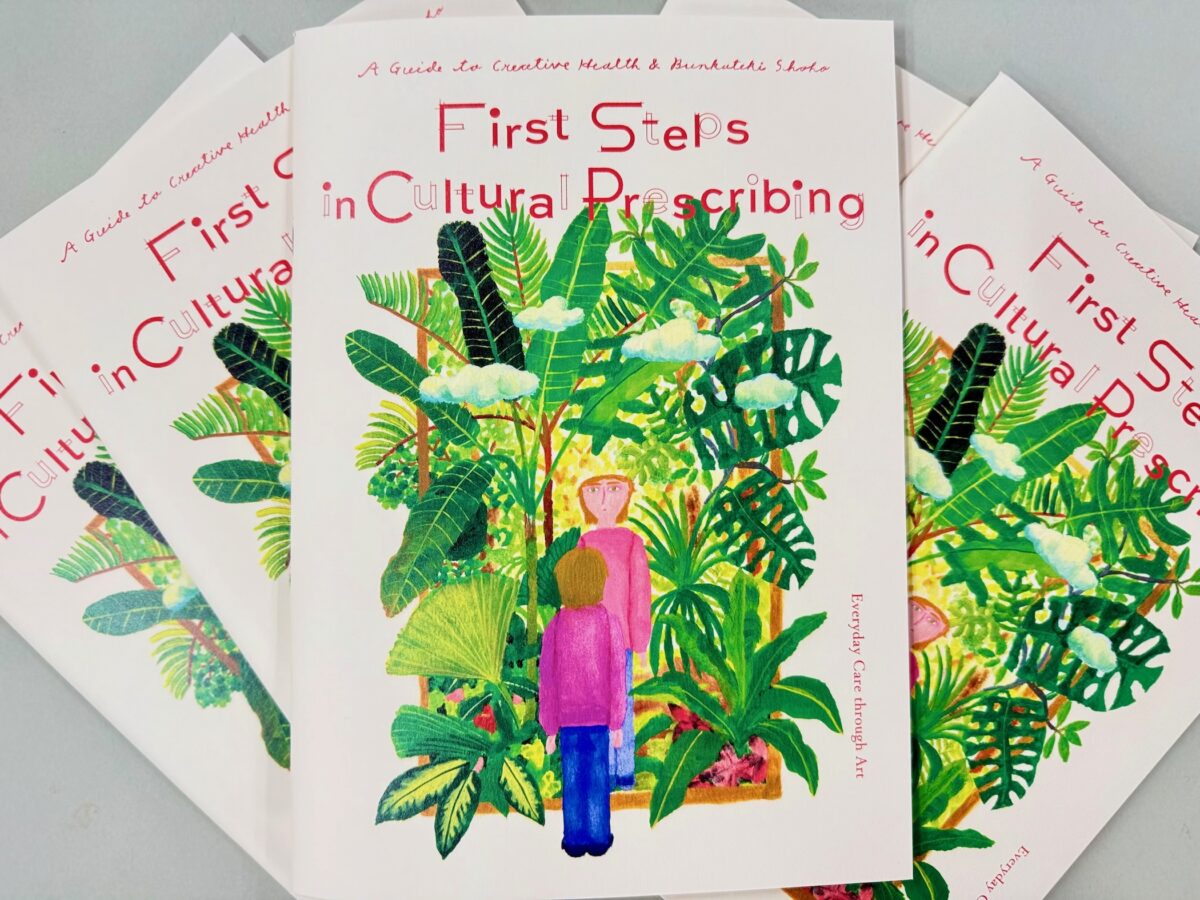
“First Steps in Cultural Prescribing”
https://aatomo.jp/en/guidebook/
“A Cultural Prescribing Guide for Teens”
https://aatomo.jp/culturalprescribing_teens/
“Discover Cultural Prescribing! Hello Future! 100-Year Museum” Exhibit at the “Science: Connecting You to the Future ~You Are a Creator of Tomorrow” Exhibition
| Dates | August 14–19, 2025 |
| Venue | WASSE EXPO Exhibition Center, EXPO 2025 Osaka/Kansai (Yumeshima) |
| Sponsor | Ministry of Education, Culture, Sports, Science and Technology (MEXT) |
| Exhibit Organizers | Tokyo University of the Arts, National Center for Art Research, National Museum of Art, Japan |
| Spatial Design | Fujiwara Teppei Architects Lab + GANEMAR |
| Graphic Design | graf |
| “Tower of the Sun” Bronze Statue & Expo ’70 Video Cooperation | NOMURA Co., Ltd. |
 KEYWORD for Cultural Prescribing! "Creative Health" What does it mean?
 KEYWORD for Cultural Prescribing! "Cultural Prescribing and Social Prescribing" What do they mean?