Dulwich Picture Gallery. Photo by Luca Piffaretti.
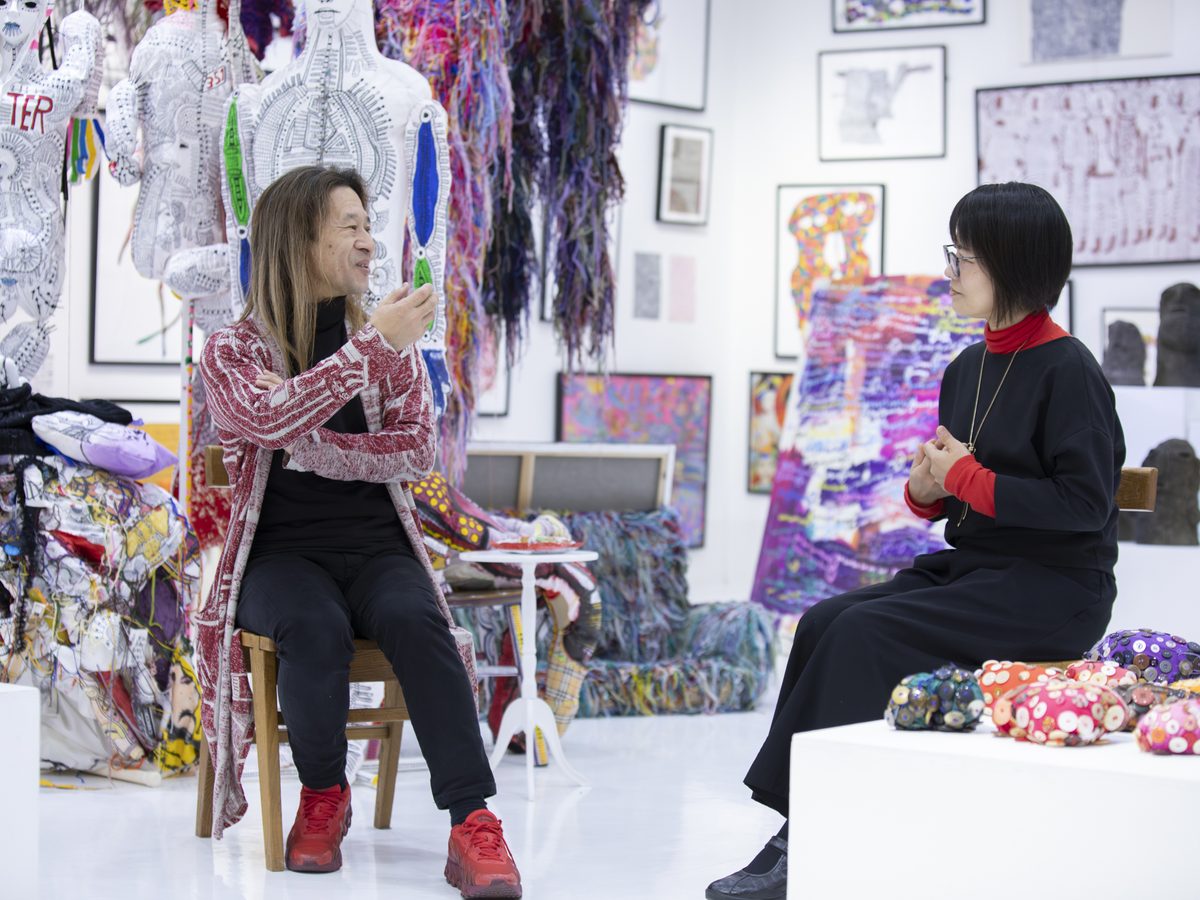
Located in south London, Dulwich Picture Gallery was the first purpose-built public art gallery in the world. Opened in 1817, it houses an outstanding collection of European paintings, including masterpieces by Rembrandt. More than 200 years later, the Gallery is also committed to supporting health and wellbeing through encounters with art, developing pioneering programmes rooted in its local community. Jane Findlay, who has led this work at the Gallery, spent two months in Japan visiting places across the country that support health and wellbeing. Community-led cultural link workers, art in hospitals, and the idea of tokimeki: Inaniwa Sawako of the National Center for Art Research, Japan, spoke with Findlay about the insights she gained from her travels across Japan.
Visiting a Range of Creative Health Initiatives
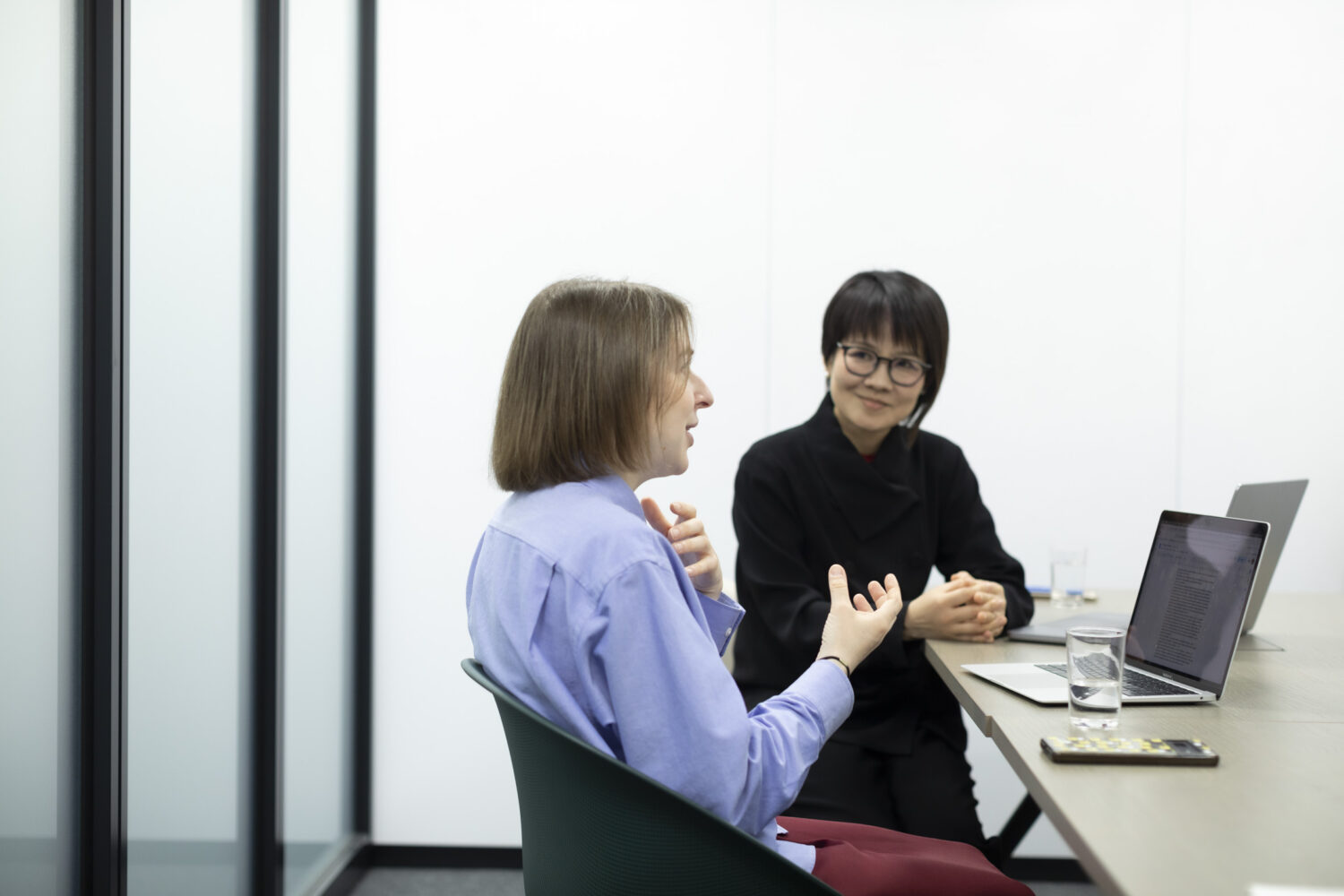
Inaniwa: Jane, during this visit you have spent around two months in Japan, exploring a wide range of creative health initiatives across the country. Remarkably, this is your tenth visit to Japan. You know Japan well and have been able to consider the practices you encountered in light of the different social and cultural contexts of the two countries. Today, I would like to hear mainly about your experiences from a comparative perspective on creative health in Japan and the UK. But first, could you tell us a little about yourself?
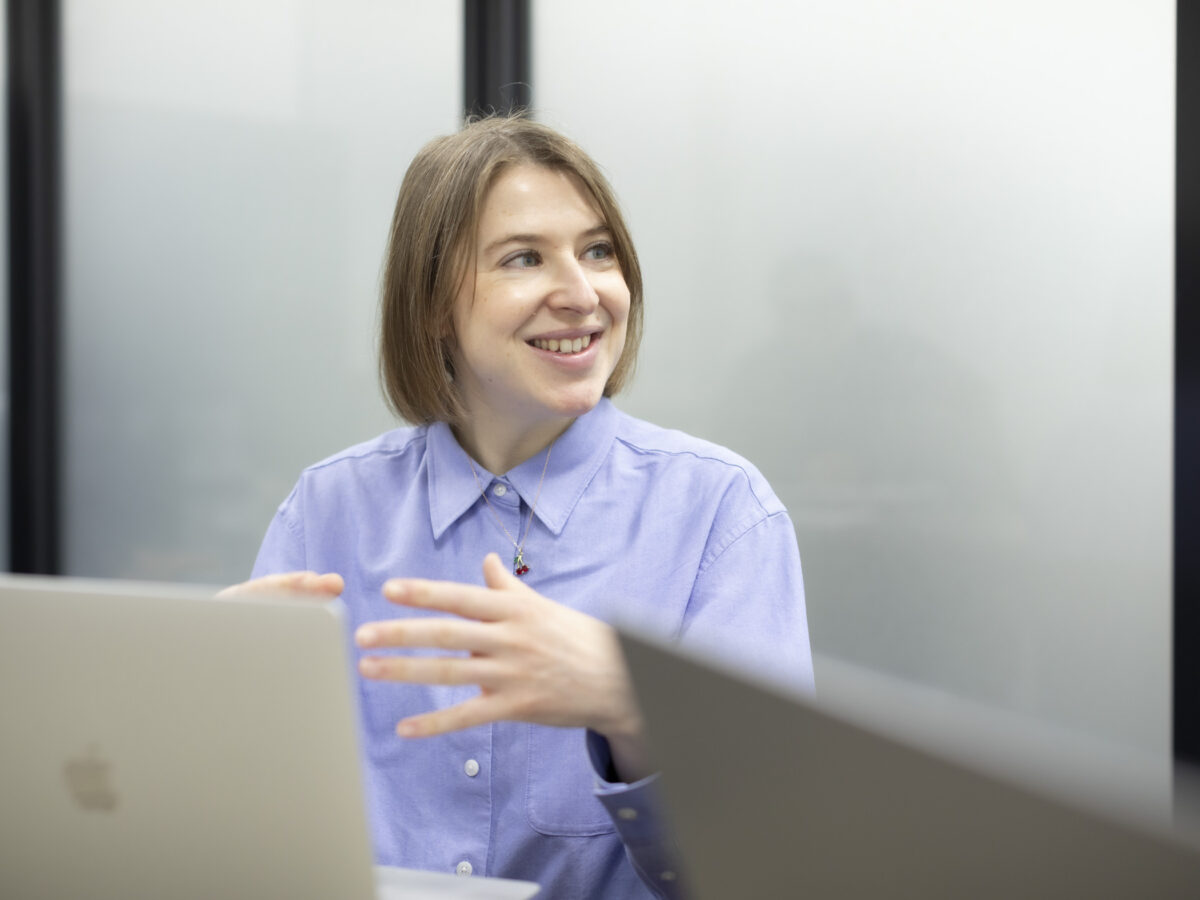
Findlay: For the past nine years, I have been Head of Programme and Engagement at Dulwich Picture Gallery in London. My role ranges from curating exhibitions featuring contemporary artists to developing creative programmes that support health and wellbeing. Our health and wellbeing work spans the spectrum from general wellbeing programmes for broad public audiences to targeted work in clinical settings. I firmly believe that art can change how we feel and function, fostering wellbeing and making a profound difference in our lives.
Inaniwa: What kinds of places did you visit in Japan as part of your research into creative health?
Findlay: So far, I have visited 27 places. The purpose of my research is to speak with healthcare and social care professionals, as well as members of the public, to understand how creative health is conceptualised and communicated, and how it is woven into everyday life. I have visited sites engaged in “museum bathing”, cultural prescribing and hospital-based initiatives, looking at how art is discussed in practice, who benefits from it, and how barriers to accessing healthcare are being removed. After returning to the UK, I plan to share my experiences and what I have learned in Japan more widely through reports and articles.
With People, Rather Than for Them: What Japan Taught Me
Inaniwa: Jane, I understand that you oversee a broad range of curatorial work at the Gallery, and I am struck by the way you bring together curation, engagement and learning in an integrated approach.
Findlay: They all have something in common: they all centre audiences in the work. They simply approach audiences in slightly different ways. Bringing these areas together, rather than running them as parallel tracks, allows us to take a more holistic view. It also enables ideas to emerge from different teams.
Inaniwa: In Japan, individual museums tend to have only a small number of curatorial posts, so there are still relatively few cases in which specialist staff are dedicated exclusively to learning or engagement. Nevertheless, there appears to be a growing recognition that curatorial responsibilities―including learning and engagement―would ideally be divided among specialists. By contrast, it is interesting to see some museums in the UK moving away from organising roles according to specialism and towards a more holistic approach over the past decade or so. At Dulwich Picture Gallery, wellbeing is understood as a principle underpinning all your activities. Is this way of thinking becoming more widespread across the UK?
Findlay: I think it is becoming more widespread. At Dulwich, wellbeing is the golden thread that runs through our programming. That said, being a small organisation which is locally embedded is partly what has given us the agility to say in a very intentional way, “This is an area we want to focus on.” I think many museums across the UK are embedding greater social value in their work, in one way or another, within their own context.
Inaniwa: It is certainly easier for small and medium-sized museums to work closely with their local communities. I would like to continue our conversation by comparing your experiences in the UK with some of the examples you encountered in Japan.
Findlay: In Japan’s creative health initiatives, I was struck by how often the emphasis was on doing things with people rather than for them. Dozen Hospital, a community hospital in Taito, Tokyo, and Minokamo Culture Forest/Minokamo City Museum in Gifu Prefecture were both rooted in relatively small communities, offering places where each person could be themselves and experience a sense of emotional connection.
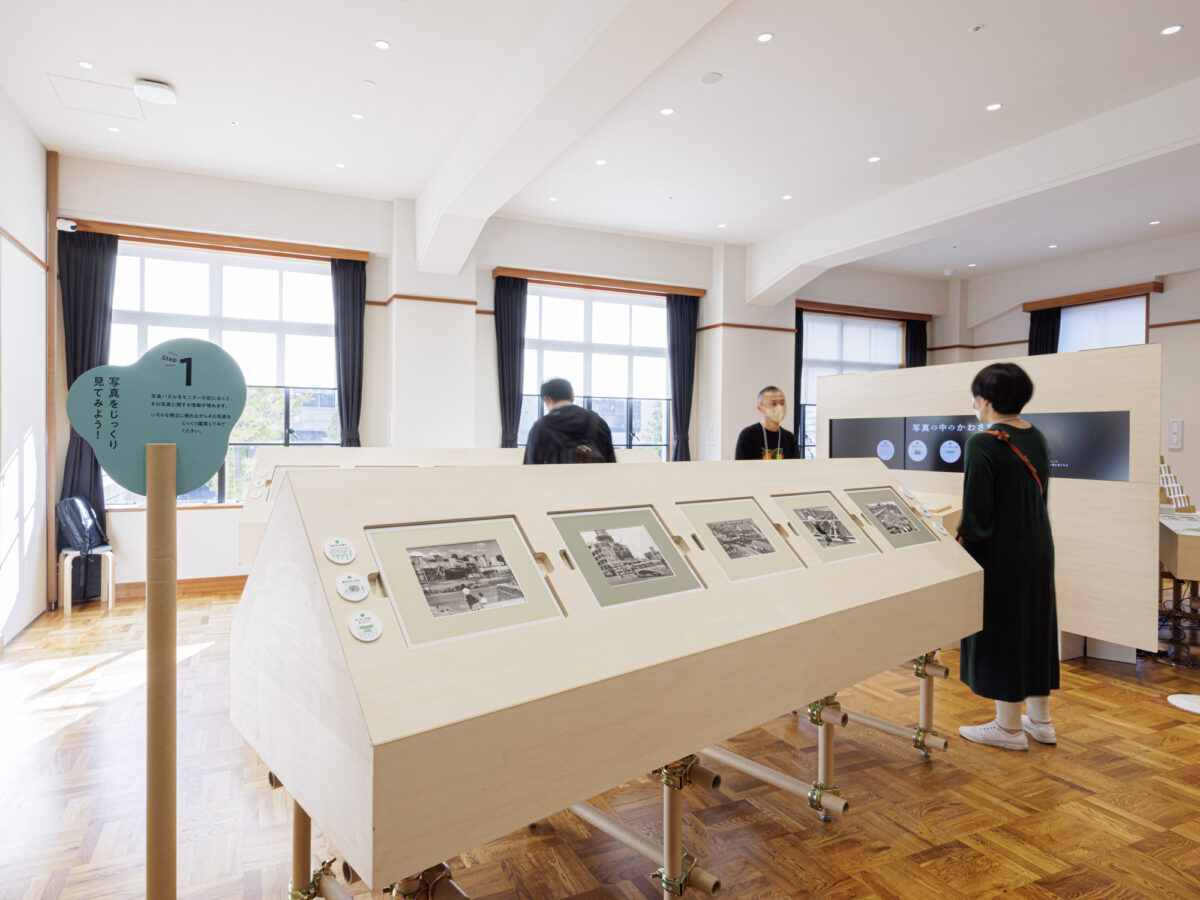
Minokamo Culture Forest stood out in particular as a museum focused on its local community. What I found especially interesting was the way local bus stops served as starting points for encounters with art and creativity in the surrounding area. Discovering culture in the places where people lived fostered a sense of pride in their community. Walking programmes developed in collaboration with local health initiatives also connected public health with community-based practice.
At the Shimonoseki City Archaeological Museum in Yamaguchi Prefecture, I learned that the museum’s contribution to wellbeing―centred on relaxation and resilience―had led both the Board of Education and the municipal administration to recognise its significance to young people. From what I was seeing, I felt that the role of the museum itself was beginning to change. Its value as a cultural hub was also becoming more widely recognised.
Inaniwa: You visited a variety of places in Kyushu as well, including Kumamoto, didn’t you? In 2025, the Cultural Prescribing Promotion Office was established within the Kumamoto City Art and Culture Promotion Foundation, which manages the Contemporary Art Museum Kumamoto. The Foundation, Kumamoto City, Kumamoto University and Tokyo University of the Arts are now working together to research and develop the “Kumamoto Model of Cultural Prescribing”. The initiative is still in its early stages, but it will be exciting to see how it develops. Of all the activities you encountered in Japan, where did you see the greatest potential, and what differences made the strongest impression on you?
Findlay: The most striking difference was the breadth of people involved in activities related to social prescribing and creative health in Japan. In the UK, link workers tend to be based within the healthcare system. In Japan, however, I encountered municipal government staff taking on link worker-like roles, as well as trained members of local communities playing similar parts. These community-led approaches struck me as potentially more sustainable, and I think there is much that the UK could learn from them. These approaches create a flatter relationship, shifting the dynamic away from “patient and professional” towards different people working together. They made me think differently about how we could work with our volunteers and with the different people who interact with us as visitors and members of our community.
Suizenji Jojuen Garden in Kumamoto, where people spend time in their own ways amid nature and culture. Photo by Jane Findlay.
Inaniwa: You previously told me about “befrienders” in London, who play a role similar to that of link workers.
Findlay: The befrienders we work with are volunteers connected to health and care services who support people in visiting cultural venues. Their work also has a preventive dimension, helping to make culture and art accessible to anyone, rather than limiting participation to people with a particular health condition. At our museum, befrienders currently have a particular focus on dementia, but I would also like to extend opportunities to engage with art to people who live alone and experience loneliness, or who have few opportunities to talk with others. If the museum’s wider volunteer community can build stronger connections locally, roles similar to these could extend beyond the healthcare system. That was one of the things I took away from the examples I saw in Japan.
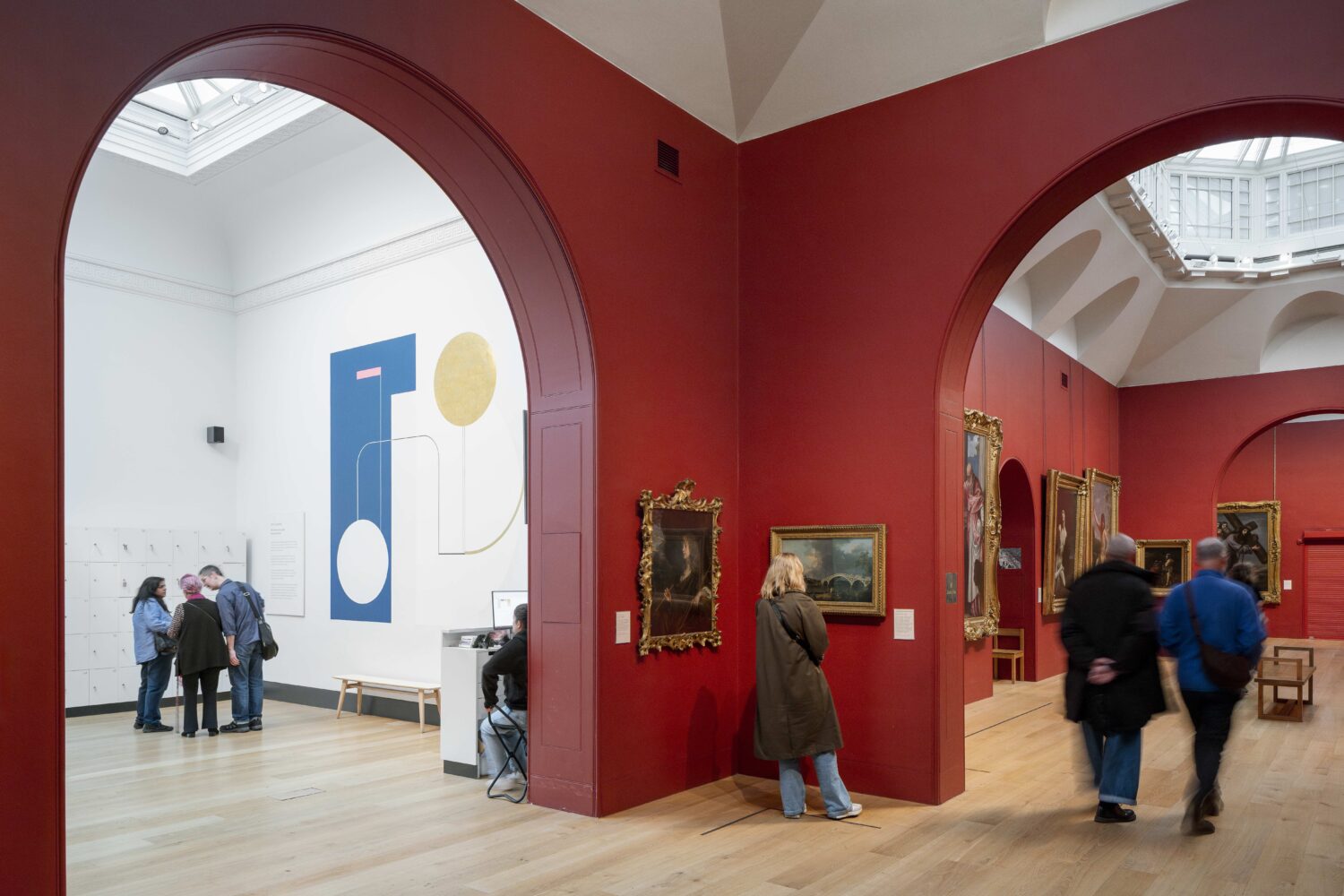
The galleries at Dulwich Picture Gallery, with light streaming in through the skylights. Photo by Luca Piffaretti.
Inaniwa: As we work to put cultural prescribing into practice in local communities in Japan, I believe it is important to involve a diverse range of citizens, not only people with backgrounds in health and social care. What capacities, then, do citizens need in order to create such spaces of connection? One of the most important is the ability to listen. For example, the Art Communicators you met in Kawasaki and Tokyo take part in courses that focus on listening skills. Listening to someone with deep attention is very similar to looking carefully at a work of art and directing our attention towards it. I believe that the capacity to closely perceive what is before us, cultivated through engaging with art, can also strengthen our ability to listen to others. Viewing art and listening to another person are both acts of paying careful attention to the person or work before us, and both are connected to care. This capacity is one of the defining qualities of Art Communicators.
A Hospital Where One Anonymous Gift Inspires Another
Findlay: In the context of wellbeing, what struck me in Japan was the effort to break down barriers between doctors and patients, enabling them to communicate person to person, human to human, beyond their respective roles. I felt this particularly strongly at the Shikoku Medical Center for Children and Adults in Zentsuji, Kagawa Prefecture. The hospital has its own hospital art director, whose work centres on communication and on making the hospital a better place for everyone who spends time there.
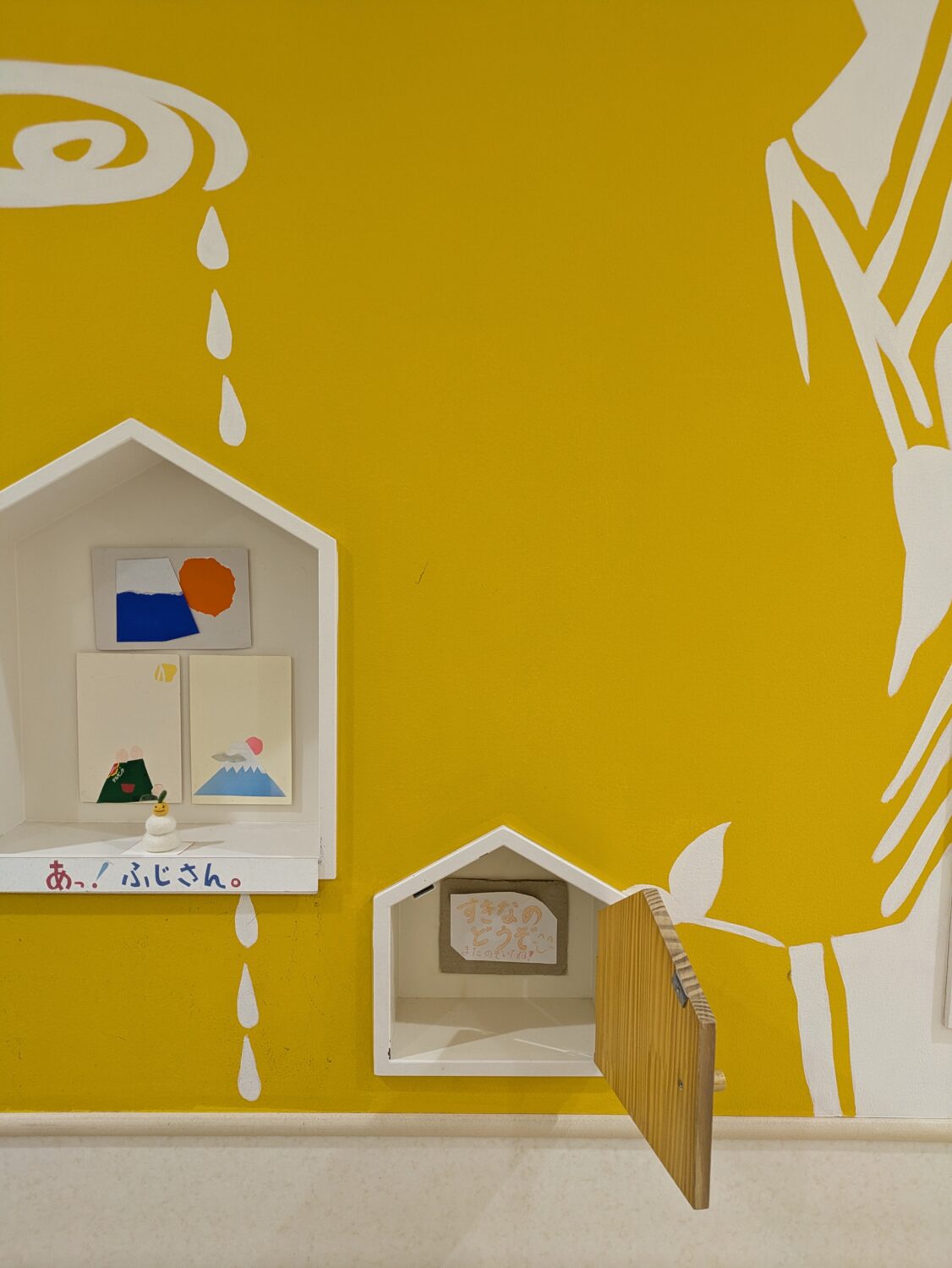
There is also a system that allows anonymous gifts to circulate among doctors, hospital staff and patients. When people are admitted to hospital, they can easily find themselves solely on the receiving end of care and services. Throughout the hospital, however, there are small boxes where anyone can anonymously leave a gift for someone else, allowing anyone to take part. I felt this was an example of art functioning in a genuinely meaningful way―not simply as beautiful pictures on the walls, but as a way of generating communication and connection.
Wall-mounted boxes at the Shikoku Medical Center for Children and Adults. Photo by Jane Findlay.
Inaniwa: The Shikoku Medical Center for Children and Adults is a wonderful example of creating a space where one gift gives rise to another, allowing people’s energy to circulate. It is not a one-way relationship in which one person gives and another receives.
Findlay: One lesson I can take from this as a museum professional is that museums must exist for people. Because museums are institutions that display works of art, they can easily become overly focused on objects, adopting an attitude along the lines of, “Please enjoy the works.” But even a brief visit can be meaningful if something significant happens during it. A few moments in a museum may be just as meaningful as spending a long time looking carefully at an exhibition.
I think it is important that we do not become too focused on the content we provide, but also consider the environment we provide, the welcome we offer and the way we make people feel. I would like museums to become a more informal, calm and gentle presence in people’s lives.
Starting with People’s Interests, Not “Health”
Inaniwa: Although the same word, “prescribing”, is used in both cases, it carries a very different meaning in conventional healthcare and in social prescribing. In the UK, social prescribing is understood as a “non-medical intervention” situated within the healthcare system. Link workers and others who facilitate connections talk with individuals and help them build connections with wider society. I believe this has to do with respecting each person’s inherent dignity. At the same time, this raises the question of whether relationships between people can simply be “prescribed”.
Human relationships are, by their very nature, profoundly organic. The idea that even a person’s connections with others can be “prescribed” by a doctor to a “patient” risks defining that person solely as someone in need of support. In the approach to cultural prescribing that we are developing from the cultural sector, we understand “prescribing” as cultivating, through cultural activities, the places and environments in which more organic human connections can emerge. I believe it is vitally important to consider how people can be themselves within their communities and how their relationships with those around them can develop organically, without the process becoming overly systematised.
Findlay: Yes. The word “dignity” has come up repeatedly in the conversations I have had during this trip, and I think it is a very important word when we consider what it means and feels like to be well. If people can support one another within their communities and connect to what is already there, rather than having someone tell them where to go, it can become more meaningful and sustainable. Ultimately, it is about enabling each person to recognise their own worth. At present, arts and culture are among the areas receiving fewer referrals from link workers in the UK, and cultural prescriptions remain relatively uncommon. At a time when I feel we need a different approach, the examples I encountered in Japan were extremely valuable, and I learned a great deal from meeting and exchanging ideas with the people doing this work.
Inaniwa: In Japan, too, some people are initially reluctant simply because, when they hear the words “art” or “culture”, they think, “That is not really for me.” There is also a risk of stigma when someone receives support through the healthcare system as a person who “needs social connection”. I understand that one of the things you wanted to explore was how Japan builds bridges between people and art and culture. How did you feel after seeing the examples here?
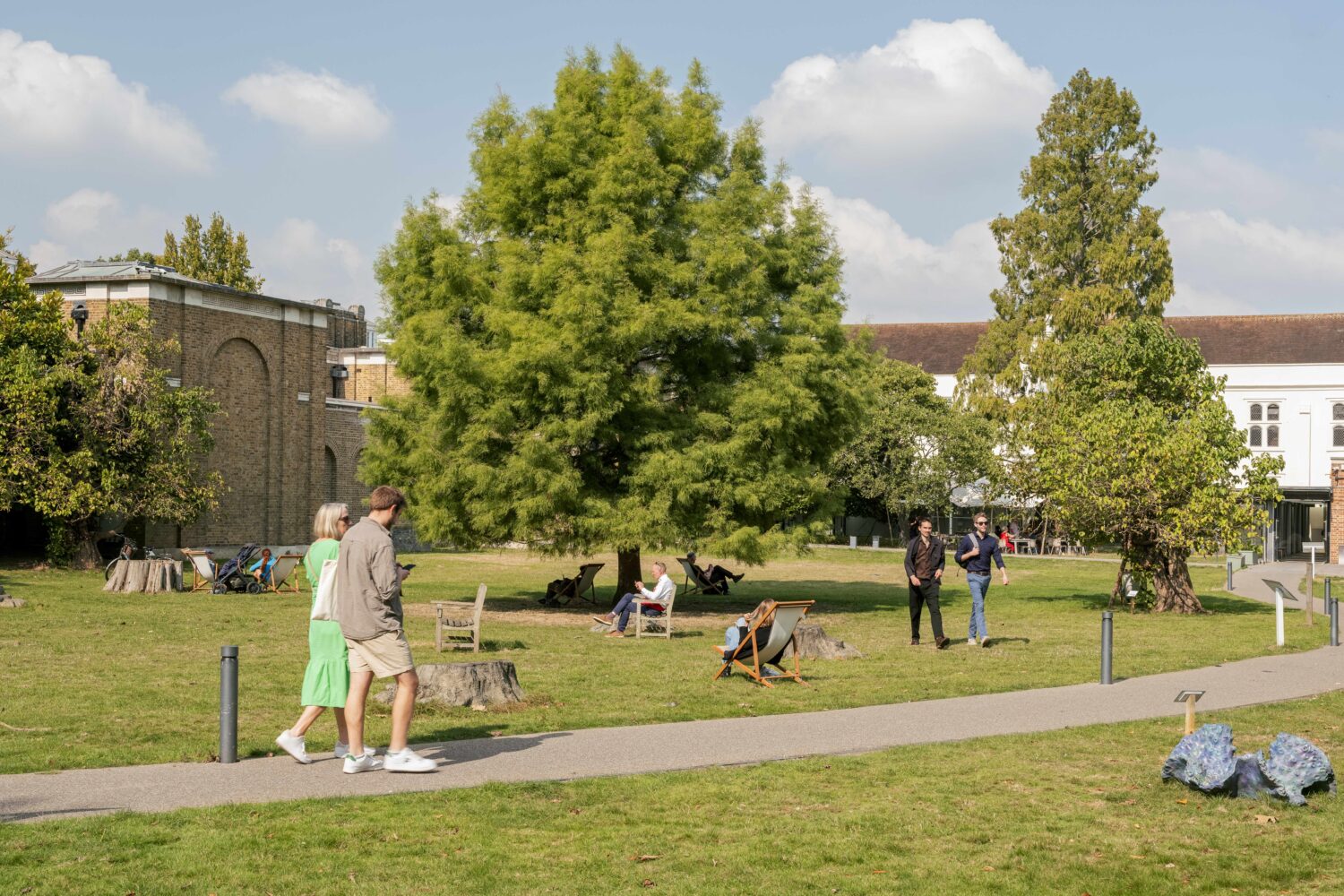
Findlay: What I found interesting in Japan was how often things were led by people’s interests. Art and culture are all around us, and people engage with them in their own ways. Starting with people’s interests can be a way of connecting them to different things, whether or not those connections lead to a museum. When I asked myself again what museums could do, I wanted to think about approaches that a wide range of people could enjoy and find meaningful. Could there be ways of engaging with cultural venues other than going to see an exhibition or taking part in a learning activity? At our Gallery, for example, we have a garden, so we are thinking about how we might use it and how it might change the everyday interactions that take place there.
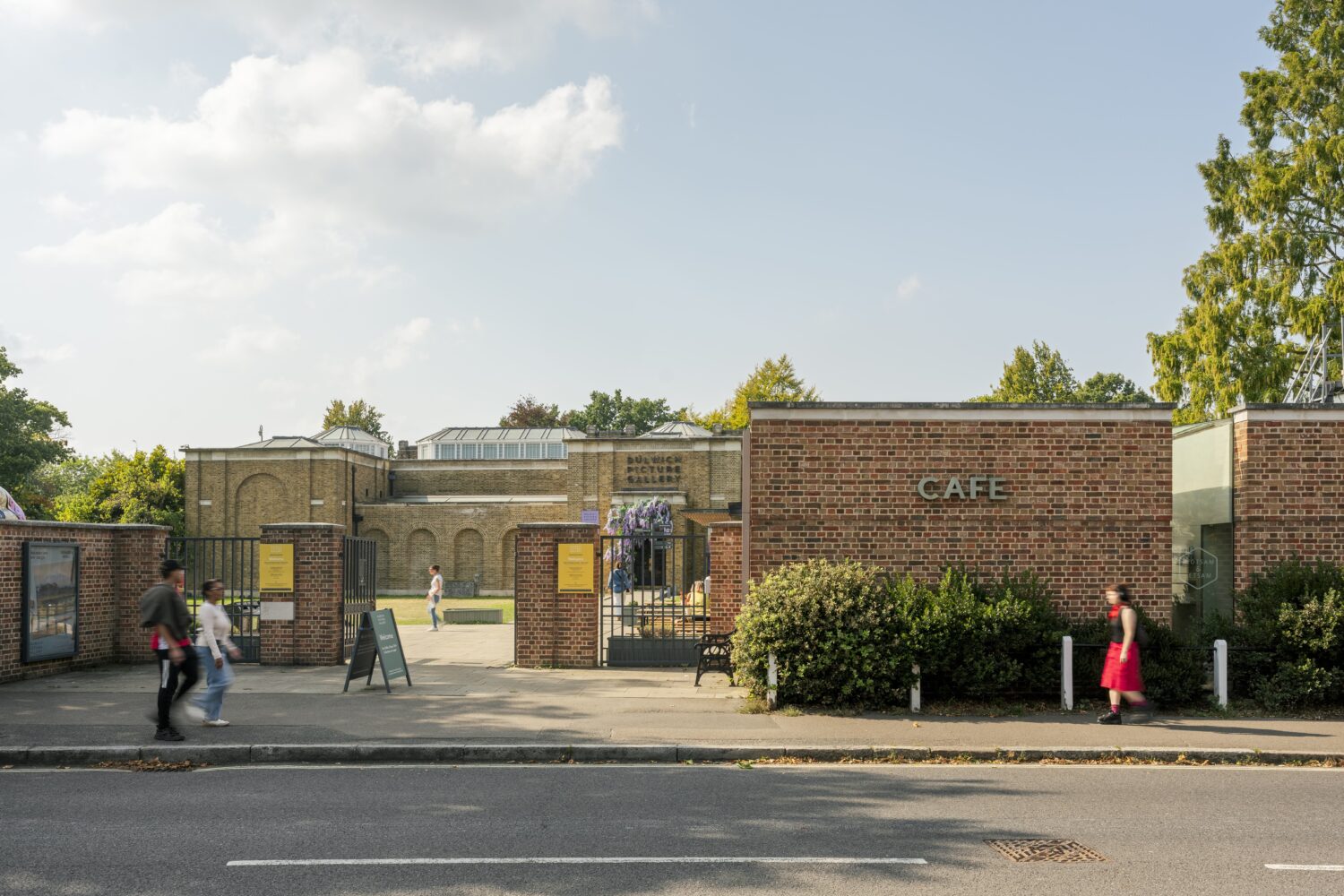
Dulwich Picture Gallery. Photo by Luca Piffaretti.
Inaniwa: Rather than going to a museum “to see an exhibition”, it is more a sense that the museum is an extension of everyday life―a place where you might think, “Let’s go and spend some time in the garden”, or “Let’s pop in for a cup of tea”.
Findlay: The big thing I’ve seen here is that people have not put “health” or “wellbeing” at the front and centre of their communication. Rather than saying, “Doing this will make you healthier”, it is better to say, “You seem interested in this, and if you continue with it, you may find yourself moving in a positive direction.” Health and wellbeing are not brought about solely through external medical intervention. They can also be nurtured when a person is recognised as an individual, listened to and connected with wider society. That is something I felt very strongly during this visit.
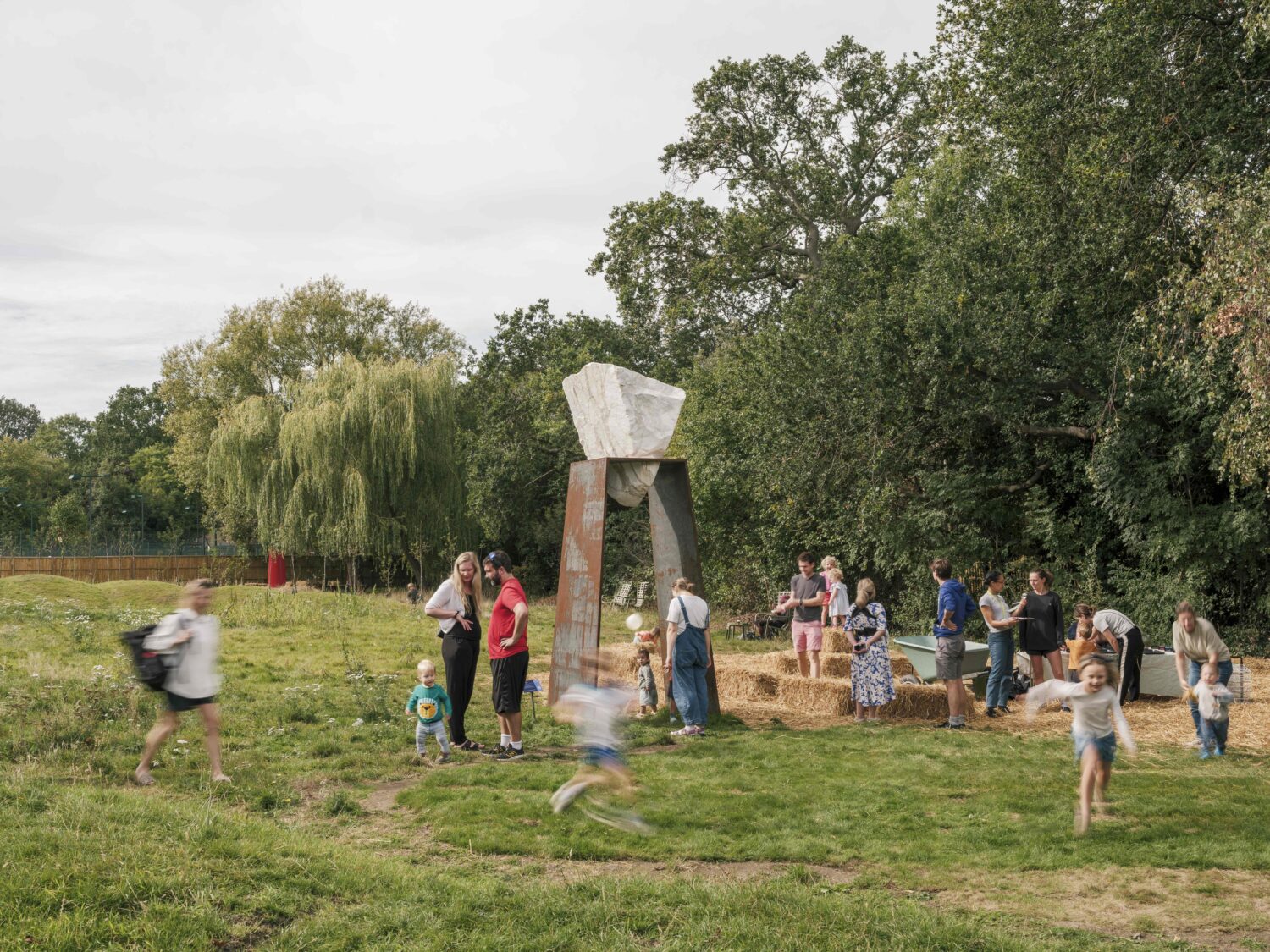
Visitors in the Sculpture Garden at Dulwich Picture Gallery. The work at the centre is Amy Stephens’s Waking Matter II (2025).
Creating Places Where Gifts Circulate and “Tokimeki” Emerges
Inaniwa: When I create activities together with Art Communicators, I often say that, rather than aiming for a “win-win” or “give-and-take” relationship, museums should seek to create a “Gift–Gift” relationship. Works of art are themselves gifts, and I see our role in passing them from one person to another as a way of passing those gifts on.
Findlay: I also had the sense that Art Communicators themselves gained a great deal of wellbeing from the role. It benefits all of us. The idea of the gift came up repeatedly during my time in Japan. I encountered it at the Shikoku Medical Center for Children and Adults, and in Fukuoka, a care worker had developed an approach called “Gift Viewing”. It offered a way of engaging with art by thinking about who you might give a gift to and how you might pass it on to someone else, exploring communication as something other than a one-way relationship.
Inaniwa: As we were developing a definition of cultural prescribing, we held a workshop that brought together people involved in the field to consider it from a range of perspectives. One of the keywords that emerged was tokimeki: a spontaneous stirring of excitement and delight. Someone suggested that cultural prescribing might be about cultivating an environment―like fertile soil―in which tokimeki and feelings of warmth can grow.
It is not simply about intentionally making ourselves feel more positive. It is about allowing an involuntary movement of the heart―the experience of unexpectedly finding ourselves filled with tokimeki―to arise naturally. The idea that art and cultural activities can provide the catalyst for such experiences lies at the heart of our work.
There is something I would particularly like you to hear, Jane. Many years ago, a fourth-grade primary school pupil visited the museum where I worked as part of a school group. At the museum, she encountered a painting of a boy, and later sent us the following reflection:
“I had been to an art museum before, but it had not left me with a particularly good impression. That was how I felt when I came to this museum today. But today, I came to really, really love art museums. I want to tell everyone in my family that an art museum can make your heart feel so warm, and that even if you have never met or spoken to the person in the painting, you can still understand how they felt.”
Findlay: It’s so, so touching. Exactly―it brings together those two core elements: connecting with someone through art and then passing that experience on to others.
Inaniwa: Her encounter with the work made her feel strongly, “I have to tell everyone in my family about what I received from this experience!” That feeling comes through very directly in her words. The stirring in her heart at that moment was a response to the work―and it was precisely tokimeki. Museums can be places where such stirrings of the heart arise. I have come to think that this experience of “responding” may lie at the heart of cultural prescribing. A work of art carries within it the presence of another person. Across time and space, she encountered the boy depicted in the artist’s painting, and through that encounter, she became aware of the response arising within herself.
Findlay: As you look at art, you also look at yourself. You become aware of yourself. And that can happen even through a work created hundreds of years ago.
Inaniwa: Yes. That is why I see Art Communicators not only as people who value dialogue, but as people who create the conditions in which each person can participate in culture and respond to it.
Findlay: Yes, all these experiences made me think that care is woven into communication itself.
Inaniwa: The inseparable connection between care and communication is precisely one of the key principles of cultural prescribing. The term “cultural prescribing” can sometimes make it sound like a system for “giving” something to someone. In practice, however, it is about cultivating the ground for people to encounter art and culture, and creating an environment in which a sense of tokimeki can arise naturally within them. The sense you encountered across Japan of “doing things with people”, together with the sense of gifts circulating from one person to another―these, I have come to realise once again, lie at the heart of cultural prescribing. Thank you very much for speaking with me today.
Profile
Jane Findlay
Head of Collections, Programmes and Partnerships, Museum of the Home
Jane Findlay specializes in participation, fostering connection and curiosity between audiences and collections. She has worked across interpretation, learning and engagement in UK museums and galleries for 20 years. Her experience spans the British Museum, National Maritime Museum, Kenwood House, London Transport Museum and Dulwich Picture Gallery, where she was Head of Programme and Engagement, with responsibility for the Gallery’s exhibitions and learning programmes from 2017. She has recently joined the Museum of the Home as Head of Collections, Programmes and Partnerships. https://museumofthehome.org.uk
Over the past nine years, Jane has developed arts and health practice, working across the spectrum from general wellbeing to targeted work in clinical services. A flagship project, established in 2020, was an innovative Creative Health partnership between Dulwich Picture Gallery and the NHS for the new Tessa Jowell Healthcare Centre, serving 250,000 people in Southwark, South East London, which Jane led. She is committed to creating healthier and happier communities by embedding creativity in people’s lives.
-1500x1126.jpg)