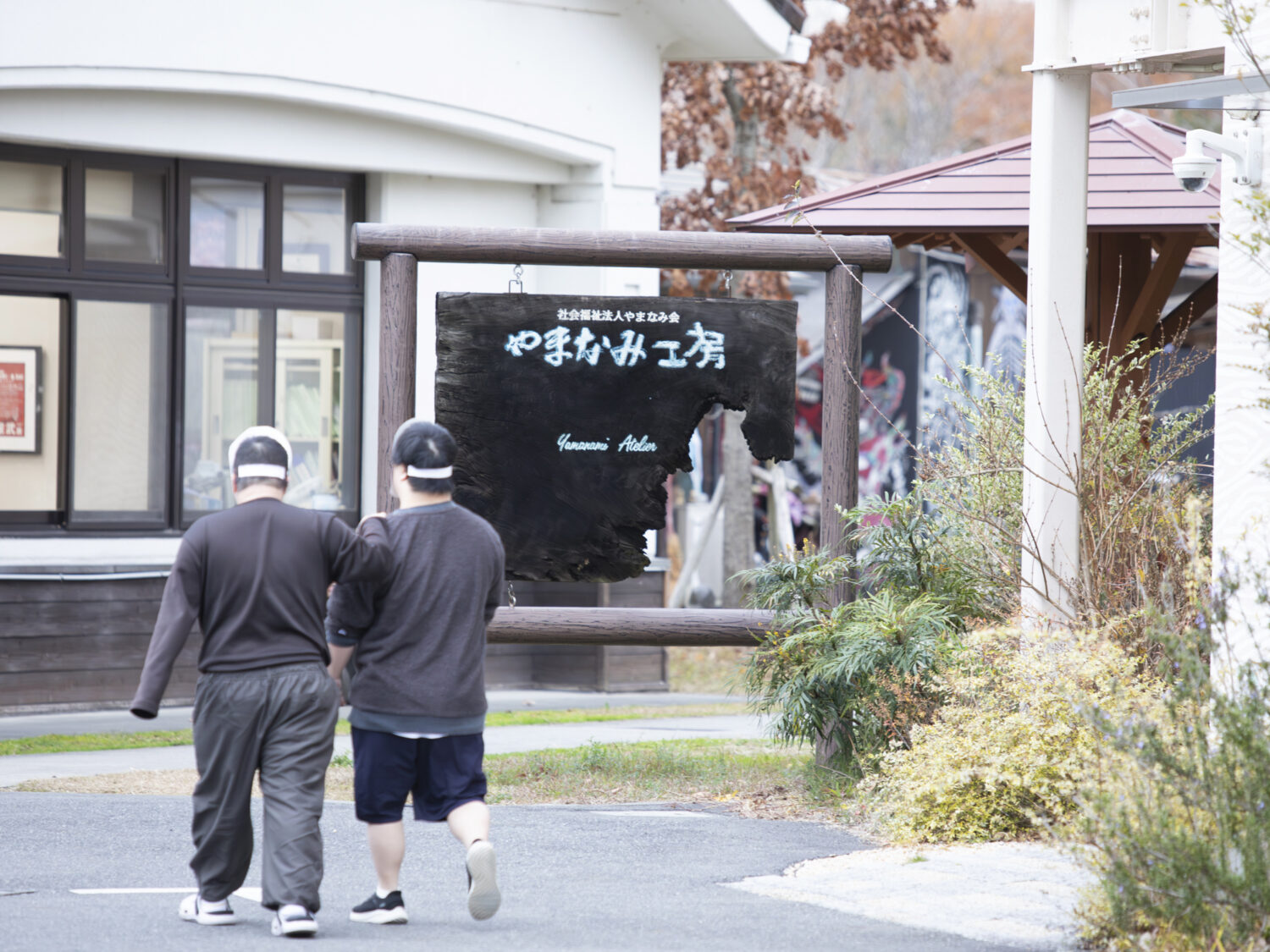
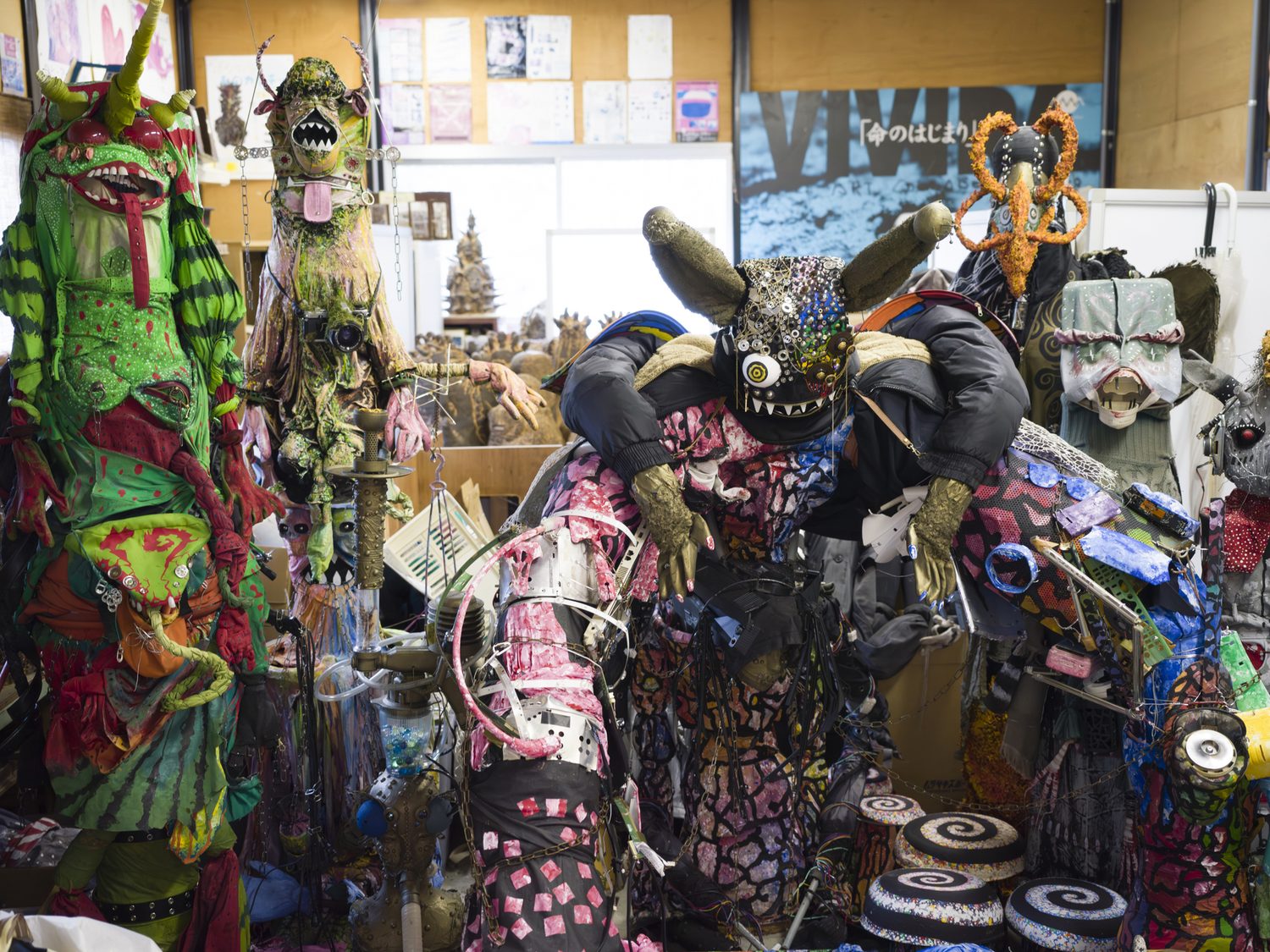
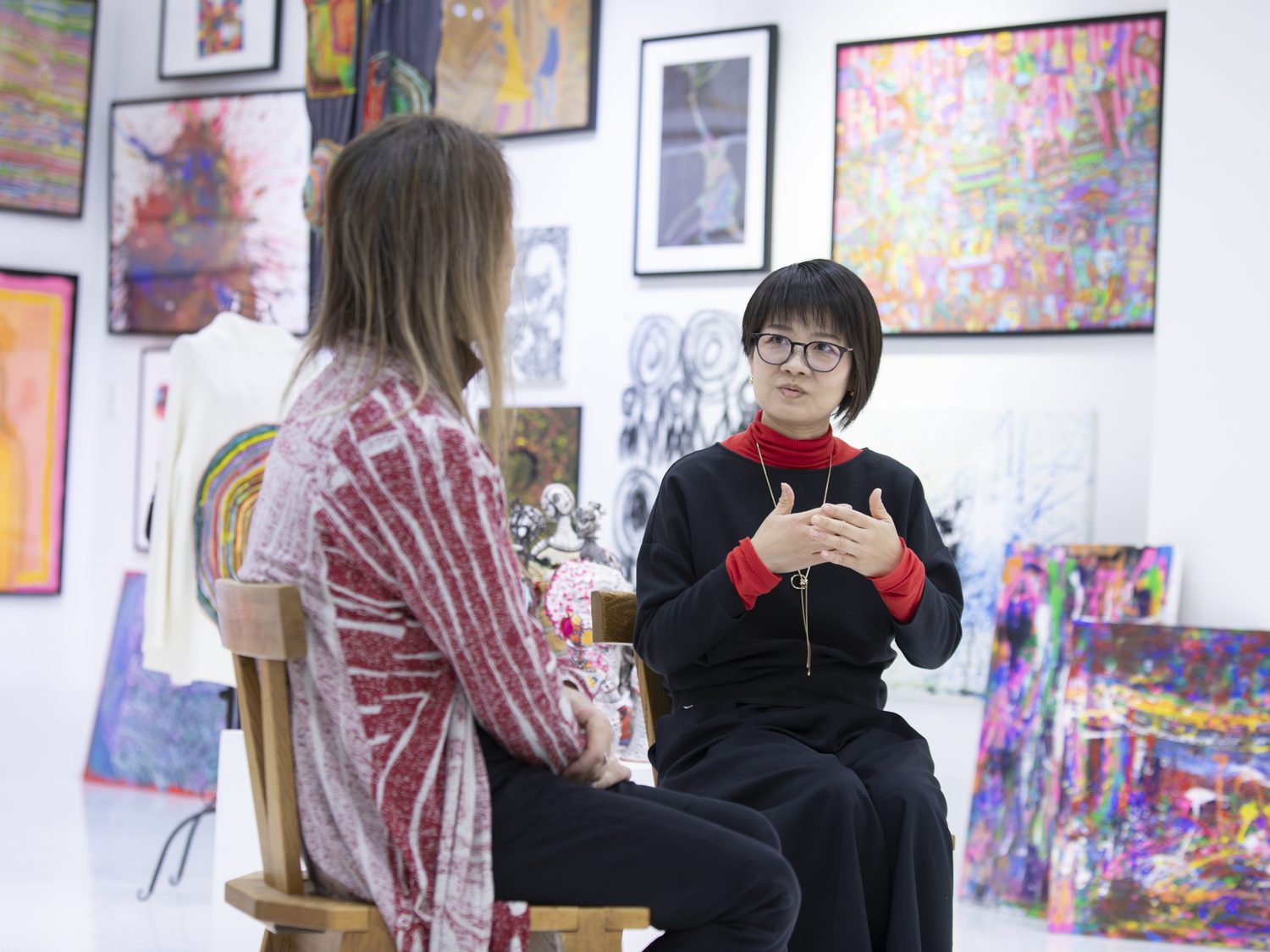
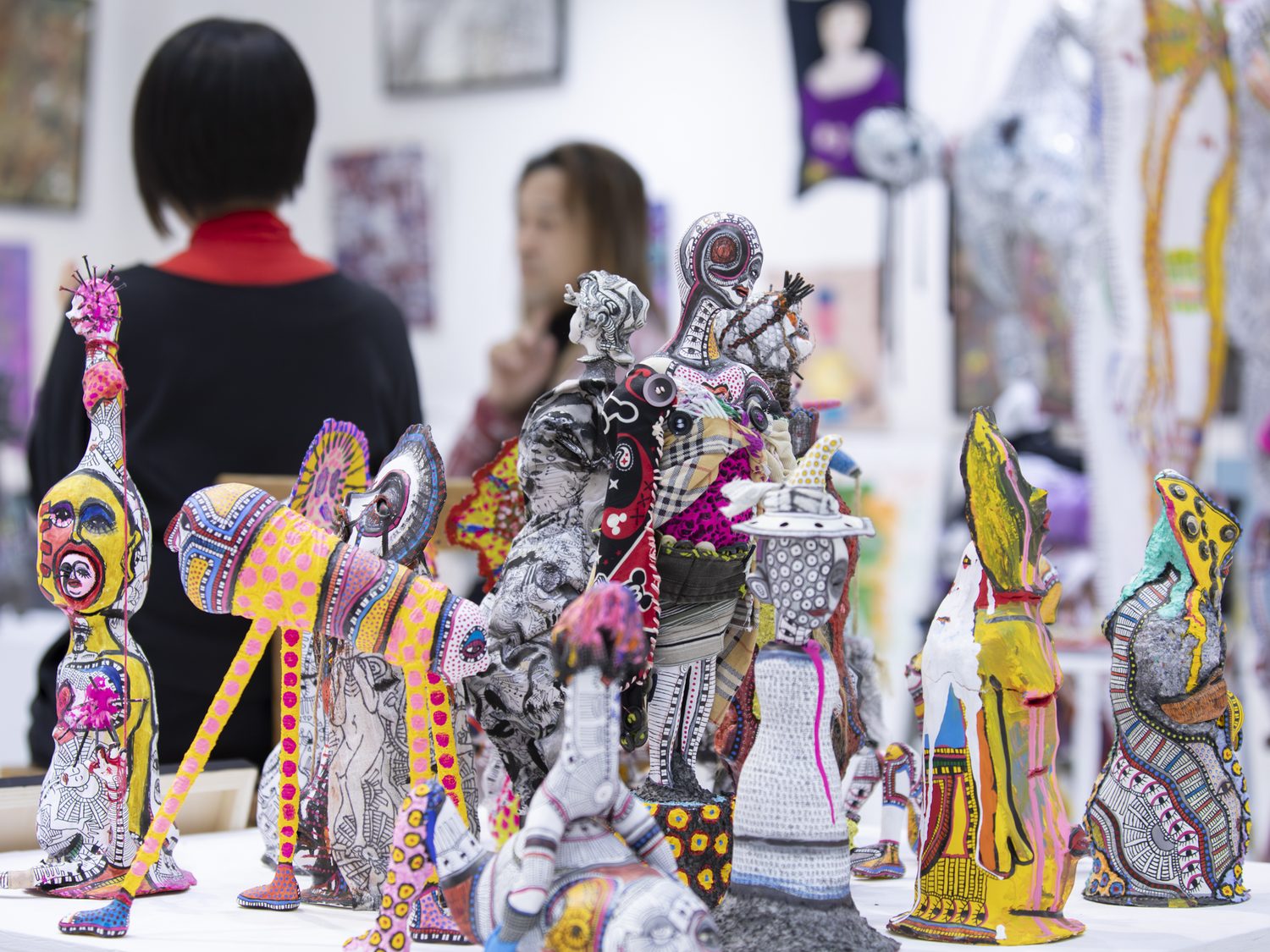
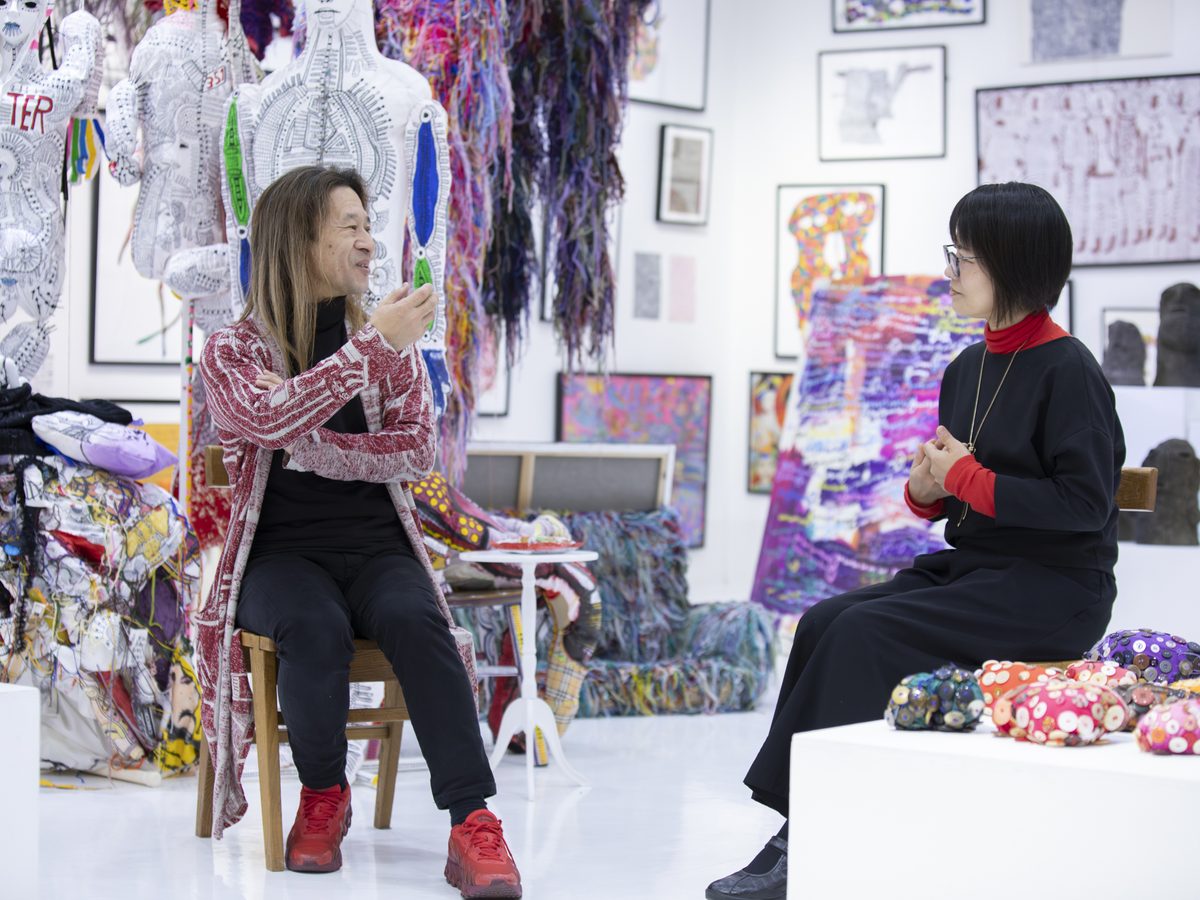
atelier yamanami, located in Koka City, Shiga Prefecture, is a welfare facility founded in 1986 for people with disabilities. Ninety-four members engage in a wide range of forms of expression, including painting, three-dimensional work and embroidery. The work created there is highly regarded both in Japan and internationally. Yet Masato Yamashita, the facility’s director, says, “We’re not trying to make art”.Sawako Inaniwa, Senior Curator at the National Center for Art Research, visited atelier yamanami to explore, from the perspective of Cultural Prescribing, what it means for people to express themselves with vitality.
Values Different from Those of Museums
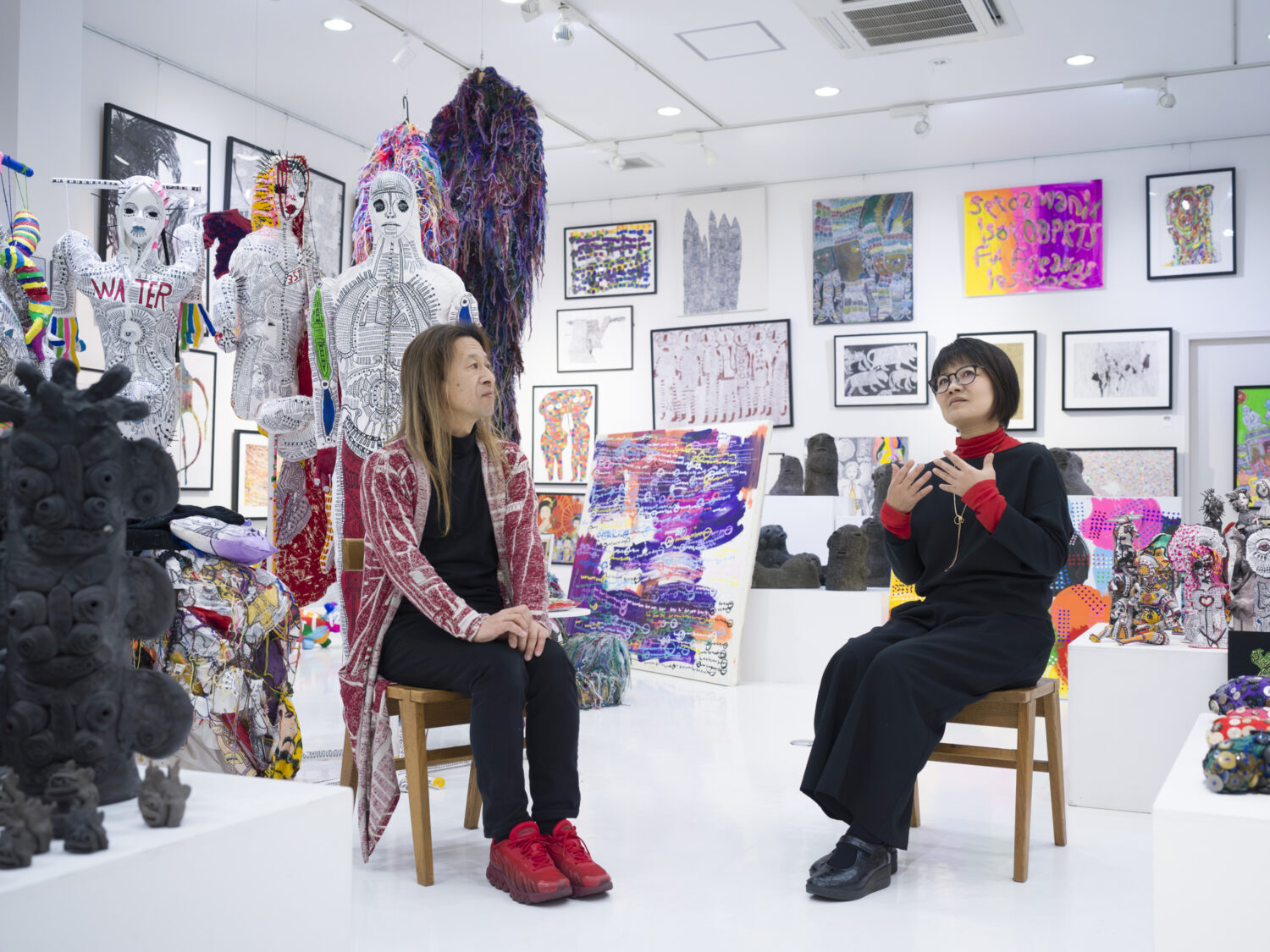
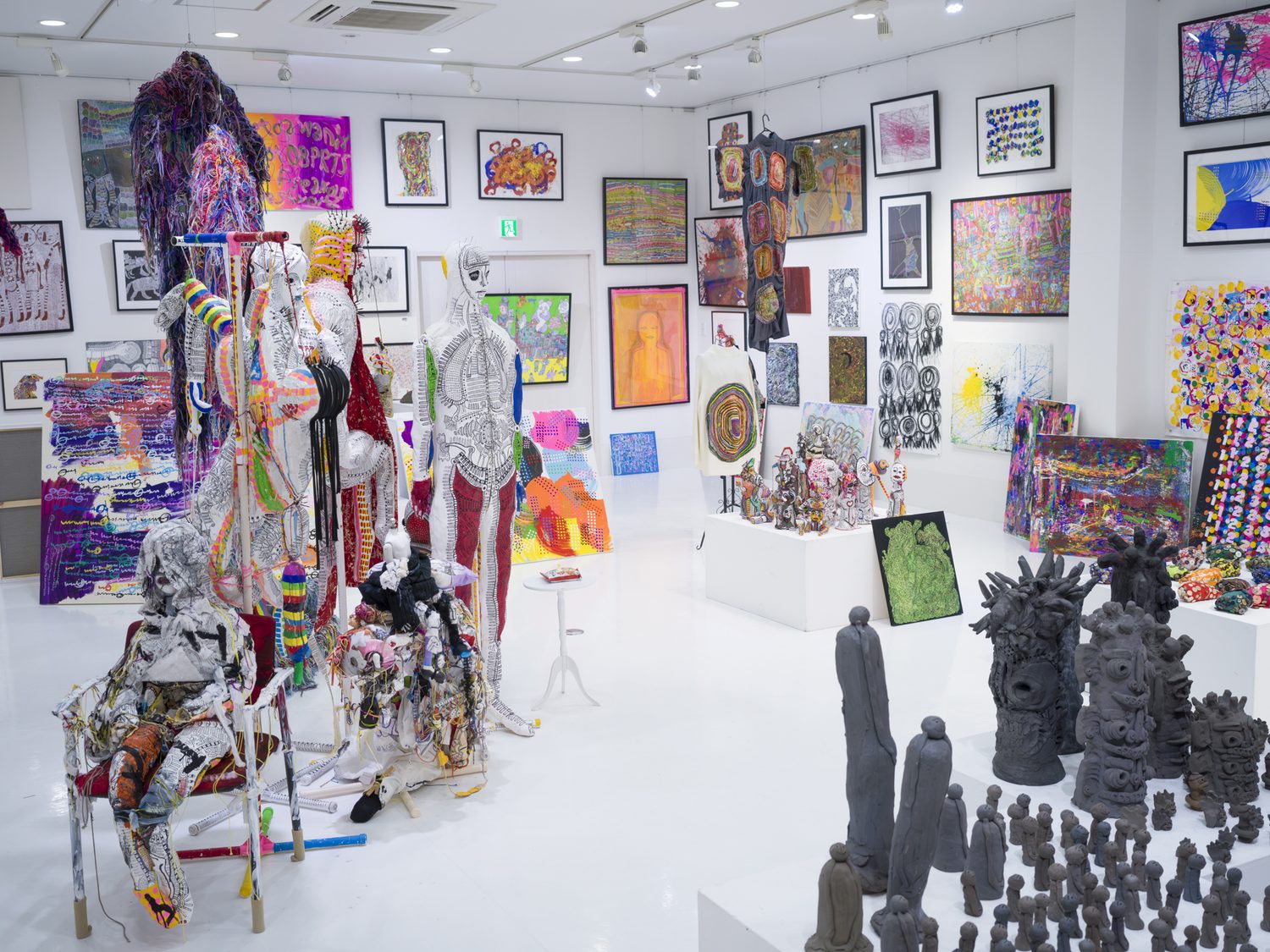
Inaniwa: What comes through in so many parts of atelier yamanami is the connection between “feeling alive” and “expression”. It also made me realise, conversely, how few places in our everyday lives offer that kind of experience. Museum exhibitions, for example, feel quite different from the sense here that these works are alive and breathing. Especially in this gallery, where the works are all gathered together, they seem completely at ease in the space—as though they are breathing.
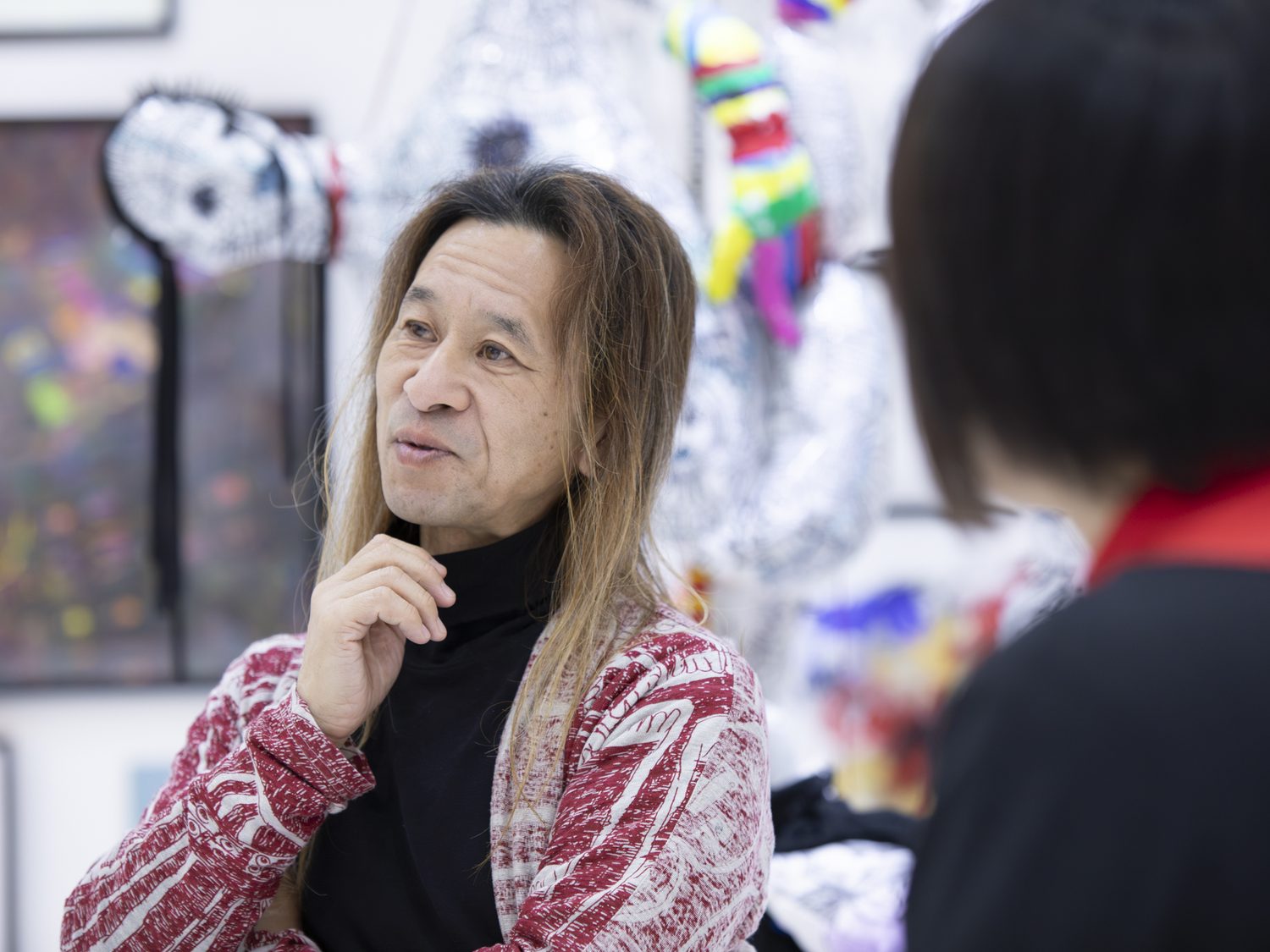
Yamashita: Thank you. The first thing we think about is what might make the people who come here uncomfortable or what they might dislike. Over the years, we have kept asking ourselves how we can make this a place where they can spend their time comfortably. atelier yamanami is simply what has resulted from that. We are not trying to show the work and say, “Look how amazing art is”, or “These people are particularly talented at art”, and ask people to see them as special. These things just happened to emerge. More than anything, we want people to come to know the members through what they make.
We don’t project any particular intention onto the work. You might say each piece is like a name tag. It is here because we want to introduce the person: “This is so-and-so, and this is the kind of person they are”. This gallery is like an entrance—a place where we simply show what has emerged here, without filtering it through anything else.
Inaniwa: That way of thinking about value seems to permeate the whole space. I feel atelier yamanami has creativity in its most fundamental form, and that the way you enable people to encounter it has been thought through in every detail.
Yamashita: To me, museums are rather special places—places to go if you like art—and they can feel intimidating. I think many people still have an image of art as something wonderful, refined, expensive or famous. But here, people simply do what they like, just as they are, and when something emerges from that we say, “Look at this”. The people making these things probably are not thinking of them as “artworks”, and we are not trying to say, “This is art”, either. We are simply creating an opening—a kind of doorway that connects them with society.
It is not about saying, “They are amazing even though they have disabilities”, or “They are wonderful artists despite their disabilities”. We do not want an environment in which they are viewed as exceptional. We simply want people to meet one another as equals, with mutual respect. That’s all.
An Environment of Trust Where Expression Can Emerge
Inaniwa: In Cultural Prescribing, we think that culture and art can create moments that stir something in us and make us feel vividly alive. Works are, after all, created when creativity is at work, so I think they can in turn pass that creativity on—or perhaps trigger a creative response—in the people who see them.
Visiting atelier yamanami, I was struck by how remarkable the staff are. I was impressed by the care and attentiveness with which they relate to each maker. The way they talk and respond seems to catch exactly the moment when someone is thinking, “How might I express this?” or “Maybe I’ll give it a try”. There is a real sense of vitality in those relationships.
Yamashita: Yes. And those relationships contain not only liveliness but irritation too. [Laughs] This is a place—and a set of relationships—where people can show exactly how they feel on a given day. I think trust has to be there for this kind of expression to emerge. The staff at atelier yamanami never give direct technical instruction. They never say, “Today, let’s draw this”, or “This is how you should draw”. Instead, they think, “This might make this person uncomfortable, so let’s arrange things in advance so they can spend the day comfortably”. They are simply people who can think about and care for the person in front of them, beyond questions of disability or artistic technique. Having staff like that is part of the environment too.
None of our staff have had any formal training in art. So even if they cannot teach technique, I think they are very good at creating, for each person, the kind of environment that makes them think, “All right, maybe I’ll try something”.
The message is: “You can be just as you are.” “You can do things your own way.” “That is good as it is.” No one judges what a person makes as good or bad. There is no competition with anyone else, and no need to seek evaluation or praise. So once people have finished making something, they do not remain attached to it, and there is no reason for them to feel discouraged. They can simply say, “Well, I did it again today”, and leave it there.
If satisfaction were a ten-point scale, we might get ourselves to six or seven, and then praise or support from other people fills in the remaining three or four and takes us to ten. But they can get all the way to ten on their own. They can reach a sense of satisfaction with themselves that day without needing someone else to fill in what is missing. I think that’s remarkable.
The Question: “What Does the Person Themselves Think?”
Inaniwa: I think many people today are looking for environments and atmospheres that bring out people’s creativity—whether in children’s play, education or business. In primary-school classrooms, for example, there may be a desire to bring out children’s creativity, but doing so is not easy, and places like this are difficult to create. What is it that makes this possible here?
Yamashita: Lately I’ve been thinking that perhaps they are simply facing in a different direction. The people who make things here aren’t doing it for someone else—for praise, for sales, for evaluation or for recognition. They are doing it for themselves. They find it difficult to adjust what they do to suit a client, a commission or a teacher’s preferences. But precisely because they find that difficult, there is a strength in the way they remain true to themselves.
They know what makes them happy and they simply keep doing it. They have the ability to keep doing what they love. I think the strength to pursue what they like without being swayed by those around them is remarkable.
Inaniwa: That strength to keep pursuing something is also part of what art education aims to nurture, I think. But it is very hard to realise. Here, it seems to be made possible by the way you pay attention to each person.
Yamashita: Yes. Being with them makes me think that this is not something created through instruction or cultivated over time. It is more a question of whether what they already have can find expression. I think it comes down to whether there is an environment that allows that to happen.
Inaniwa: Unless the staff are constantly sharing that understanding with one another, I don’t think this kind of environment could exist. It seems quite difficult to maintain that kind of shared understanding.
Yamashita: Actually, it is very simple. Someone might visit atelier yamanami and think, “Why does this person attach so many buttons to this piece?” or “There’s no point in doing that”. Because people here are free to do what they want, someone might also think, “That is problem behaviour”, or “That is neither art nor work”. By conventional standards, many people might see it that way.
But our staff do not think that way. Instead of asking, “Why are they doing that?” they think, “If doing this makes the person happy, then we need to create an environment in which they can do it”. They can always return to the question, “What does this person think?” That is what everyone here is working towards.
There is a woman at atelier yamanami named Mihoko Sakai who simply keeps rubbing a packet of Sapporo Ichiban Shoyu Ramen with her thumb. She has been doing this for more than 20 years. We don’t take the ramen packet away and try to get her to draw it instead, or use the situation to teach her to read and write. We don’t approach what she does as something that needs to be corrected or redirected. Over time, what grew among all of us was the thought: “If this has meaning for you, then let’s value what is meaningful to you”. I think that is how atelier yamanami came to take the form it has today.
How atelier yamanami Began
Inaniwa: Even for people generally described as non-disabled, there is a real need for environments where they can express themselves at their own pace and share that expression with someone else. atelier yamanami seems to me a rare place where that has actually been realised. How did the facility begin?
Yamashita: Originally, we did almost nothing but subcontracted piecework. Everyone did the same tasks for less than one yen per item. Our approach was along the lines of “Let’s do our best and make ten or twenty more today”, and “Make sure everything meets the specifications and we don’t produce defective items”.
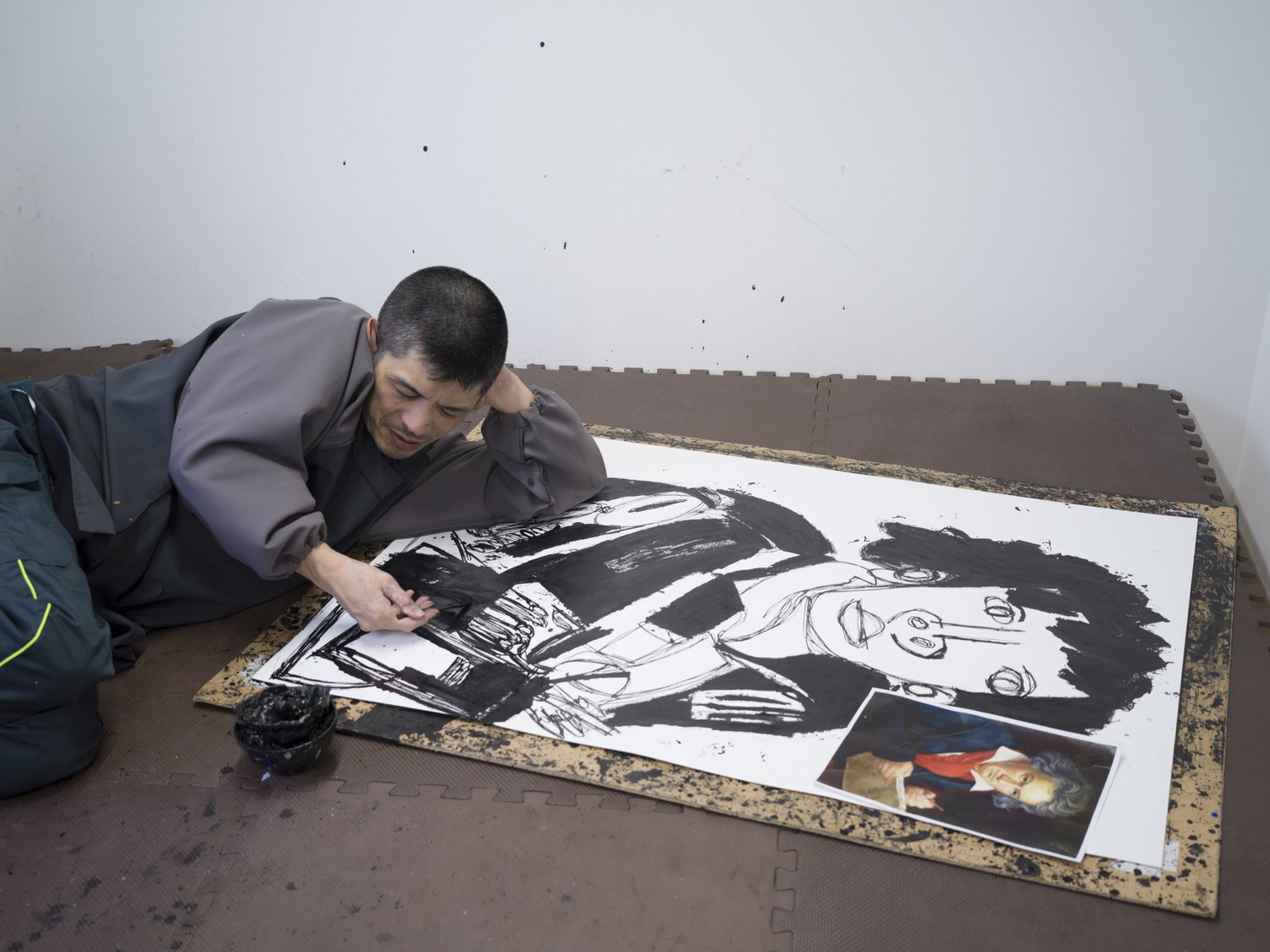
Then one day, I saw someone scribbling with a pencil on a scrap of paper he had picked up. To me, it was not art or anything of the kind. But while he was drawing, he had a smile on his face unlike anything I had ever seen from him. Until then, I had thought I understood everything about him. To be honest, I had no idea what he was drawing. But when I looked not at what he had made or at the act itself, but at his face, I realised, “What we have been providing is not enjoyable for him”. That scribbling was the first thing he had done spontaneously, without anyone telling him to do it. If there was something he could choose to do for himself that made him smile, then that was what we should make possible. That was how it began. Today, atelier yamanami has 94 members. So even now, all we are doing is asking, in 94 different ways, “What might make this person smile?”
atelier yamanami is a space that has emerged from thinking about what the people right in front of us might want to do. It has not been shaped to fit an ideal that I or the staff had in mind. We simply kept responding to what each person wanted to do, and this is what the place became. I do not think what they themselves are necessarily seeking is employment in the open labour market or higher wages. I think what they are looking for is a sense of ease. So coming to atelier yamanami does not mean that you have to paint, or that you have to be able to do anything in particular.
Profile
YAMASHITA Masato
Director, atelier yamanami, Social Welfare Corporation Yamanami-kai
After graduating from high school and working in a variety of occupations, Yamashita joined Yamanami Kyodo Sagyosho (Yamanami Cooperative Workshop) as a support worker in 1989. In 1990, he established Atelier Korobokkuru and began supporting expressive activities in ways that respected each individual’s wishes and pace. He has served as Director of atelier yamanami since 2008. Work created by members of atelier yamanami has been exhibited and acquired by museums in Japan and abroad, continuing to attract international attention.