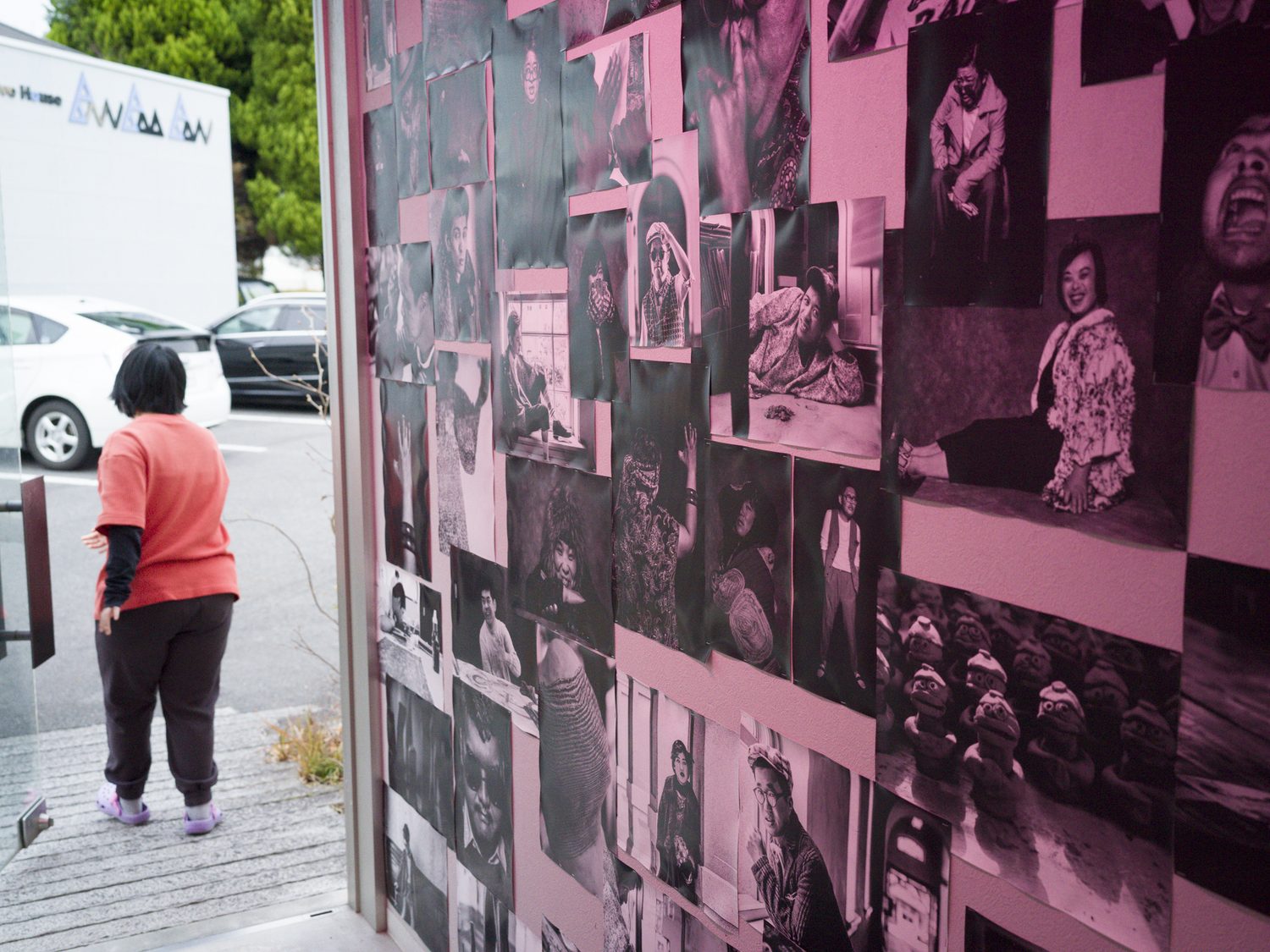
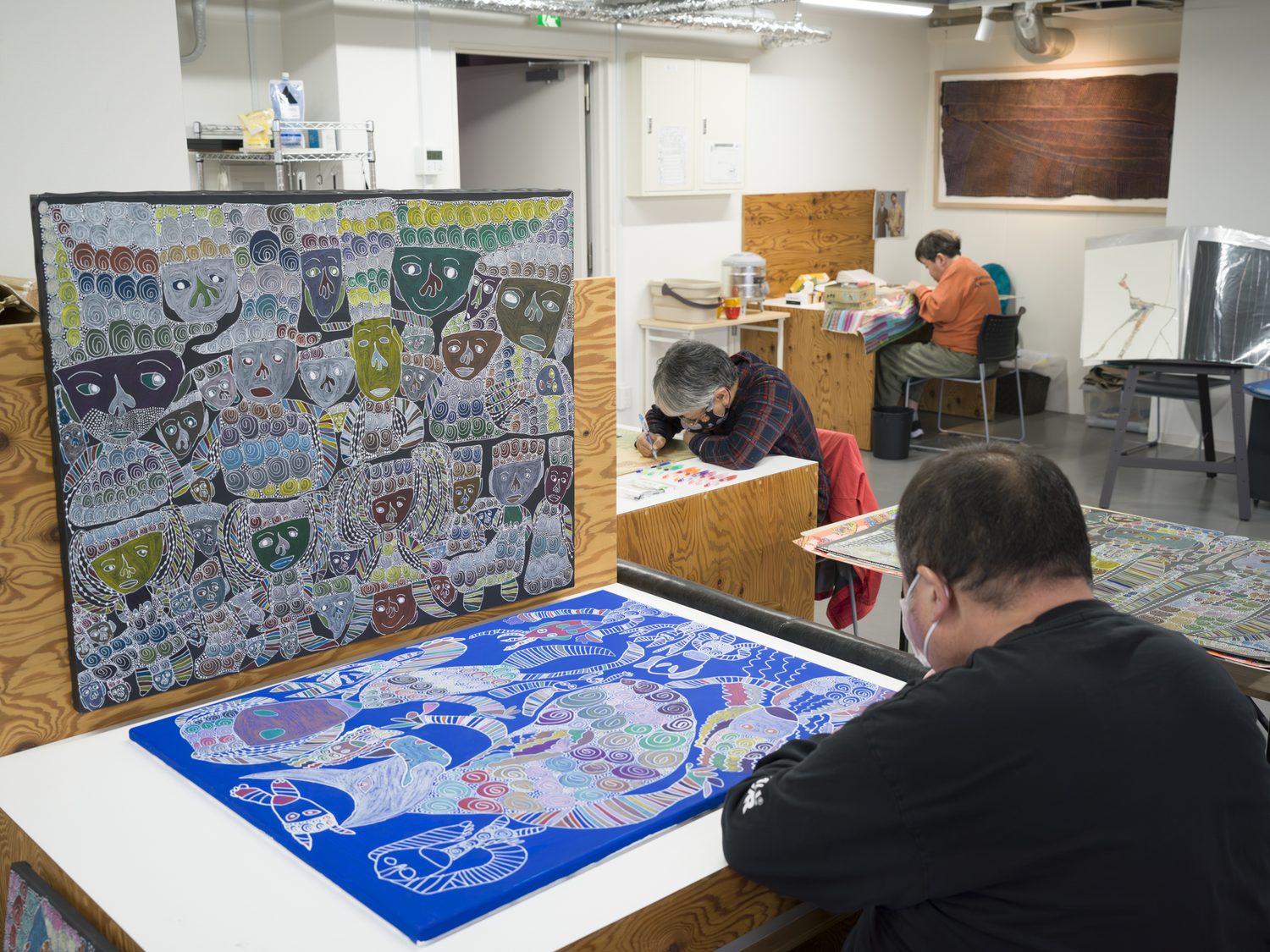
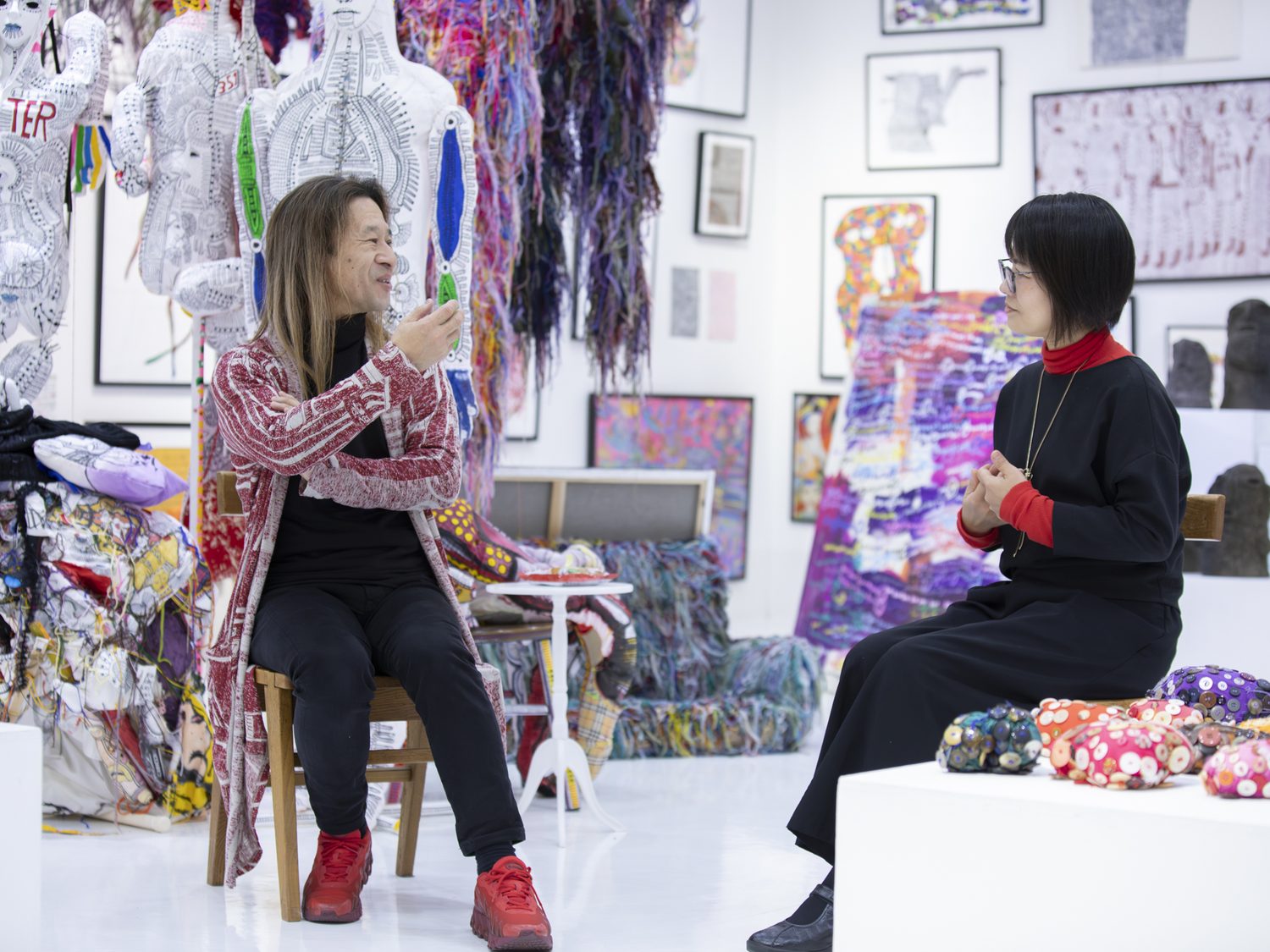
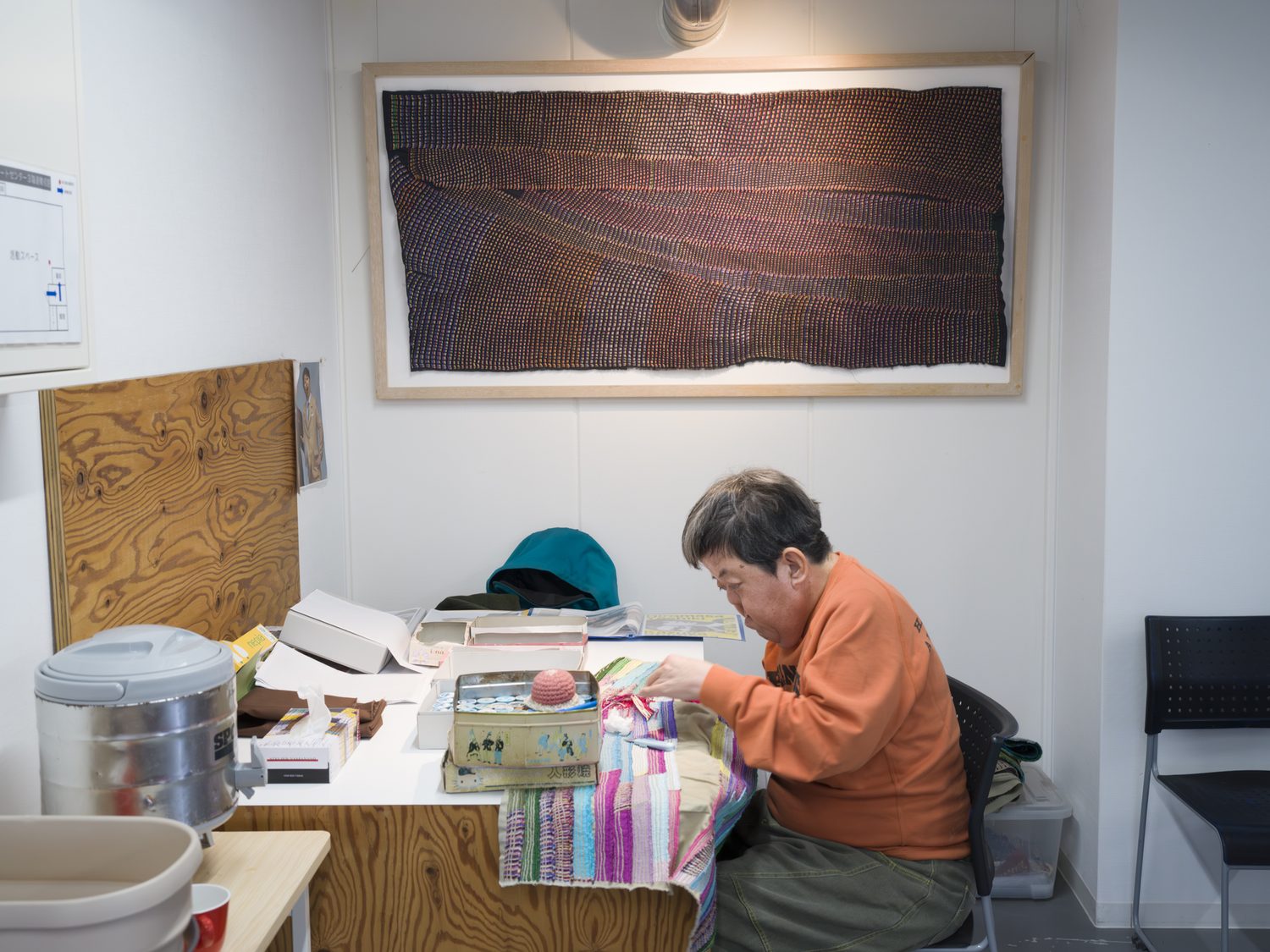
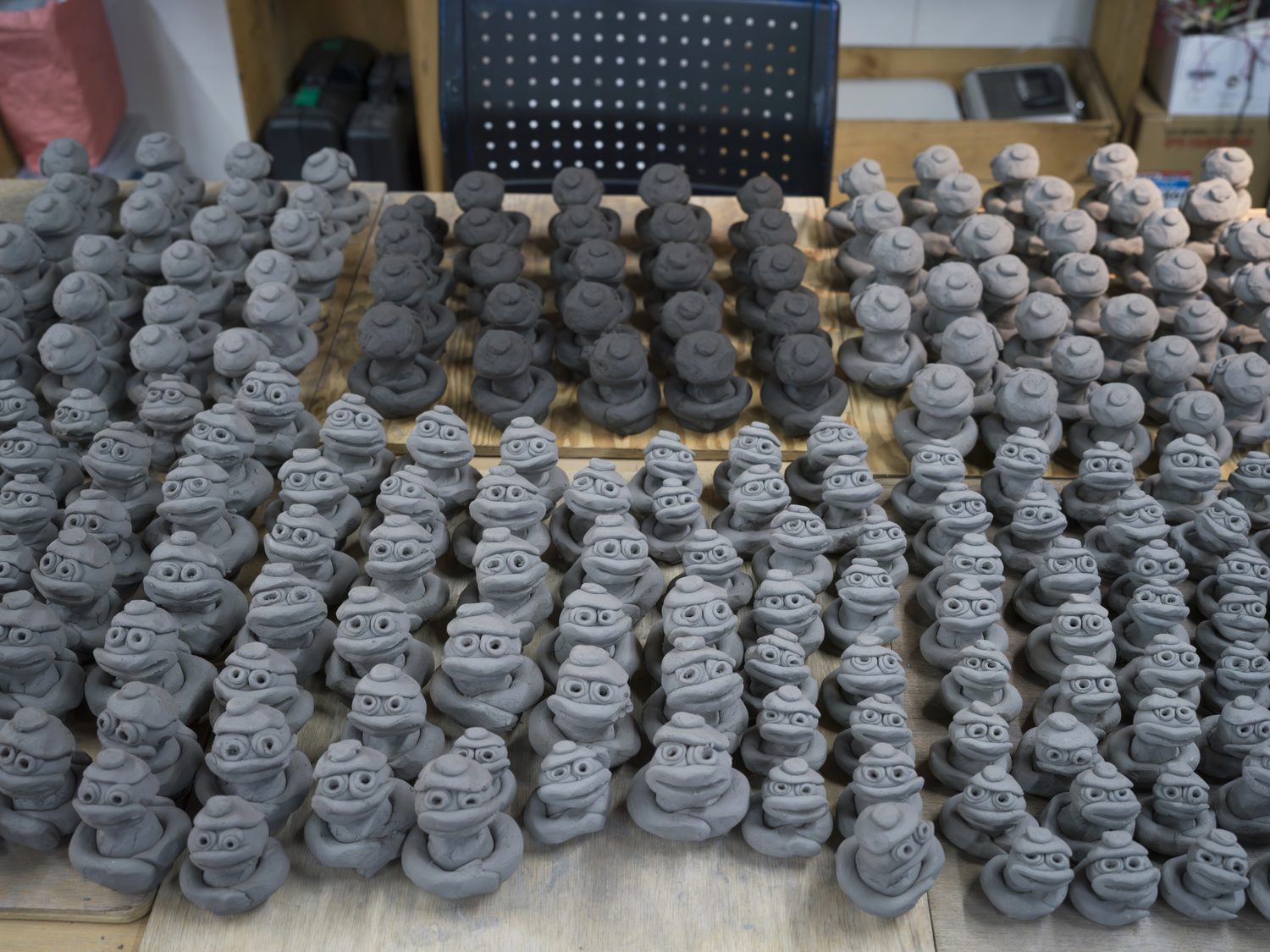
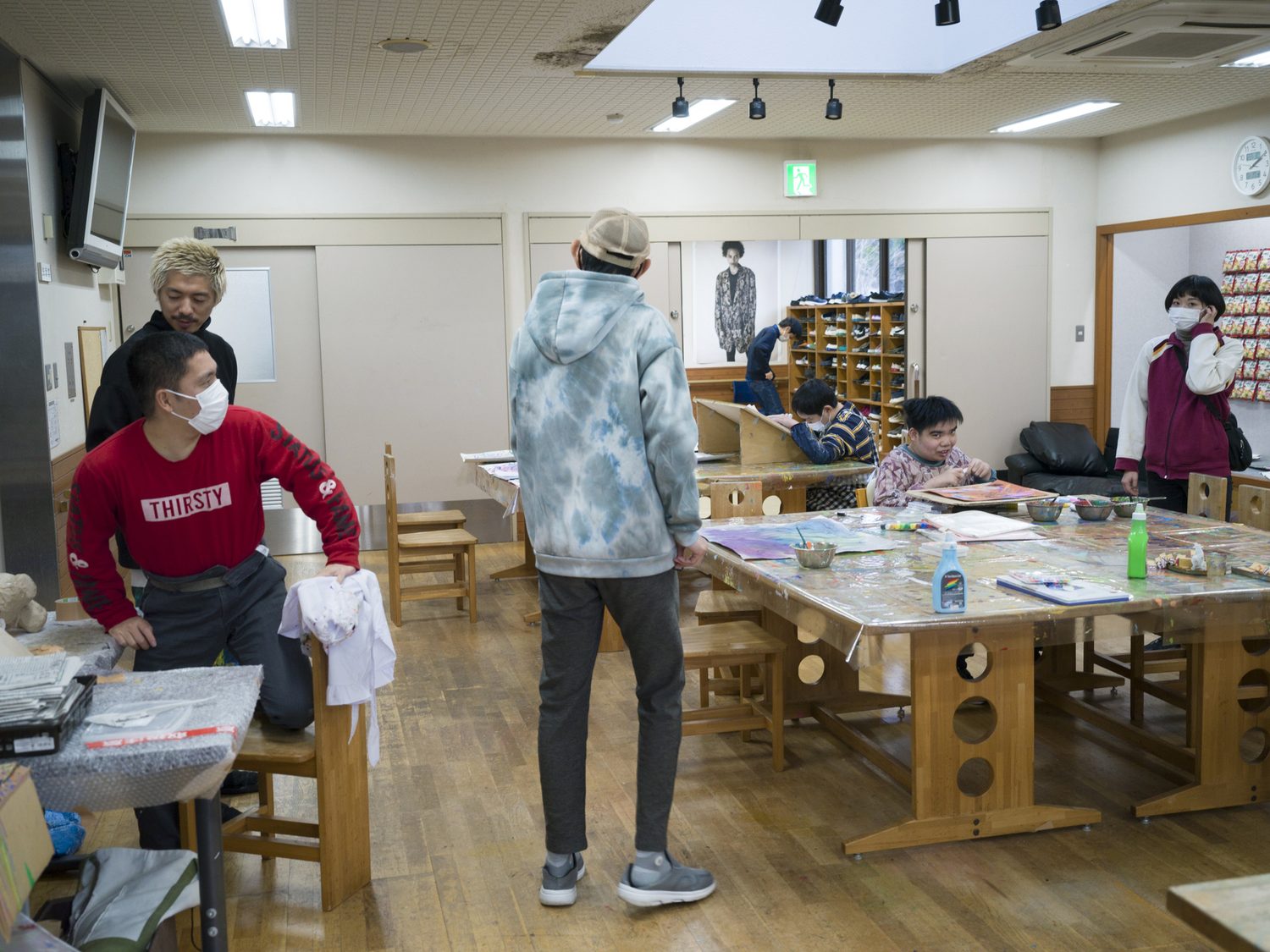
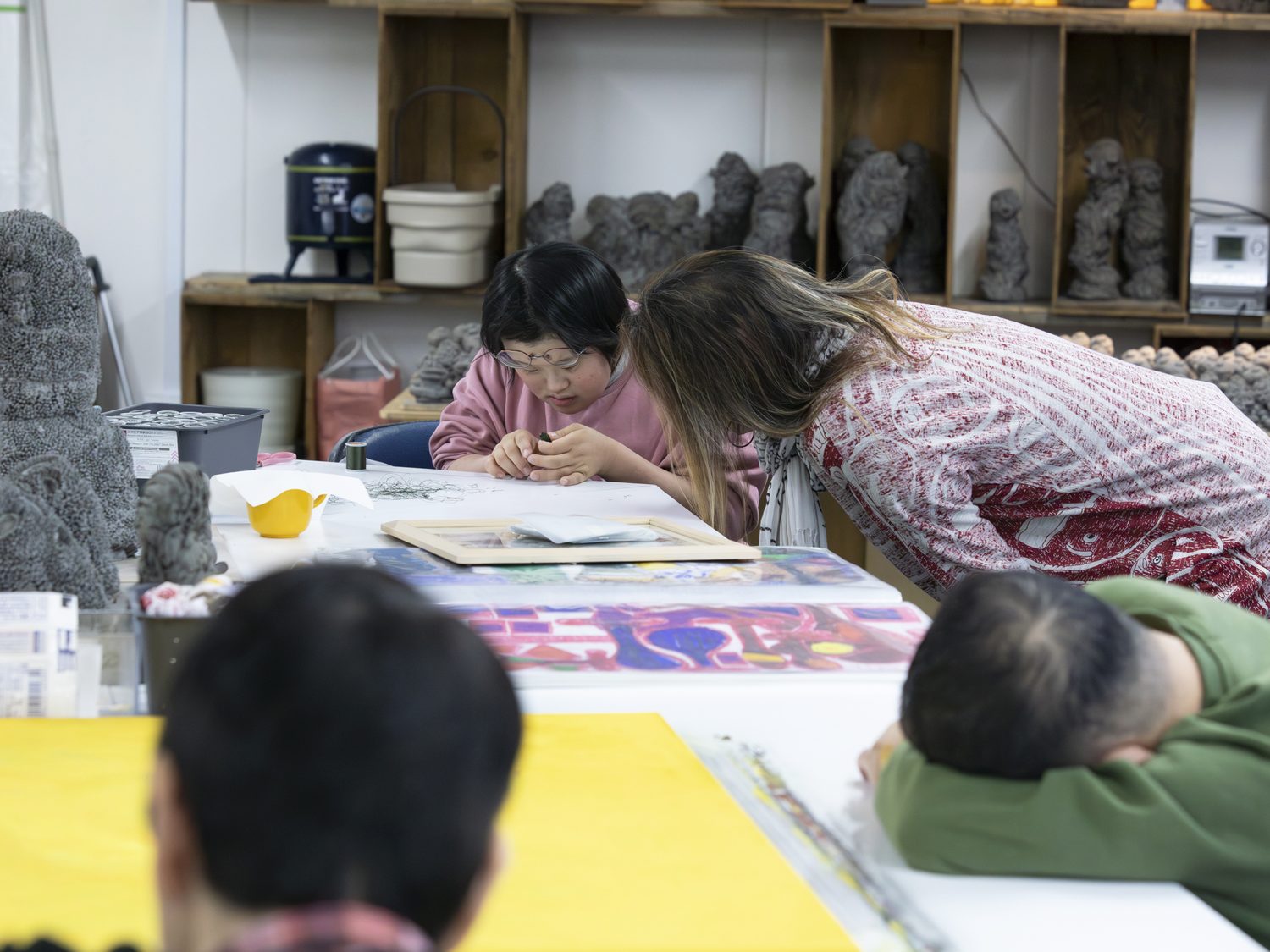
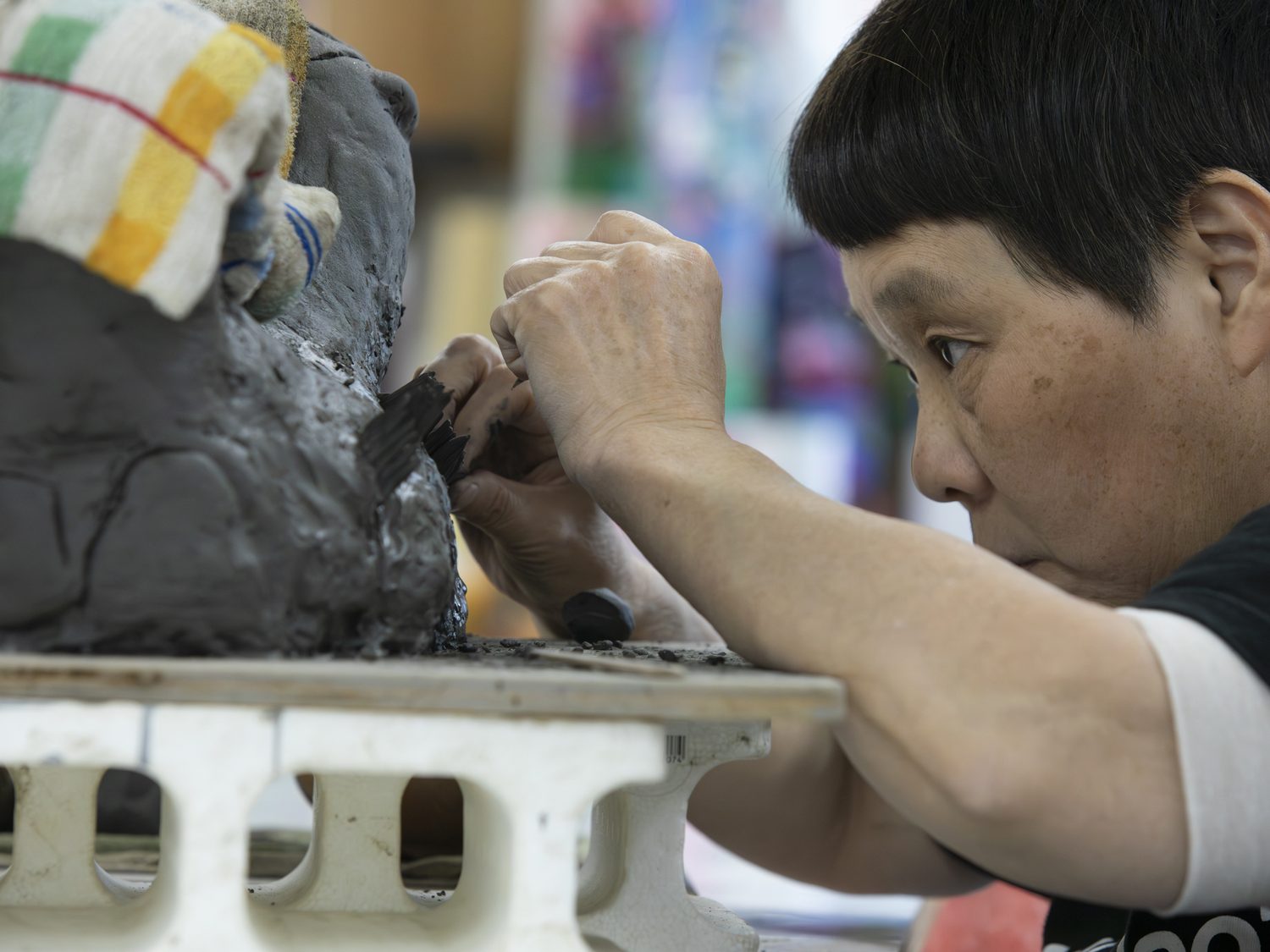
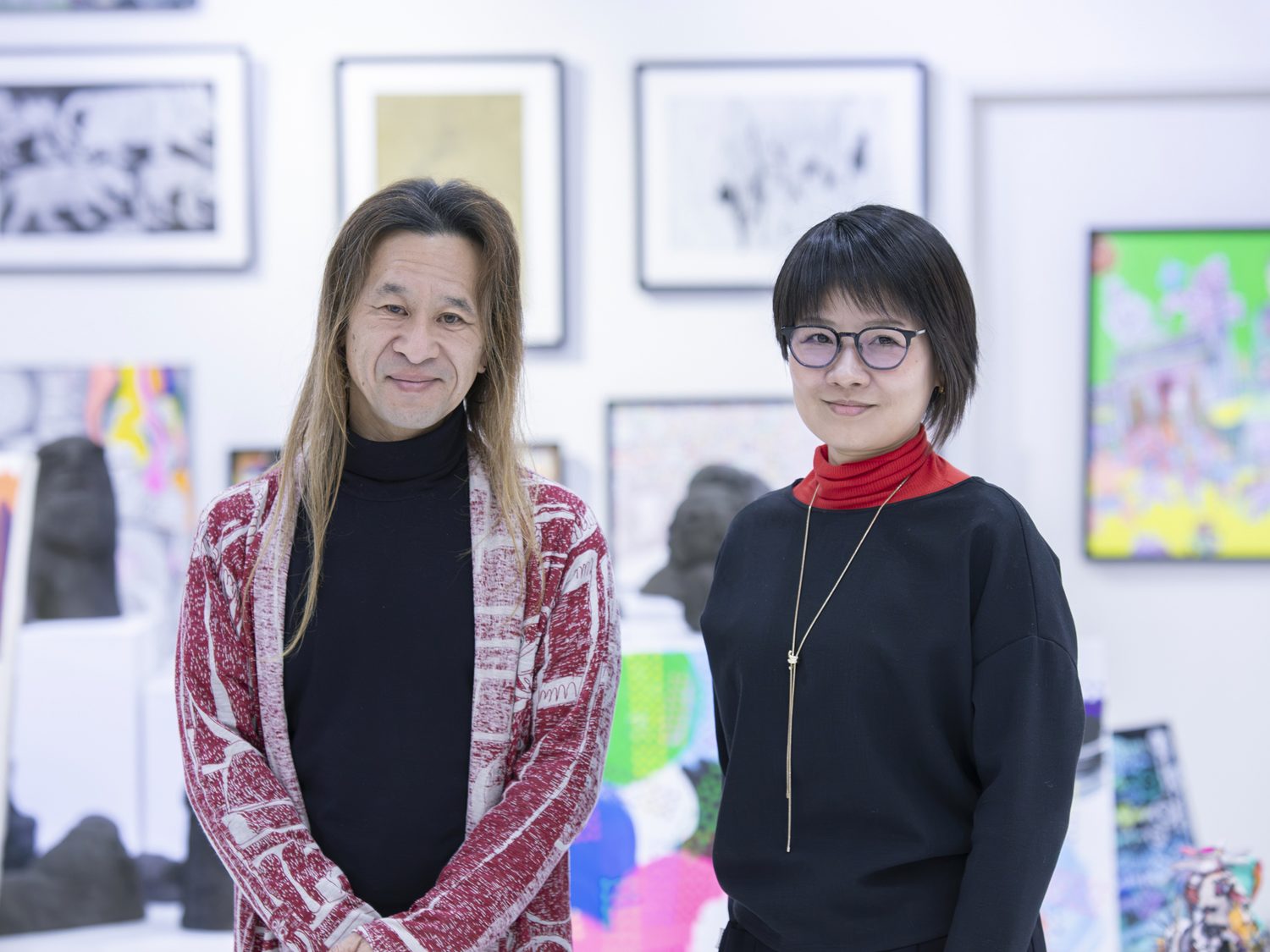
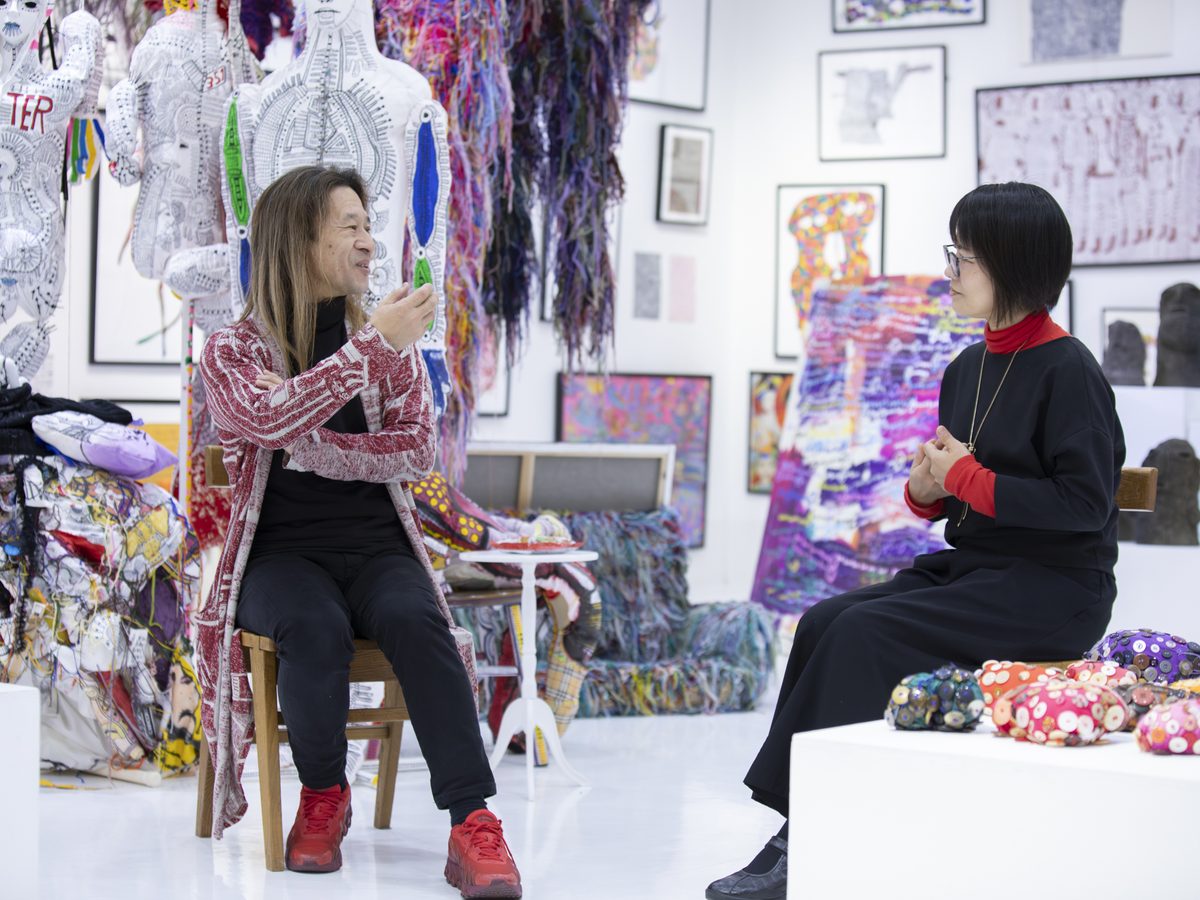
In Part One, Yamashita Masato spoke about what makes the space at atelier yamanami so distinctive and how its environment is shaped around the question, “What does the person themselves think?” In Part Two, Inaniwa Sawako, whose research focuses on Cultural Prescribing, explores how the practices of atelier yamanami might extend into wider society. She speaks with Yamashita about atelier yamanami’s relationship with the art world, staff development, connections with the local community, and the power of art—which he describes as “the only way”.
Inaniwa You mentioned that the staff at atelier yamanami are not necessarily people who came here with a background in art. Yet there is so much work here, attracting considerable attention in Japan and abroad. You began by staying close to people and trying to create moments when they could simply feel happy, and what emerged from that has ultimately taken the form of art. How do you feel about that?
Yamashita To be honest, I have simply accepted that, for better or worse, it is not something I can control. A person with a disability comes here and finds something they enjoy in their own way. Perhaps changing the tools around them might make it even more enjoyable. If we made the paper they stamp on larger, or provided more things they could use as stamps, their expression might change, and they might enjoy it even more. That is why we do these things. Beyond that, I don’t think we have any particular ambition or intention for it to lead to a certain kind of art.
The person themselves isn’t thinking about art or trying to make a good piece of work, either. If someone happens to see what they have made and says, “This is art”, it is more like, “Well, that’s lucky”. We don’t pay much attention to what people around us think of the work or how they evaluate it. I also feel that if we started projecting our own intentions onto their work, or paying too much attention to it, our everyday relationships with them might begin to change.
Inaniwa At the same time, there is growing interest in the makers at atelier yamanami. When do you think the way society looks at them began to change?
Yamashita I suppose we’re talking about the last twenty years or so. There was a period when the term Art Brut—“raw art”, referring to work by people without formal artistic training—began to appear in the welfare sector, and work by people with disabilities that had received recognition overseas began to be reintroduced in Japan, so to speak. I think it was around then that connections between makers with disabilities and museums began to increase as well.
Inaniwa Around that time, there were also more opportunities to see such work in museum exhibitions.
Yamashita There is an idea in Japan often described as “support for independent living for people with disabilities”, which aims to support people in their daily and social lives so that they can live as themselves in their communities. But from our perspective, real support is not about teaching them to paint more “valuable” pictures. It is about helping society gain a proper understanding of who they are.
If we tried to get them to paint pictures that could be turned into products, or devised ways for them to be recognised within the art world by bringing in excellent curators or artists to teach them, we would simply end up following the same kind of process as subcontracted work. I think we might erase what is good about that person.
Inaniwa I heard that once, when someone from a museum came to collect some works, you said, “Please, let me introduce you to the artist”, and they replied, “We don’t need to know about the artist, their background or their story. All we need is the work in front of us”.
Yamashita Yes. [Wry laugh] There was a time when the attitude was, “We’re evaluating the work and nothing else.” If anything, it was almost as though they deliberately didn’t want to know. They felt that knowing about the maker would affect how they viewed the work.
Inaniwa Even though what you want to do is tell people about the makers through their work… I have visited several workshop-based welfare facilities, including ones overseas, and my own feeling is that atelier yamanami is completely different from the others. What do you think is the biggest difference?
Yamashita Every place is the result of the people there engaging with each person in their own way. So rather than thinking there is a particular way a facility ought to be, we are simply doing what is good for the 94 people at atelier yamanami right now. Perhaps the only difference is that instead of making people adapt to the facility, the facility adapts to the people. [Laughs]
Staff Development and a Sense of Ease
Inaniwa I imagine that new staff members gradually absorb “the way atelier yamanami is”. How do staff learn the culture here?
Yamashita We let them do things freely. Of course, we have team meetings and formal staff meetings, and we do what we need to do as welfare professionals. When I say “freedom”, I don’t mean putting those basics aside.
I think this is an environment where we can learn important things about being human from people with disabilities, and, as support workers, we can have relationships with them as equals without being bound by the idea of “support”. Perhaps feelings of not wanting to betray one another’s trust, and of caring for one another, naturally begin to emerge. I never say to the staff, “Because you are staff, this is how you should be”.
Inaniwa Is it a matter of learning by watching the staff who have been here longer?
Yamashita I’m not sure. [Laughs] We don’t actually have that many meetings, and everyone does things in their own way. But the one thing we share is the question, “What does the person themselves think?”
Rather than saying, “This is what I think, so this is what you should do”, we keep asking, “What do they think? Is this really all right for them?” I think what we have here has emerged as a result of continually asking that question.
Inaniwa So do you relate to the staff in the same way that they relate to the makers?
Yamashita Yes. I always say, “Staff first”. I think about what would make the staff feel comfortable. Then the staff think about what would make the makers feel comfortable. I don’t think very much about whether staff know every detail of the system or hold particular qualifications. More than expertise or social skills, perhaps what matters is that staff think about the other person and, as a result, come to feel, “I can be myself too”.
Inaniwa What does a sense of ease mean to you?
Yamashita Let me see. It is when something makes you happy and other people are happy about it as though it had happened to them. It is the sense of security that comes from knowing you will be forgiven no matter how many times you fail, and an atmosphere in which even those failures can be put to good use. Perhaps it is a place where everyone has that. There is also a kind of trust in knowing that no one there thinks badly of you. That is what a sense of ease means to me.
Distance matters too. Not everyone likes everyone else or trusts everyone else. [Laughs] If people find certain relationships difficult, then they should be able to establish an appropriate distance. We are always thinking about how to make space for each person to find their own place within the group.
Rather than thinking about what abilities or qualities we can make use of, or saying, “This person has this particular ability”, we try to create an atmosphere in which each individual can express themselves without stress. To be honest, many of the people who come to atelier yamanami have struggled elsewhere, whether in relationships or in other environments. Some have spent years feeling that they did not belong anywhere. For them, this may finally be a place where they feel at home. Perhaps what we are really talking about is a sense of security, for staff as well as the makers.
Inaniwa One thing I notice when looking at the work here is how little aggression it contains. I once visited an open-call exhibition where each room had a completely different atmosphere. In some rooms, depending on the group, I felt an aggressive quality and found it difficult to stay for more than ten minutes. Here, by contrast, perhaps because of the colours, the forms and the overall effect, I feel there is a kind of harmony.
Yamashita Thank you. Yes, perhaps so. Neither the works nor the people who make them interfere with one another, and in a positive sense they accept one another. Perhaps these are forms of expression that have emerged from breathing the same air. Basically, everyone is happy. [Laughs] I think that sense of being fulfilled comes through in the work.
The Potential to Change Standards in Welfare
Inaniwa atelier yamanami seems to take a very different form from conventional standards in welfare. It really feels as though a different world opens up here. Do you think the atelier yamanami approach could be realised elsewhere?
Yamashita Yes, I think it could be done anywhere. We are not doing anything particularly special. We can do this precisely because the basic standards are in place. What we need is something beyond the standard. If we simply stop at the standard, it isn’t very interesting. It becomes dull. Rather than saying, “This is how things are done at our facility”, I think the form should emerge from asking, “What is right in this day and age, and in this moment with the person in front of us?”
Inaniwa In 2016, there was the Sagamihara attack at Tsukui Yamayuri-en, a care facility for people with disabilities. A former employee entered the facility armed with knives, killing 19 residents and injuring 26 residents and staff. Even since then, although not always on a scale that shocks society in the same way, we continue to hear news of incidents involving people with disabilities. Perhaps valuing the kind of attentiveness practised at atelier yamanami, and the conditions in which creativity can emerge, could deepen our understanding of what disability is and what it means to be human. It might also help us move away from whatever each of us assumes to be the “standard” and towards responding to the person in front of us, opening up the possibility of change.
Yamashita As you say, I almost feel there is no other way. I think incidents and ways of thinking like that arise because those of us who work in welfare still have not done enough. We are still too often presenting people with disabilities through ideas such as “unproductive” or “of no use”. We also still create environments that make them appear that way. As a result, we end up making them into people who seem to be “unable to do anything”.
Inaniwa In other words, the social environment is what makes them appear that way.
Yamashita Exactly. Once we shift our perspective away from productivity and employment, all kinds of forms of expression become possible. There are many things I can do that they cannot, but they also have a unique appeal that is entirely their own. If we create an environment in which they can simply do the things they like and the things they are good at, what emerges can move people and draw them in. In some communities, people with disabilities may still be seen as people to be pitied, unhappy, or incapable. But when the way society sees them begins to change and people say, “The people at atelier yamanami are amazing”, I feel as though the word “disability” begins to fall away from the relationship between them and the wider community. I think art has that kind of power. Rather than excluding or rejecting one another, singling out differences and pointing fingers, people can look at what each person is good at and say, “That’s wonderful”. Through art, that kind of relationship is already emerging here with local children.
Inaniwa atelier yamanami is very open to the local community. There is a wonderful café, and visitors can see where the work is made. Do many local residents come here?
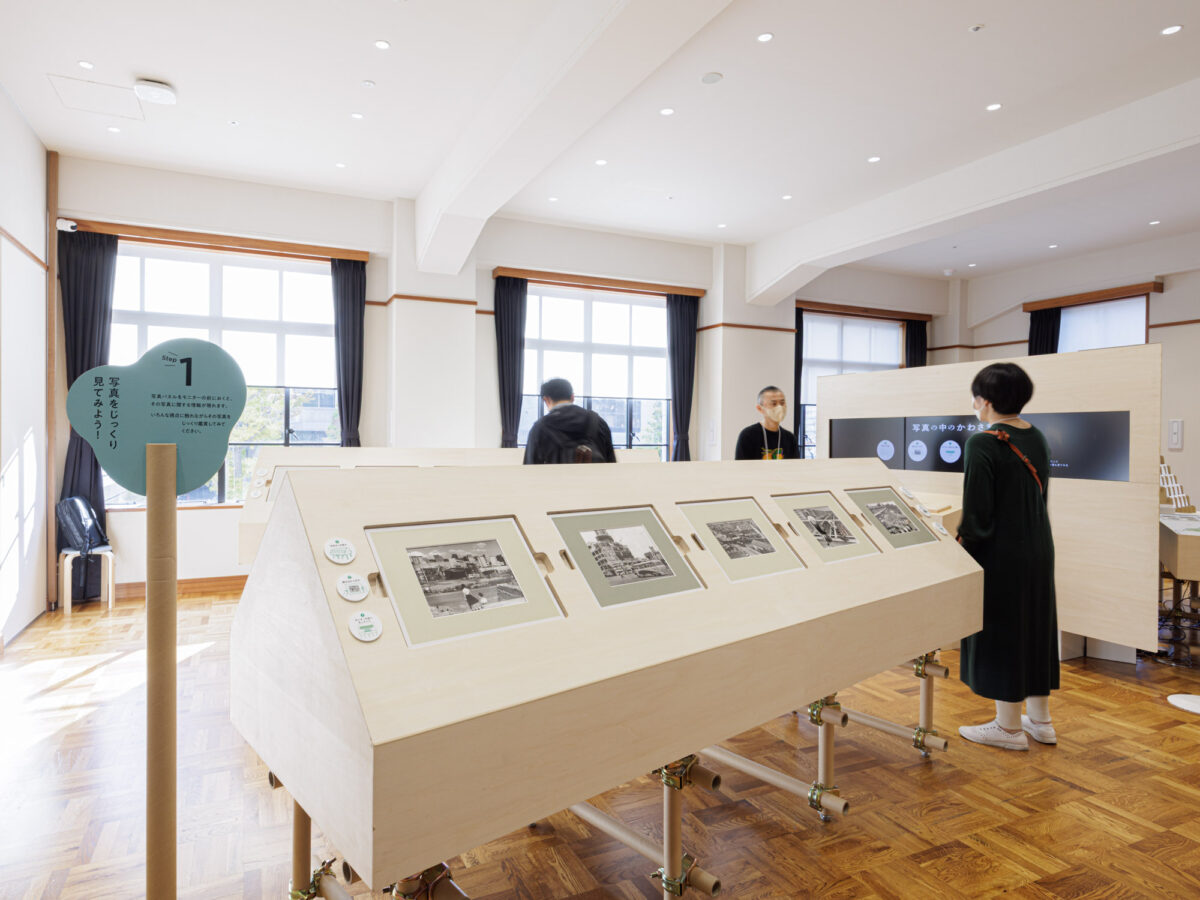
Yamashita Yes, many people come to us, and we also make a point of going out to them. In the past, even when we held exhibitions locally, most visitors were people already connected with us or older people. Only a few dozen teenagers came. So we thought that rather than simply waiting for them, we should go to the local schools ourselves. We organised a travelling exhibition and took it to unused classrooms in every school in the area. That meant that 8,000 children in the town were able to encounter work from atelier yamanami. If we keep doing things like this, perhaps something will change ten or twenty years from now.
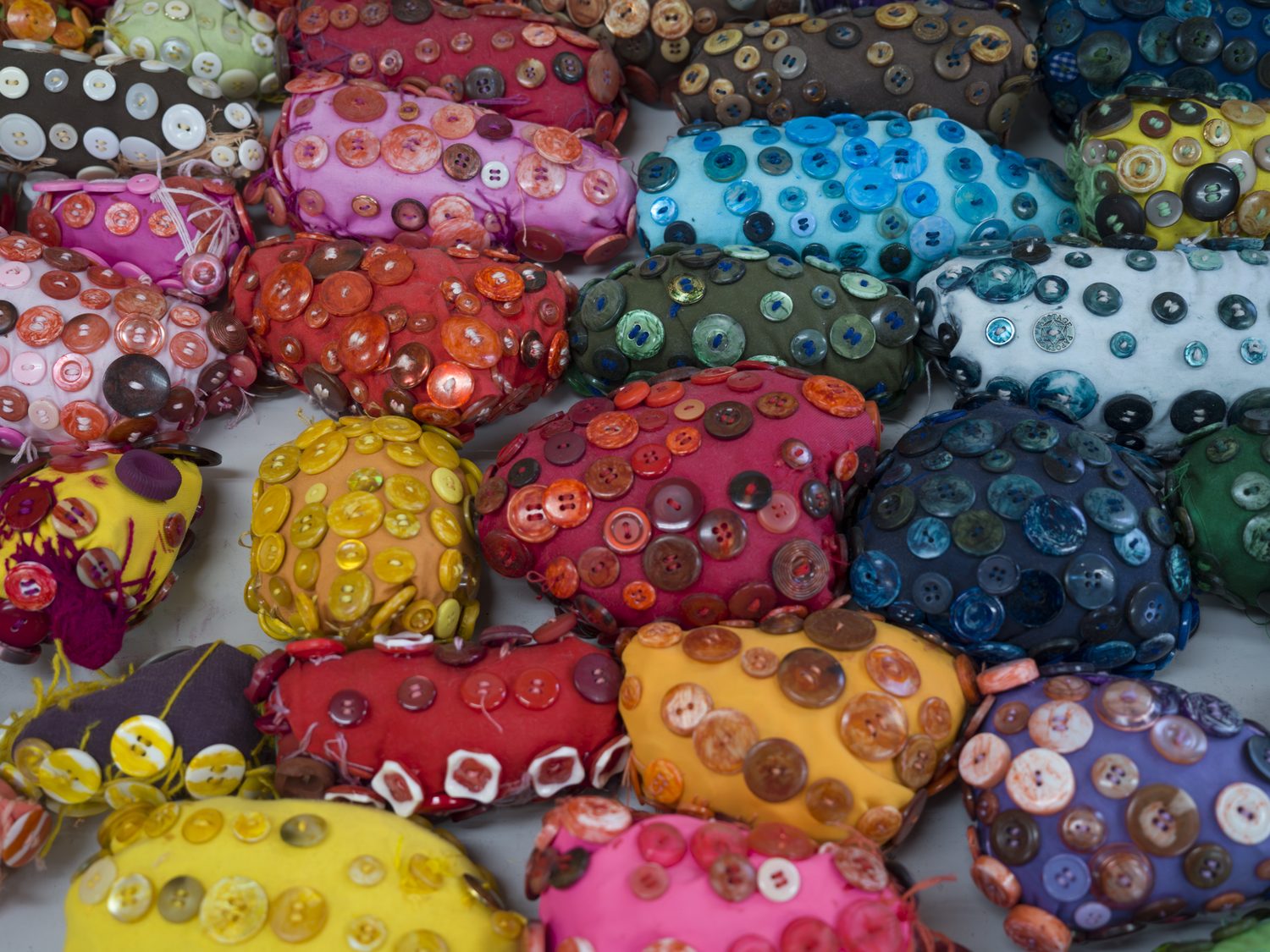
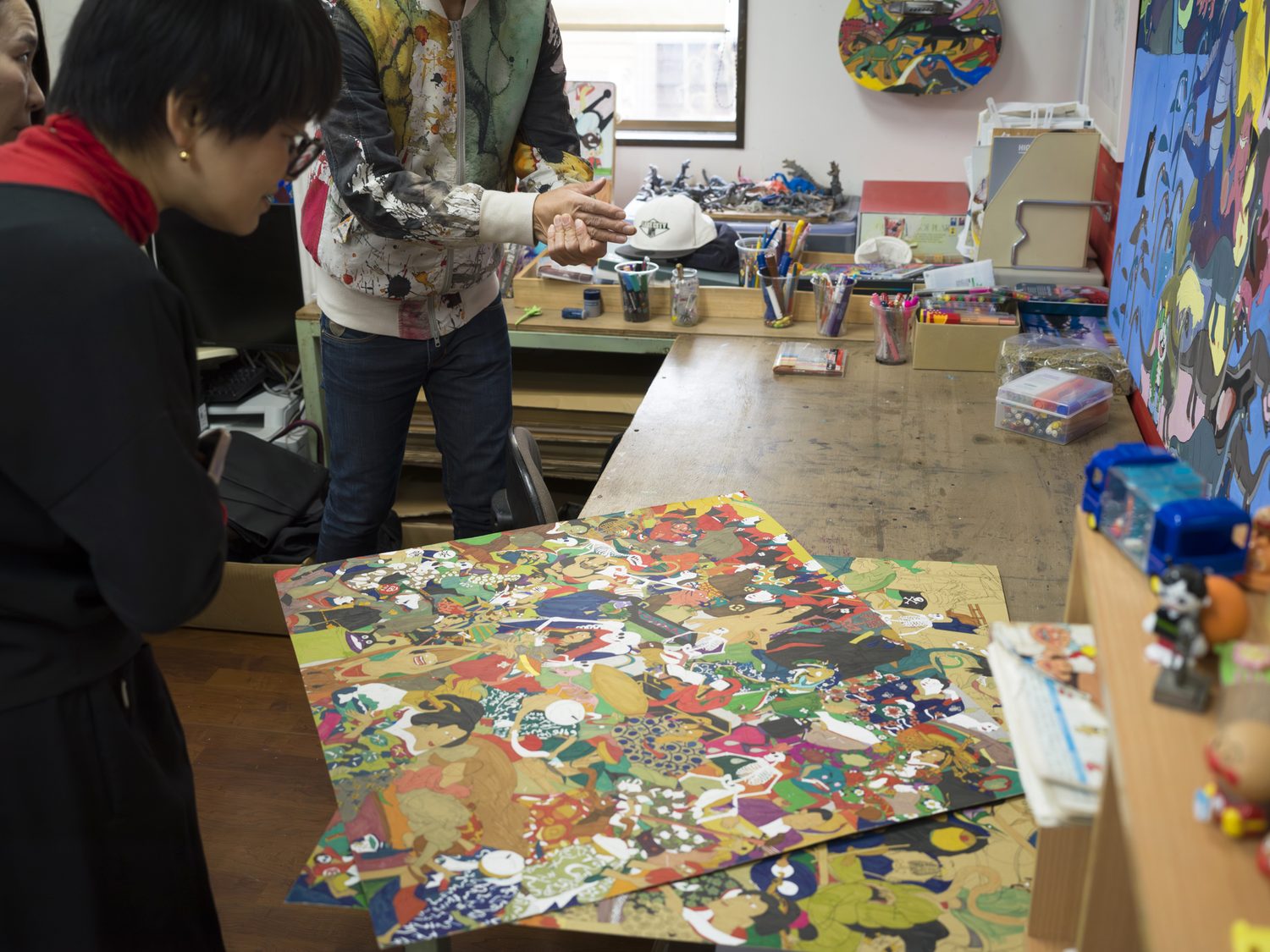
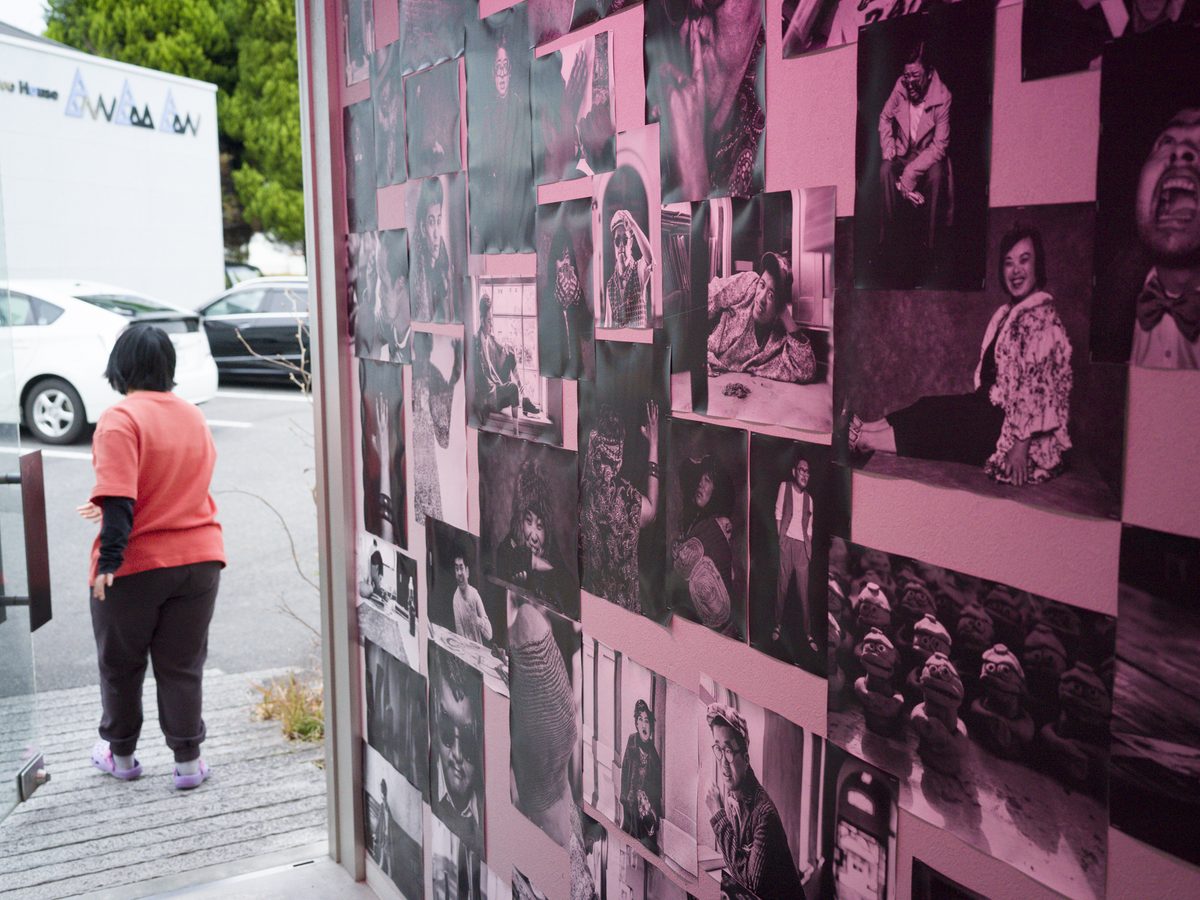
We simply wanted them to look at and enjoy the art. We did not frame it as a lesson in human rights. Children would react by saying, “Wow, what are all these buttons?” or “What’s this? There are dinosaurs everywhere!” And from there it naturally becomes, “The person who made this picture is amazing!” It created an opportunity for the makers to be recognised in the community not as “people with disabilities” but as individuals. Words alone can remain abstract, almost like fiction. Seeing the work for yourself changes something inside you.
Inaniwa It seems that many people from other facilities and from local government come to visit atelier yamanami. If someone wants to change the way a facility is run, or take welfare administration beyond existing standards, what creates the opportunity for that change? What is the key?
Yamashita It is extremely simple: you just keep turning the question, “What would make this person happy?” into something real. It is not difficult. I think anyone can do it, anywhere. It is not “Bloom where you are planted”, but “Put me somewhere I can bloom”. I think that is what everyone wants. Everyone has the power to influence others when they are in the place where they can flourish. In the end, I think it comes down to human potential.
The Power of Art to Change Everything
Inaniwa Earlier, when we were talking about valuing creativity, you said you felt it was “the only way”. Could you say a little more about that?
Yamashita Because this is simply the form taken by what they are good at and what they love. It just happens to be art. Over the decades I have spent with them, I have found that people very often come to know them through the work. Only then do people begin to think, “Disability is different from what I imagined”, or “This person is remarkable, whether or not they have a disability”. The work acts like a kind of glue, connecting people directly to the person who made it. I realised that it was not us who were connecting them with society; it was the power of the work itself. And the thing that draws people here, like a magnet, is the work too.
In that sense, I think their art is changing everything. No matter how much I talk, a single work can change everything. Parents can feel happier too. Each work becomes a catalyst, setting things in motion and creating a larger current of change.
Inaniwa So the work does not exist in isolation. People respond to it, and through those responses the town itself begins to change.
Yamashita Recognition within the art world has enormous influence. There is a huge difference in impact between having a work shown in a corner of a local bank and having it acquired by a prefectural art museum. Strangely enough, it is the work of the same person, but suddenly it carries a different kind of prestige. That is why we first need to create environments in which their work can receive fair recognition. And for that recognition to reach them, we need to create as many opportunities as possible.
Inaniwa The more I think about Cultural Prescribing, the more I realise that we need to broaden our understanding of art far beyond the boundaries traditionally defined by universities, museums and other established educational and research institutions. We need to consider art in relation to something much more fundamental about being human. atelier yamanami offers a concrete place from which to explore those questions. Very little research has examined where human creativity and artistic expression emerge from, or how such acts relate to the body. Nor are there many places where this can be explored in practice. In that sense, what happens here gives us a concrete way to think through those questions.
Yamashita Perhaps each person is simply building their own world—their one and only world. For us, there is nothing particularly special about it. If we think about it in terms of art, I have been working with them for forty years, and there was a time when people said, “This does not count as art”, or “This isn’t art”. We were even told, “If this is accepted as art, it would be unfair to people in the art world”.
That history is part of how we have arrived where we are today. But whatever people said, the makers were creating the same figures and the same kinds of pictures forty years ago. That has not changed. It is only the people around them who have changed. They themselves have simply been there all along.
Profile
YAMASHITA Masato
Director, atelier yamanami, Social Welfare Corporation Yamanami-kai
After graduating from high school and working in a variety of occupations, Yamashita joined Yamanami Kyodo Sagyosho (Yamanami Cooperative Workshop) as a support worker in 1989. In 1990, he established Atelier Korobokkuru and began supporting expressive activities in ways that respected each individual’s wishes and pace. He has served as Director of atelier yamanami since 2008. Work created by members of atelier yamanami has been exhibited and acquired by museums in Japan and abroad, continuing to attract international attention.